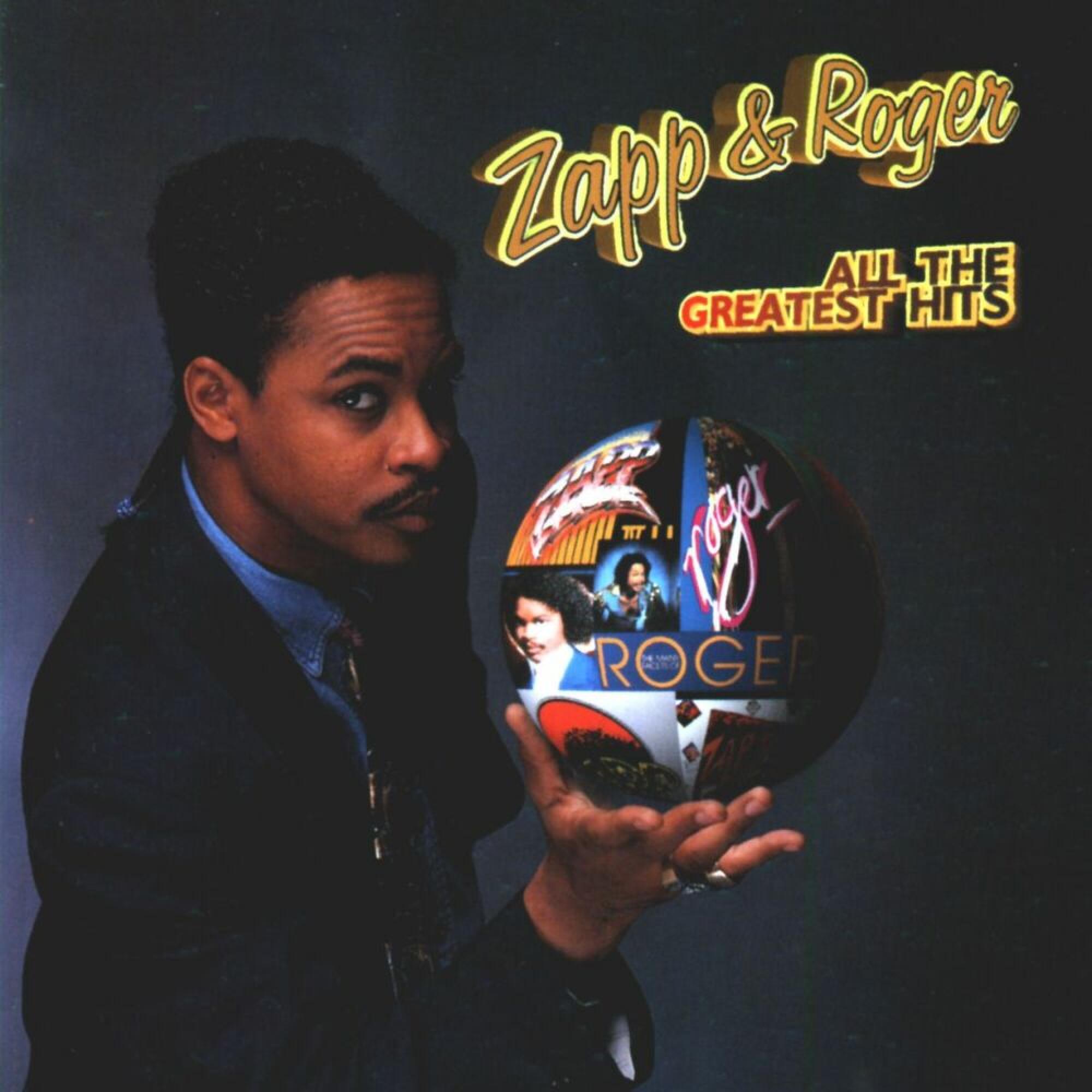
Honestly, if you’ve ever felt that uncontrollable urge to start nodding your head the second a heavy, synth-drenched bassline kicks in, you can probably thank Dayton, Ohio. Specifically, you can thank the Troutman brothers. In 1980, they dropped a track that didn't just climb the charts—it basically rewrote the DNA of West Coast hip-hop and G-Funk before those genres even had names. We’re talking about "More Bounce to the Ounce" by Zapp.
It’s one of those rare songs that feels like it’s moving at 100 mph while simultaneously being the most relaxed thing you’ve ever heard. It’s heavy. It’s robotic. It’s incredibly human.
The Pepsi Ad and the Basement Tapes
Most people don't realize the title actually came from a 1950s Pepsi slogan. "More Bounce to the Ounce" was literally a soda marketing pitch. Roger Troutman, the visionary leader of Zapp, took that catchy phrase and turned it into a nine-minute manifesto of electro-funk.
The story of how it actually got made is kind of legendary in nerd circles. Zapp was a family affair—Roger, Larry, Lester, and Terry (who everyone called "Zapp"). They were local heroes in Dayton, playing weddings and small clubs, but they had a secret weapon: a childhood friendship with Bootsy Collins. Bootsy was already a star with Parliament-Funkadelic, and he kept his word about helping the brothers out once he made it big.
When they finally got into United Sound Systems in Detroit in 1979, the sessions were wild. George Clinton was there. Bootsy was co-producing. But there’s a weird bit of history here that often gets glossed over. George Clinton actually claimed in a 2020 interview that the "More Bounce" groove was something of a Frankenstein creation. They took a short segment of the band playing, copied it, taped it into a loop using a pencil to keep the tension on a two-track machine, and ran it for ten minutes.
Roger apparently hated it at first. He thought it was too repetitive, too mechanical. But that mechanical, looping "stutter" became the very thing that made the world go crazy.
The Magic of the Golden Throat
You can’t talk about Zapp and Roger More Bounce to the Ounce without talking about the talk box. A lot of people mistake it for a vocoder or early Auto-Tune, but it’s a completely different beast.
Here’s how it actually works: The sound of Roger's keyboard (usually a Moog or later a Yamaha DX100) is sent through a driver in a floor pedal, then up a plastic tube. Roger would put that tube in his mouth. He wasn't "singing" into a mic in the traditional sense; he was using his mouth to shape the actual instrument's sound into vowel shapes and words.
It’s physically exhausting. It’s messy. And if you do it wrong, it sounds like a dying radiator. But Roger was a virtuoso. He used an Electro-Harmonix Golden Throat talk box to create that signature "growling" vocal that felt both futuristic and deeply soulful.
Why the Tempo Changed Everything
In 1980, disco was still hanging on by a thread, and most dance tracks were fast—around 120 BPM or higher. "More Bounce to the Ounce" sits at a cool, confident 106 BPM. It was slow. It was "low and slow," which is why it resonated so hard with the lowrider culture in Los Angeles.
When that heavy handclap hits on the two and the four, it creates a "pocket" that you can't help but sink into. Chris Frantz from the Tom Tom Club once mentioned that this specific track was the direct inspiration for "Genius of Love." People were just obsessed with how "More Bounce" managed to be raw and hard-edged while staying completely sexy and relaxed.
The 200+ Samples That Built an Empire
If you grew up in the 90s, you probably heard "More Bounce to the Ounce" a thousand times without even knowing it. It is arguably one of the most sampled songs in history. It’s the foundational stone of the West Coast sound.
Think about these tracks:
- EPMD - "You Gots to Chill": This is the one that really broke the seal for hip-hop using Zapp.
- The Notorious B.I.G. - "Going Back to Cali": That iconic, staggering beat? Pure "More Bounce" energy.
- Ice Cube - "Friday": You can't have a backyard BBQ in a movie without this track.
- MC Breed - "Ain't No Future in Yo' Frontin'": A Midwest-meets-West-Coast anthem that lives and breathes on that Troutman loop.
Dr. Dre basically built the G-Funk era on the back of Zapp samples. It wasn't just about the beat; it was about the feeling. That laid-back, sun-drenched, slightly robotic vibe became the aesthetic of an entire generation. Roger Troutman eventually became a frequent collaborator with the rappers who sampled him, most famously providing the talk box hook for 2Pac’s "California Love."
A Legacy Cut Short by Tragedy
It’s hard to talk about the music without acknowledging how the story ended. The Troutman family story is one of the most heartbreaking in music history. In 1999, Larry Troutman shot Roger outside their recording studio in Dayton before taking his own life.
It was a senseless end for a man who spent his entire career trying to make people dance. Roger was a guy who would walk into the crowd with a 50-foot cord on his talk box just to connect with the fans. He was a "do-it-all" mastermind—playing the bass, the guitar, the keys, and the harmonica, often on the same track.
How to Get That Zapp Sound Today
If you’re a producer or just a fan trying to understand why this song still sounds so "fresh" in 2026, it comes down to the "human-machine" hybrid.
- The Pocket: Don't quantize everything to a perfect grid. The "More Bounce" feel comes from the interaction between the live percussion (Larry and Lester) and the looped synth bass.
- The Layering: Roger didn't just use one synth. He layered live bass guitar with heavy keyboard patches to get that "thick" low end.
- The Talk Box: If you're going to try it, get a real tube. Plugins are great, but they lack the physical "grunt" of air moving through a human mouth.
To truly appreciate the impact of Zapp and Roger More Bounce to the Ounce, you have to look past the "gimmick" of the talk box. Look at the arrangement. Look at the way they used space. Most funk songs of that era were busy, with horns and guitars fighting for space. "More Bounce" is minimalist. It gives the groove room to breathe, which is exactly why it still fills dance floors today.
Go back and listen to the full nine-minute album version. Skip the radio edit. Let that handclap hit you. You’ll see that the "bounce" isn't just in the title; it’s in the soul of the track itself.
Actionable Next Steps:
- Listen to the 12-inch version: To understand the structure, you need the full 9:25 version to hear how the groove evolves.
- Compare the samples: Queue up EPMD's "You Gots to Chill" immediately followed by the original to hear how hip-hop producers isolated the "pocket."
- Explore the Dayton Sound: Check out other Ohio funk pioneers like The Ohio Players and Slave to see how this regional scene influenced everything from Prince to Outkast.



