If you close your eyes and listen to the opening tracks of Adventures in Afropea 1, it’s easy to get disoriented. You hear birds. You hear clicking. There’s a rhythmic thrum that sounds like a bass guitar, but it isn’t. It’s a throat. It’s a chest. It’s Zap Mama, a group that basically told the music industry in the early nineties that instruments were, more or less, optional.
Marie Daulne is the engine behind it all. She’s the daughter of a Belgian father and a Congolese mother, and her life started in the middle of a revolution. Her father was killed during the Simba Rebellion; her mother fled to the forest and was protected by Pygmies before eventually making it to Belgium. That’s not just "flavor text" for a bio. That specific, harrowing, and beautiful origin story is the literal DNA of the music.
The Birth of the Afropean Sound
People love to throw around the word "fusion," but it usually feels like a polite way of saying "messy." Zap Mama was different. When they arrived on the scene, they brought this concept of "Afropean" identity to the forefront. It wasn't just about mixing African rhythms with European harmonies; it was about acknowledging that someone can belong to both worlds entirely and simultaneously.
In the beginning, it was strictly a cappella. Five women. No drums. No synths.
Honestly, the sheer guts it took to release an album of vocal gymnastics in 1991—and have it become the biggest-selling world music album on the Billboard charts—is wild. They weren't just singing songs; they were mimicking the environment. They used the "liquid" vocal sounds of the Sub-Saharan polyphonic traditions and mashed them up with 16th-century European madrigals.
It worked because it felt human.
We live in a world where everything is quantized and pitch-corrected to death. Zap Mama is the antidote. On Sabsylma, the second album, you can hear the breath. You can hear the slight imperfections that make a vocal arrangement feel alive. Daulne traveled back to Africa to record sounds, not just to "find her roots" in a cliché way, but to document the specific acoustic properties of the desert and the forest. She wanted to know how the air changed the sound of a human voice.
Why the 1993 Breakthrough Still Matters
When David Byrne signed them to his Luaka Bop label, he knew what he was doing. The American audience was just starting to wake up to "World Music" (a term that Daulne has had a complicated relationship with over the years).
But Zap Mama wasn't a museum piece.
They were cool. They were fashionable. They looked like they were having more fun than any grunge band in Seattle. The 1993 release of Adventures in Afropea 1 proved that vocal music didn't have to be "barbershop quartet" or "church choir." It could be urban. It could be funky.
The Pivot to "Seven" and Beyond
Then, Marie Daulne did something that annoyed the purists: she added a beat.
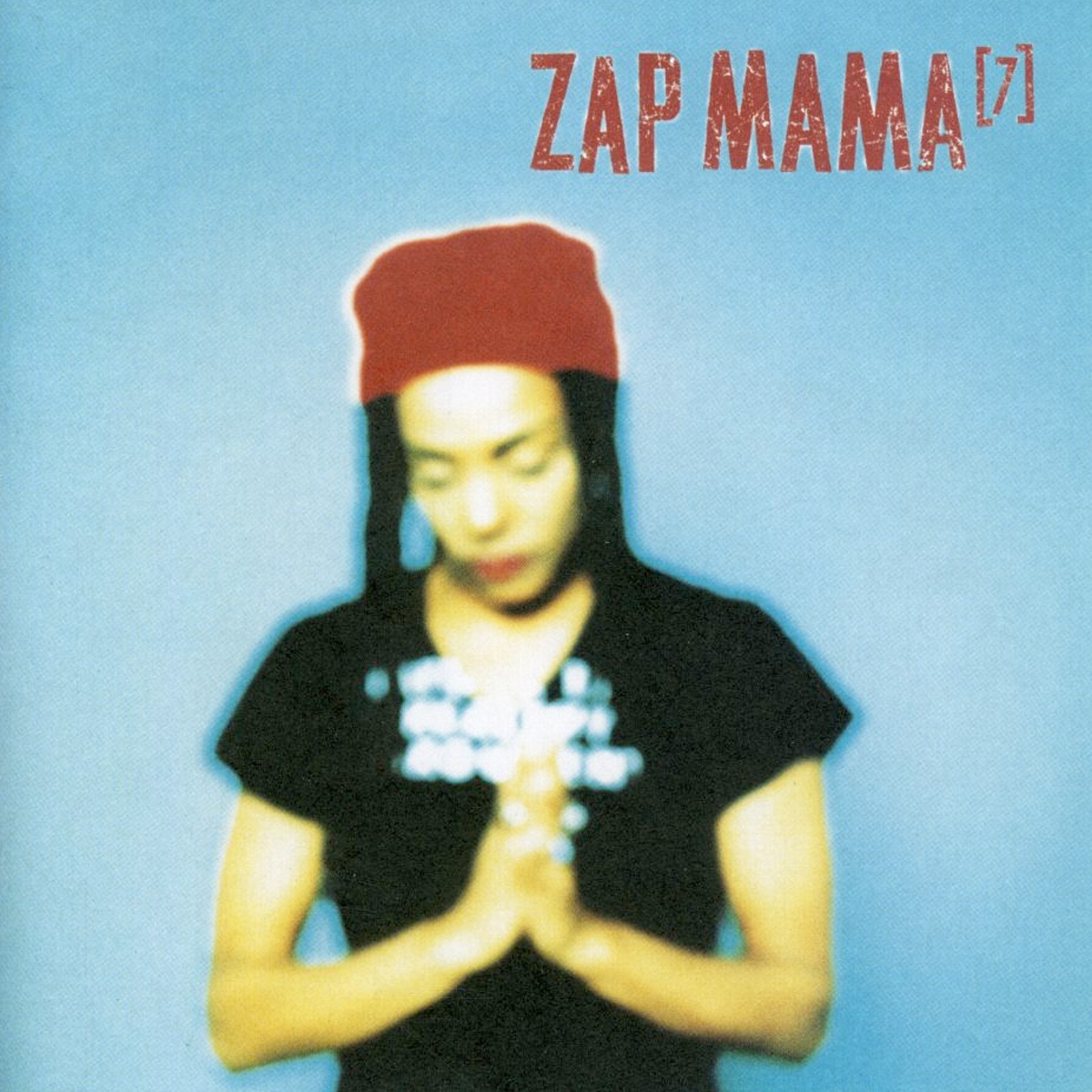
By the time Seven came out in 1997, the a cappella group had evolved. Daulne realized that while the voice is the ultimate instrument, she wanted to play with the toys of modern production. She started collaborating. You had Michael Franti and Spearhead showing up. Later, on Ancestry in Progress, she was working with Erykah Badu and Common.
The transition wasn't always smooth. Some fans wanted them to stay in that "pure" vocal space forever. But Marie is a restless creative. She saw the connection between the rhythmic clicking of the Pygmies and the beatboxing of American hip-hop. To her, it was the same line. A circle, really.
If you listen to "Vibrations," you hear that neo-soul influence. It’s smooth. It’s got that Questlove-adjacent pocket. But underneath the slick production, Daulne is still using those polyphonic layers. She’s still playing with the "Zap" in the name—that sudden, electric shock of sound.
The Nuance of Cultural Exchange
There’s a lot of talk today about cultural appropriation. It's a tricky landscape. Zap Mama navigated this by being a literal embodiment of the exchange. Daulne wasn't "taking" from Congolese culture; she was reclaiming her own lost history.
She often talks about her mother teaching her the songs of the forest as a way to survive. When you hear those sounds in a track like "Mupepe," you aren't hearing a gimmick. You’re hearing a survival strategy turned into art.
Misconceptions About the "Group"
One thing people get wrong: Zap Mama isn't always a "they."
While it started as a quintet of women (Sabine Kabongo, Sylvie Nawasadio, etc.), it eventually became Marie Daulne’s solo project with a revolving door of incredible talent. This shifted the dynamic. The early stuff is about the blend of five distinct voices. The later stuff is about Marie’s vision as a producer and composer.
Is one better?
That’s subjective. The early a cappella records have a raw, haunting quality that's hard to beat. But the mid-2000s records like Supermoon brought a pop sensibility that made the music accessible to people who wouldn't normally touch a "world music" record with a ten-foot pole.
The Technical Brilliance of the "Zap" Style
If you're a singer, Zap Mama is basically a masterclass. They don't just sing notes; they manipulate the shape of their mouths to change the frequency of the sound. It’s called "overtone singing" in some contexts, but Daulne approaches it more intuitively.
- The Yodel: It’s not the Swiss kind. It’s a rapid-fire break between chest voice and head voice used in Central African music.
- Body Percussion: Using the chest as a kick drum and the palms as a snare.
- Glissando: Those sliding notes that sound like a synth filter opening and closing.
They proved that the human body is the most sophisticated synthesizer ever built.
Why We Don't Hear Enough About Them Now
In the age of TikTok and 15-second hooks, Zap Mama’s long-form vocal explorations can feel like they belong to a different era. But look at artists like Jacob Collier or even the way Beyoncé approached the Lion King: The Gift soundtrack. The fingerprints of the "Afropean" vocal style are everywhere.
Marie Daulne paved the way for the idea that African music isn't just "traditional"—it’s futuristic.
She fought against the "exotic" label. She didn't want to be a National Geographic feature; she wanted to be on the radio next to Janet Jackson. And for a brief, shining moment in the nineties and early 2000s, she actually bridged that gap without sacrificing an ounce of her weirdness.
How to Actually Listen to Zap Mama Today
If you want to dive in, don't just shuffle a random "Best Of" playlist. You have to hear the progression.
- Start with Adventures in Afropea 1. It’s the foundation. Listen to it on headphones so you can hear the spatial placement of the voices. It’s an architectural marvel.
- Move to Seven. This is where the instruments come in. It’s the "bridge" album.
- Finish with Ancestry in Progress. This is the peak of the "Vocal Gallery" era where she marries the forest sounds with the concrete jungle of American R&B.
The music is about empathy. It’s about the fact that no matter where you go in the world, the sound of a human breath is a universal language. Marie Daulne took the trauma of her childhood and the complexity of her biracial identity and turned it into a "Zap"—a spark that still catches fire whenever someone decides to sing without a safety net.
Actionable Takeaways for the Curious Listener
To truly appreciate the depth of what’s happening here, try these specific steps:
- Analyze the "Muppet" effect: Listen to the track "Guzophela" and try to isolate the different vocal layers. Notice how one voice acts as a percussion instrument while the other handles the melody. It changes how you perceive "background singers."
- Trace the Sample: Many hip-hop producers have dipped into the Zap Mama catalog. If you're a fan of The Roots or Common, go back and find the original vocal textures Marie provided for them. It shows how "world music" isn't a separate genre but a foundational element of modern urban sound.
- Explore the "Afropean" Philosophy: Read up on Marie Daulne's interviews regarding her "Afropean" identity. It’s a vital framework for understanding modern European demographics and the art that comes out of the African diaspora in cities like Brussels and Paris.
- Vocally Experiment: Even if you aren't a singer, try to mimic the "clicking" sounds in their early work. It’s a physical exercise in understanding how different cultures utilize the vocal tract. It’s harder than it sounds and gives you instant respect for their technical precision.



