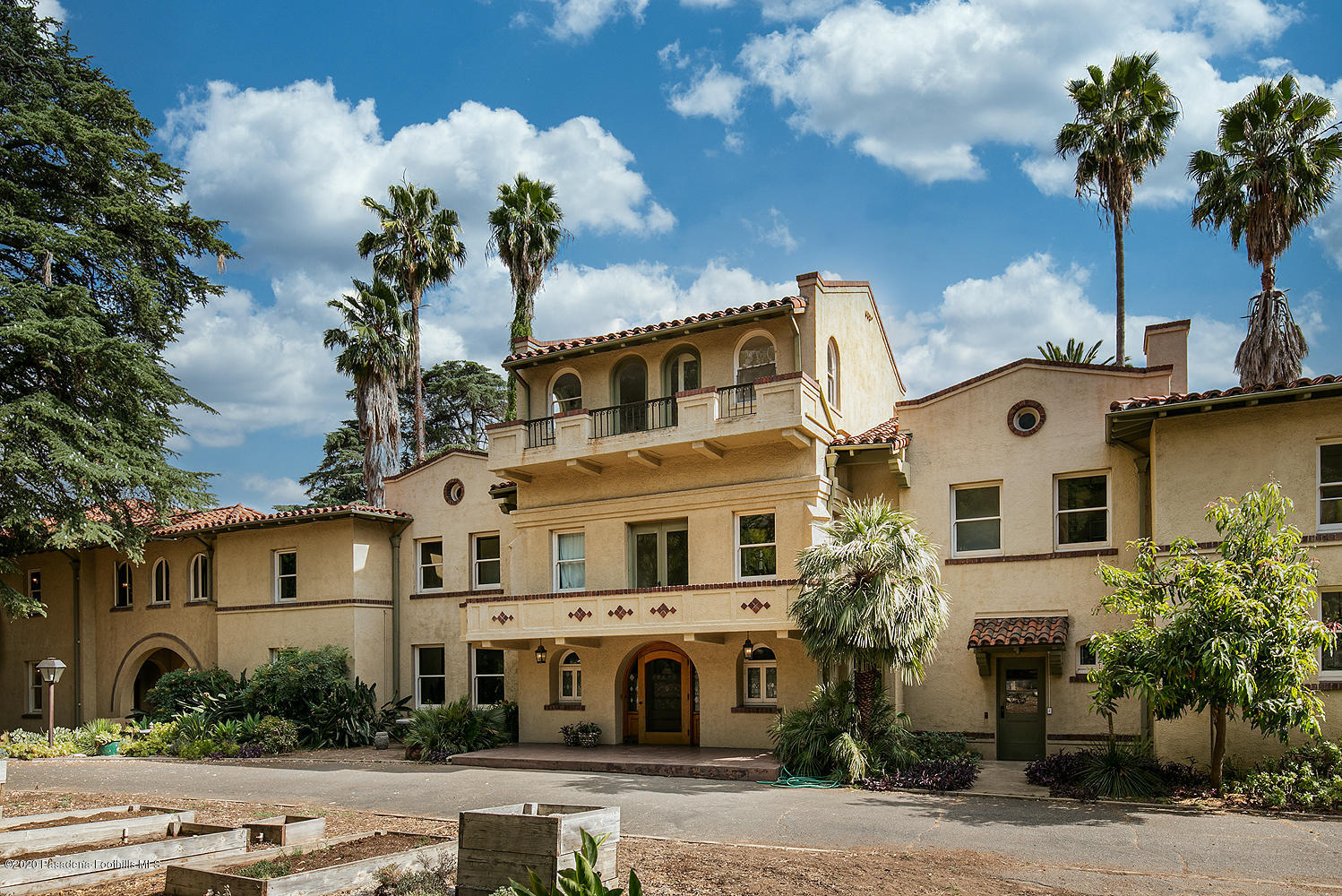
Honestly, walking up to the gates of the Zane Grey estate in Altadena used to feel like stepping into a different century. Not just the 1920s where the famous Western novelist lived, but a version of California that barely exists anymore. It was massive. Stately. It had these thick, white concrete walls and a vibe that was more "Spanish monastery" than "suburban mansion."
Then January 2025 happened.
The Eaton Fire ripped through the foothills. It was devastating. Most people think of the Zane Grey estate in Altadena as a piece of history that’s safely tucked away in textbooks, but the reality is much more raw. The fire basically gutted the place.
The Irony of the "Fireproof" House
Here’s the thing that’ll make you shake your head. The house was literally built to be fireproof. Back in 1907, a guy named Arthur Herbert Woodward commissioned architects Myron Hunt and Elmer Grey to build it. His wife, Edith, had survived the horrific Iroquois Theater Fire in Chicago. She was terrified of fire. Understandably so.
So, they built it out of reinforced concrete.
It was the first of its kind in Altadena. No wood frames. Just solid, heavy concrete. When Zane Grey bought it in 1920, he loved that ruggedness. He added a third story for his study—a place where he could churn out those iconic Westerns like Riders of the Purple Sage—and filled it with Native American art and heavy beams.
But fire is a beast. While the concrete walls of the Zane Grey estate in Altadena actually stood their ground during the 2025 blaze, the interior was a different story. The old-growth wood beams, the books, the history—all gone.
Why Zane Grey Chose Altadena
Why did a guy who made his fortune writing about the wild, dusty trails of Arizona and Utah settle down at 396 East Mariposa Street?
He was looking for peace. He found it in the shadows of Mount Lowe. Altadena back then wasn't the commuter hub it is today; it was the edge of the world.
Grey wasn't just a writer; he was a brand. He was one of the first "celebrity" authors. He needed space for his massive collection of artifacts and a place where his wife, Dolly, could manage his complicated business empire. She was actually the one who ran the show while Zane was off fishing in Tahiti or hunting in the Sierra Nevadas.
- The Architecture: It was Mediterranean Revival with a heavy dose of Mission style.
- The Size: We’re talking over 12,000 square feet.
- The Details: Hand-painted stencils of Hopi figures adorned the walls. Remarkably, some of those stencils are still visible on the charred remains today.
What’s Left of the Zane Grey Estate in Altadena?
If you drive by today, you won't see a pristine mansion. You'll see a skeleton. But it’s a skeleton with a lot of stories. The current owners, Nathaniel Grouille and Alice Carr, are in a tough spot. How do you rebuild a legend?
They’ve been pretty vocal about not wanting to build a "Las Vegas version" of the house. You can't just go to Home Depot and buy 1920s old-growth timber. It doesn't exist.
There's a lot of talk in the preservation community about what happens next. Some people want a perfect replica. Others think the ruins should stay as they are—a monument to the reality of life in the "Wild West" of modern climate change. It’s a messy, expensive, and emotional debate.
A Legacy Beyond the Concrete
The significance of the Zane Grey estate in Altadena isn't just about the bricks and mortar—or concrete, in this case. It’s about the cultural footprint of the man himself. Grey basically invented the "Old West" as we imagine it. Before him, Westerns were cheap "dime novels." He made them epic. He made the landscape a character.
Living in Altadena gave him that perspective. He could look up at the San Gabriel Mountains every morning and feel that scale.
The house also served as a hub for the community for decades. After the Greys passed, it went through different hands. It was an Airbnb for a while. It hosted an underground farmers market. It wasn't a stuffy museum; it was a living, breathing part of the neighborhood.
What You Can Do Now
If you’re a history buff or a fan of California architecture, the loss of the estate is a gut punch. But the story isn't over.
- Visit the Altadena Historical Society: They have extensive records and photos of the estate in its prime. It’s the best way to see the "inside" without a time machine.
- Support Local Preservation: The Eaton Fire showed how vulnerable our historic landmarks are. Organizations like Pasadena Heritage are constantly working to survey and protect these sites before the next disaster hits.
- Read the Classics: If you haven't read Riders of the Purple Sage, pick it up. You’ll start to see the echoes of those Altadena foothills in Grey’s descriptions of the purple-shaded canyons.
The Zane Grey estate in Altadena might be a ruin for now, but its impact on American culture is pretty much permanent. Whether it gets rebuilt or remains a "stenciled ghost," it stands as a reminder that history is fragile. It needs us to pay attention.
Keep an eye on the local planning commission meetings if you live nearby. The future of the site is being decided right now, and public input usually carries more weight than people realize. It’s our history, after all.