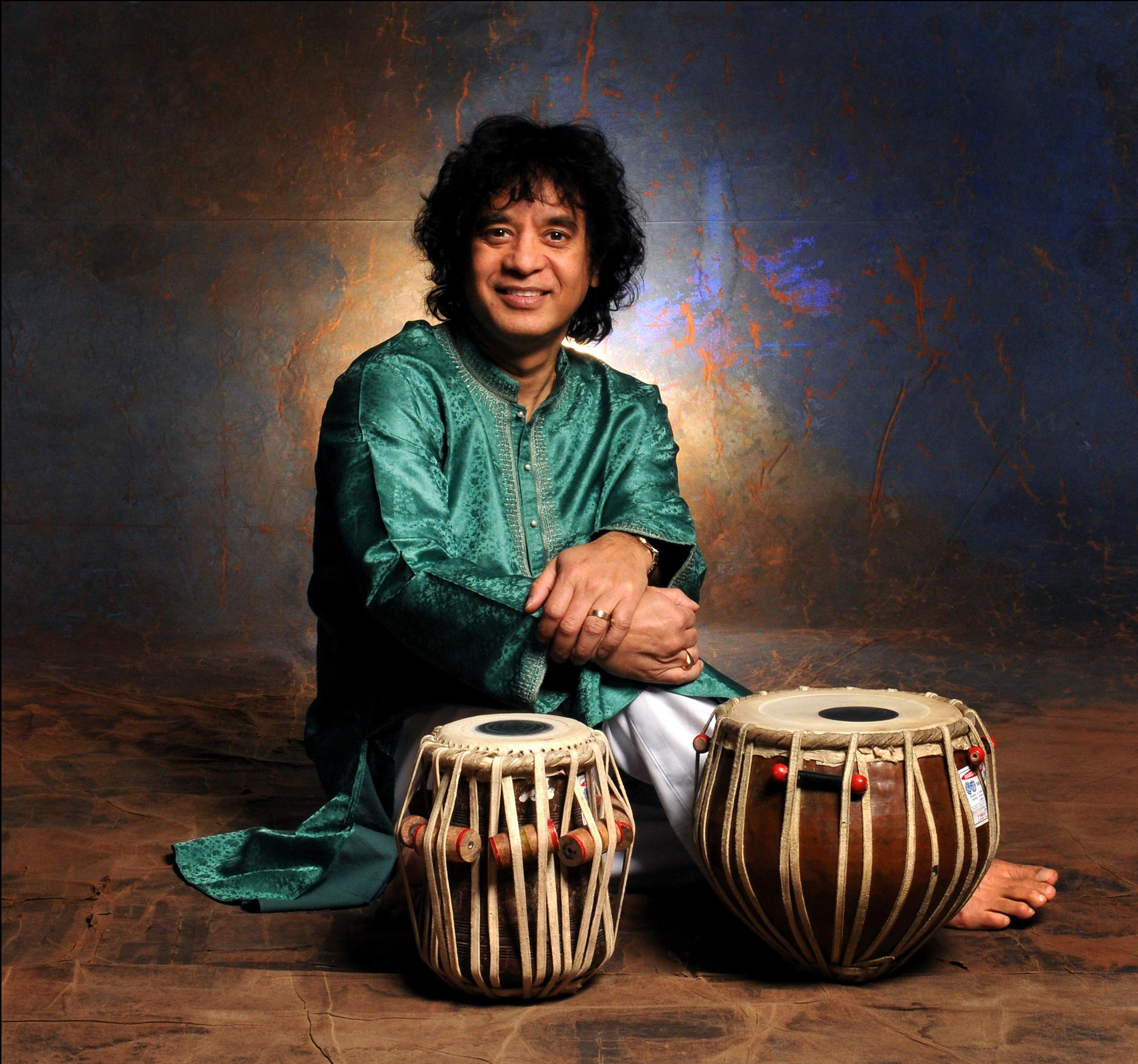
You’ve probably seen the hair first—that iconic, wild mane of curls bouncing in sync with hands that move faster than most people can blink. But reducing Zakir Hussain tabla player to just a visual brand or a fast pair of hands misses the point entirely. To understand him is to understand how a 2,500-year-old tradition survived the age of synthesizers and TikTok and somehow came out looking cooler than ever.
Honestly, it wasn’t supposed to be this way.
Classical Indian music can be dense. It’s mathematical, spiritual, and often intimidating to the uninitiated. Yet, Zakir made it feel like a rock concert. When he died in December 2024, the world didn’t just lose a drummer; it lost the guy who basically built the bridge between East and West with nothing but two small wooden drums and a lot of soul.
The Early Days: More Than Just a Prodigy
Zakir’s life started with a whisper. Literally.
His father, the legendary Ustad Alla Rakha, didn't recite traditional prayers into his newborn son’s ear. Instead, he whispered rhythmic syllables—bols—into the infant's ear. He was literally being programmed for rhythm before he could even hold a spoon.
By age seven, he was performing. By twelve, he was touring.
But don't think it was all some glamorous "star is born" story. It was grueling. We’re talking about riyaaz (practice) that started at 3 a.m. while the rest of Mumbai was asleep. His father was a "canny" teacher, as Zakir often recalled, letting him beat on pots and pans until the kid realized for himself that the tabla was his calling.
He grew up in a house where the sound of the tabla was the background noise of life. It’s no wonder he plays like the instrument is just an extension of his own nervous system.
Breaking the Classical Mold
Most people get it wrong when they think Zakir Hussain just played "traditional" music. He was actually a bit of a rebel. In the late 60s, he headed to San Francisco. Imagine a young Indian classical musician landing in the middle of the hippie movement, surrounded by The Grateful Dead and psychedelic rock.
He could have stayed in the "classical" lane. He chose to jump the fence.
- Shakti: He teamed up with John McLaughlin in the 70s to create a sound that combined jazz and Indian music. It wasn't just "fusion"—that word is kind of overused. It was a high-speed conversation between different worlds.
- Planet Drum: Collaborating with Mickey Hart of the Grateful Dead, he proved that rhythm is a universal language. It wasn't just about India anymore; it was about every culture that ever hit a drum.
- Global Recognition: He didn't just win Grammys; he dominated them. In 2024, he took home three in a single night. That's a feat most pop stars can't pull off, let alone a percussionist playing an instrument most Westerners had never heard of fifty years ago.
The "Speaking" Hands
If you've ever watched a video of a Zakir Hussain tabla player solo, you've noticed he talks to the audience. Not just with his voice, but with the drums. He can make the tabla sound like a thunderstorm, a galloping horse, or even a giggling child.
This isn't just a gimmick.
It’s about storytelling. Indian classical music is built on raags and taals, but Zakir’s genius was making the audience feel the story without needing to know the theory. He’d wink at the crowd, trade jokes with the sitar player, and then drop a rhythmic pattern so complex it would make a NASA engineer sweat.
What Most People Miss
The technical stuff is cool, but the real magic was his adaptability. He played on the soundtrack for Apocalypse Now. He collaborated with banjo virtuoso Béla Fleck. He worked with Van Morrison and Earth, Wind & Fire.
He was a musical polyglot.
While some purists in India initially looked sideways at his "Western" antics, they couldn't argue with the results. He made the tabla a solo instrument. Before him, the tabla player was often just the guy in the back keeping time. Zakir moved the drum to the front of the stage. He made it the star.
Why 2026 is a Big Year for His Legacy
Even though he’s gone, the momentum hasn't stopped. March 2026 marks what would have been his 75th birthday, and the "Zakir Hussain Eternal" celebrations at venues like Carnegie Hall show just how deep his roots go.
It’s not just a memorial. It’s a testament to the fact that he trained an entire generation of drummers to think outside the box. Whether it's his brothers Taufiq and Fazal Qureshi or his countless students across the globe, the "Zakir style" is now the gold standard for modern percussion.
He taught us that you can respect your ancestors without being a slave to the past. You can wear the traditional kurta and still be the coolest guy in the room.
How to Actually Listen to Zakir Hussain
If you're new to his stuff, don't just go for the most famous albums. Try these specific vibes:
- For Pure Mastery: Look for any live recording of him with Pandit Shivkumar Sharma (santoor). The chemistry between them is basically telepathic.
- For the Fusion Junkie: Check out the Shakti album This Moment (the 2024 Grammy winner). It’s 50 years of evolution packed into one record.
- For Something Weird: Tabla Beat Science. It’s Zakir meets drum-and-bass and electronica. It’s chaotic and brilliant.
Actionable Insight: If you really want to understand rhythm, stop looking for the beat and start looking for the "gap" between the beats. Zakir often said the silence is just as important as the sound. Try listening to a solo and focusing only on the moments where he doesn't hit the drum. It’ll change how you hear music forever.
His journey from a small house in Mumbai to the biggest stages in the world wasn't a fluke. It was the result of a man who realized that while we all speak different languages, our hearts all beat to the same rhythm.



