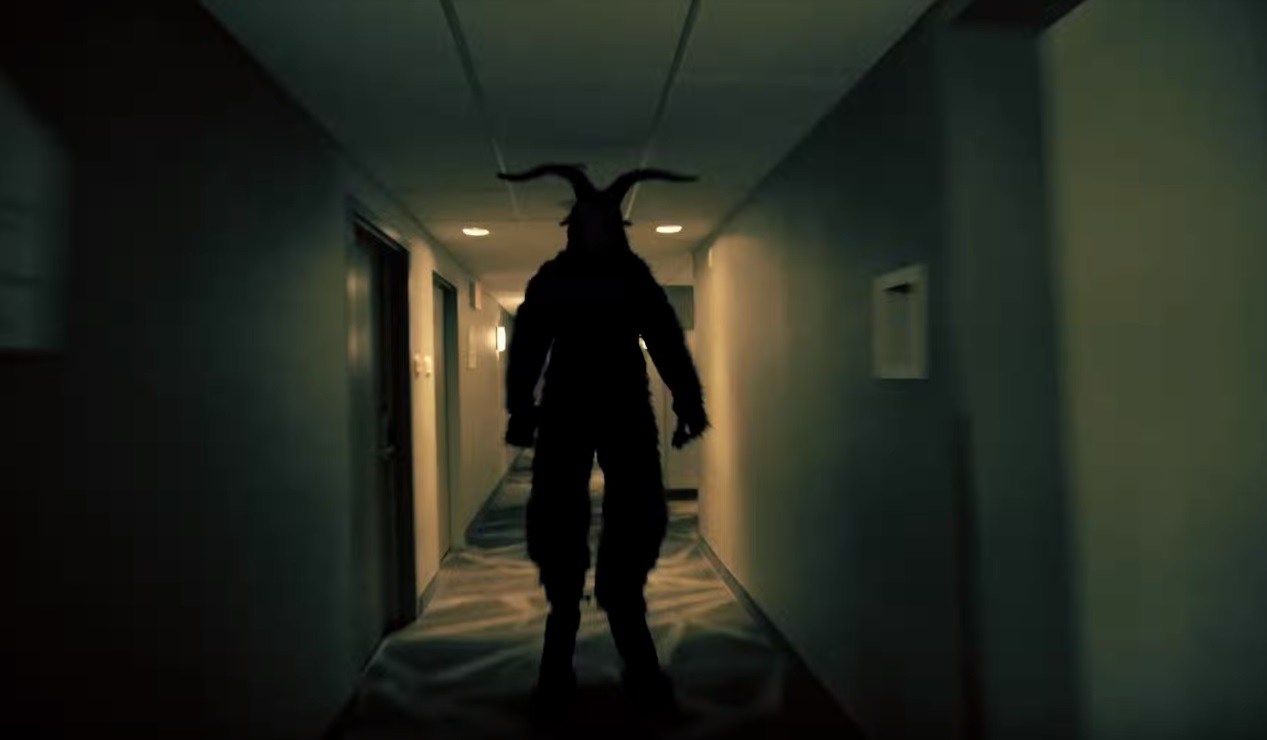
Honestly, if you've ever spent a late night scrolling through the Travel Channel, you’ve seen Zak Bagans. He’s the guy who wears the heavy black vests and talks to ghosts like they owe him money. But something shifted when he bought that small, unremarkable-looking home on Carolina Street in Gary, Indiana. Most people know it as the Demon House, a place so allegedly infested with evil that it made international headlines before Bagans even touched it.
The story didn't start with a TV crew. It started with Latoya Ammons and her family. In 2011, they moved in and claimed the house was basically a portal to hell. We're talking black flies swarming the porch in December, children levitating, and a nine-year-old boy supposedly walking backward up a wall in front of a social worker and a nurse.
It sounds like a bad horror movie script. Except, the official reports from the Department of Child Services (DCS) and the Gary Police Department actually mention this stuff. Captain Charles Austin, a 37-year police veteran and a skeptic, went into that house and came out a believer. He said things happened there that he couldn't explain. Naturally, Zak Bagans saw this and decided he had to own it.
The Reality of Zak Bagans the Demon House Documentary
In 2014, Bagans bought the house sight unseen for about $35,000. He didn't just want to film an episode of Ghost Adventures there; he wanted to make a feature-length documentary. The result, released in 2018, was Zak Bagans the Demon House.
It’s a weird film. It’s not your typical jump-scare fest.
Instead of the usual "did you hear that?" energy, the documentary feels heavy and somber. Bagans claims the house didn't just have ghosts—it had something intelligent and predatory. During filming, members of the crew allegedly started turning on each other. One of the cameramen, Adam, reportedly suffered a "personality shift" after an encounter in the basement.
But there’s a massive divide between what the film shows and what skeptics believe.
The Skeptical Side of the Gary Haunting
While the film is terrifying, many people point to more earthly explanations. A home inspector actually found black mold and high levels of carbon monoxide in the house. If you've ever read about the effects of mold or CO poisoning, you know they cause hallucinations and extreme anxiety.
Then there’s the psychological angle. Clinical psychologist Stacy Wright, who evaluated the Ammons children, suggested it was a case of "delusional system" where the kids were essentially acting out their mother's deep religious fears.
Why Did He Tear It Down?
This is the big question. In 2016, Bagans had the Demon House demolished and the debris hauled away to a secret location. He says he did it because the house was too dangerous to exist. He claimed he didn't want anyone else to ever live there and risk being "attached" by whatever was in the basement.
Critics have a different theory.
Some think he destroyed it to "seal the legend." If the house is gone, no one else can investigate it. No one can go in with better equipment and debunk his claims. There’s also the rumor about a massive Hollywood movie deal. Lee Daniels eventually made The Deliverance (2024) based on the same story. Some believe Bagans was blocked by legal rights from showing certain things, so he razed the property out of frustration or to protect the value of his own footage.
Interestingly, even though he leveled the building, Bagans didn't get rid of everything. He kept some of the dirt and parts of the basement. If you go to his Haunted Museum in Las Vegas, you can actually see the "Demon House" stairs. It's a bit of a contradiction, isn't it? To say a house is too dangerous to stand, but then to charge people tickets to look at the remains.
What Most People Get Wrong About the Case
People often think the "Demon House" was just another haunted house. It wasn't. The Ammons case was unique because of the credibility of the witnesses. You had a priest, Father Michael Maginot, performing actual exorcisms. You had a police captain and a social worker filing official government paperwork about supernatural events.
That’s why Zak Bagans the Demon House still gets talked about. It’s not just about the "evidence" he caught—which, let's be real, is often blurry and debatable. It’s about the fact that a whole group of professionals who had "no skin in the game" were genuinely terrified.
The Lasting Impact on Bagans
Bagans claims the house permanently damaged him. He says he developed a permanent eye condition (diplopia) because of the energy in the house. During the climax of the documentary, he locks himself in the house alone for a night. Whether you believe in demons or just think he's a master of marketing, the footage of him in that dark, empty room is undeniably effective.
Practical Next Steps for Paranormal Enthusiasts
If you're looking to dive deeper into this specific rabbit hole without getting "attached" yourself, here is how you should approach it:
- Watch the Documentary First: Start with Demon House (2018) to see Zak’s perspective. It’s available on most streaming platforms like Amazon Prime or Discovery+.
- Read the IndyStar Reports: Look up the original 2014 reporting by Marisa Kwiatkowski. It provides the most grounded, non-sensationalized account of what the police and DCS workers actually claimed to see.
- Compare with The Deliverance: Watch the 2024 Netflix film to see how Hollywood dramatized the same events. Seeing the differences between the "documentary" and the "movie" helps you spot the tropes.
- Visit the Museum (Optional): If you're ever in Vegas, the Haunted Museum has the actual basement dirt and stairs. Just be aware that many visitors report feeling "heavy" or sick after that specific exhibit.
The Demon House is gone, but the debate isn't. Whether it was a portal to hell or a tragic case of mold-induced mass hysteria, it remains the most famous haunting of the 21st century for a reason.



