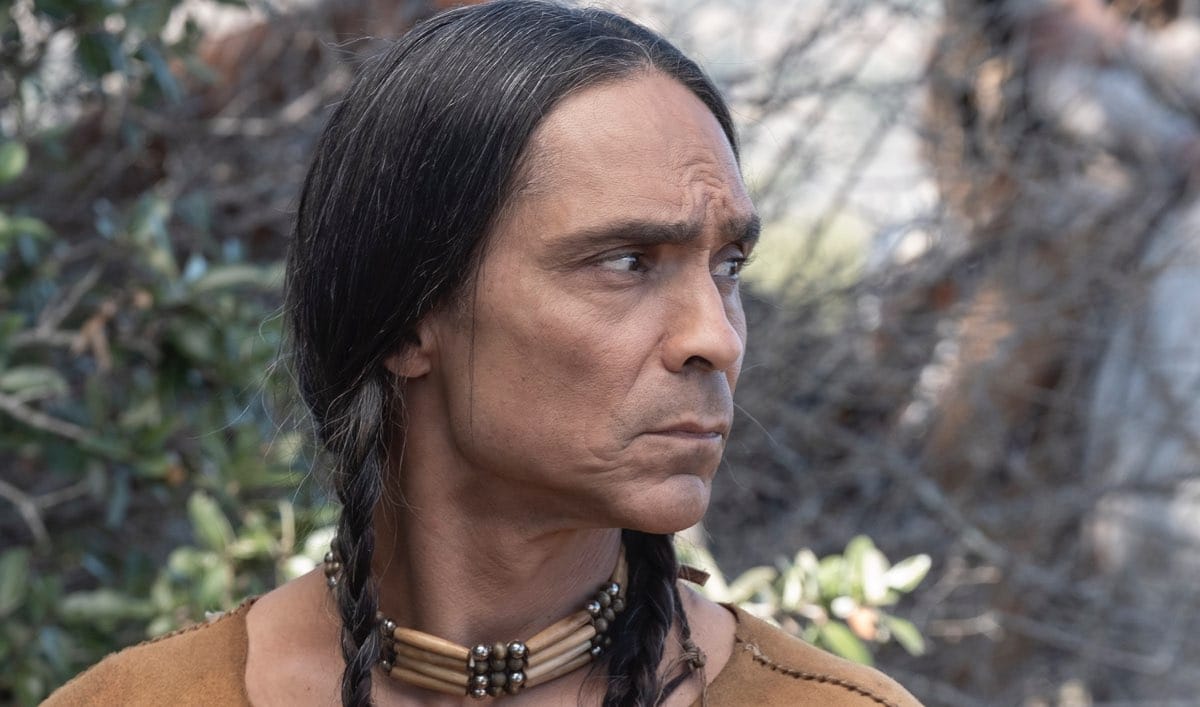
You’ve seen the face. It’s a landscape of deep lines and quiet authority that seems to hold the weight of a thousand years, even when he's just staring at a cup of coffee. Zahn Tokiya-ku McClarnon has become the go-to guy for roles that require a soul-piercing gaze and zero wasted words. But if you think he just appeared out of thin air when Longmire or Fargo got big, you’re missing the actual story.
Honestly, Zahn is one of those rare performers who actually lives up to the "stoic" label without it being a caricature. He’s Hunkpapa Lakota on his mother's side, and that heritage isn't just a fun fact for a press junket. It’s his bedrock. He was born in Denver back in 1966, the son of a Lakota mother and a father of Irish and Polish descent who worked for the National Park Service. That meant a childhood spent moving around—Glacier National Park, Nebraska, South Dakota. He grew up between worlds, which probably explains why he can inhabit characters who feel like they belong to a different century while standing in the middle of a modern crime scene.
What Zahn Tokiya-ku McClarnon Actually Means
Names carry weight in Lakota culture. They aren't just labels; they're stories. Zahn Tokiya-ku McClarnon has a name that literally explains his entrance into the world. He’s a twin. His middle name, Tokiya-ku, translates roughly to "first one to come" or "the one who comes first." He beat his brother, Aakeu ("the last one"), into the world by about four minutes.
His first name, Zahn, is a tribute to his great-great-uncle, Frank "Francis" B. Zahn. Frank was a bit of a legend himself—an artist, a tribal judge on the Standing Rock Reservation, and a keeper of Lakota history. When you see Zahn on screen today, you’re seeing the continuation of a lineage that takes dignity very seriously.
It’s not just about the name, though. It’s the way he carries it. There’s a specific kind of "Native American stoicism" that Hollywood has exploited for decades, usually in the form of "Indian No. 3" who dies in the first act. Zahn took that trope and set it on fire. Whether he’s playing Hanzee Dent in Fargo or Joe Leaphorn in Dark Winds, he’s giving those characters an inner life that doesn't need a five-minute monologue to feel real.
The Long Road to Joe Leaphorn
Success didn't happen overnight. Not even close. Zahn started out in the early '90s doing the usual rounds—bit parts in shows like Baywatch and In Living Color. He spent years as a journeyman actor, the guy who showed up for three scenes and then disappeared.
The real shift happened around 2012 with Longmire. As Officer Mathias, he wasn't just a sidekick. He was a foil. He was the guy reminding the white protagonist that the reservation has its own laws and its own soul. That role paved the way for Hanzee Dent in Fargo Season 2. That character was a revelation. Hanzee was a Vietnam vet, a tracker, and a man who had finally reached his limit with being treated like a tool.
Then came Westworld. If you haven't seen the episode "Kiksuya" (Season 2, Episode 8), go watch it right now. It is basically a standalone masterpiece centered entirely on Zahn’s character, Akecheta. It was a massive moment for Indigenous representation because the episode was largely in Lakota. It wasn't about "the robots" or "the park" in the usual way; it was a deeply human love story about memory and awakening.
Why Dark Winds Changed Everything
Currently, Zahn is the face of Dark Winds, the AMC series based on Tony Hillerman’s Leaphorn & Chee books. This is significant for a few reasons:
- Executive Power: Zahn isn't just the lead; he’s an executive producer. He has a seat at the table to ensure the Navajo (Diné) culture is treated with respect, even though he himself is Lakota.
- Complexity: Joe Leaphorn is a middle-aged man grieving his son while trying to maintain order in a world that feels like it’s slipping away.
- The Cast: The show features a predominantly Indigenous cast and crew, moving away from the "lone survivor" narrative.
Surviving the Industry and Personal Hurdles
Life hasn't always been a smooth ride for Zahn. In 2017, he had a major health scare. He fell at home and suffered a serious brain injury that put him in the ICU. It actually caused production on Westworld to shut down for a while. It was a "blink and you'll miss it" moment where we almost lost one of our best actors.
He’s also been very open about his past struggles with substance abuse. He’s clean now, and has been for a long time, but he doesn't shy away from that part of his history. He often talks about how getting sober allowed him to actually focus on the craft of acting rather than just surviving the day. That vulnerability is what makes his performances so grounded. You can’t fake that kind of perspective.
What People Get Wrong About Him
People often assume Zahn is just "playing himself" because he seems so naturally quiet and intense. That’s a mistake. If you see him in interviews or behind-the-scenes footage from Reservation Dogs (where he played the superstitious and slightly goofy Officer Big), you see a completely different guy. He’s funny. He’s self-deprecating. He likes to joke around.
The "stoic Indian" is a mask he wears for specific roles, but he’s actually a versatile character actor who just happened to find his niche in the neo-Western genre. He’s also a big fan of the "old school" ways of filmmaking. He prefers being out on location, in the dirt and the wind, rather than standing in front of a green screen. You can see that grit in the final product.
If you want to truly appreciate the work of Zahn Tokiya-ku McClarnon, start by moving past the blockbusters. Look at the smaller, quieter moments in his career. Watch his guest spots. Notice how he uses his eyes to communicate things that aren't in the script.
To really understand his impact on modern television, your next move should be watching the Westworld episode "Kiksuya." It’s a masterclass in acting that transcends language. After that, dive into Dark Winds to see how he’s helping reshape the way Indigenous stories are told in the 21st century.
Stop thinking of him as just a "Native American actor" and start recognizing him for what he is: one of the most formidable leading men working in Hollywood today.



