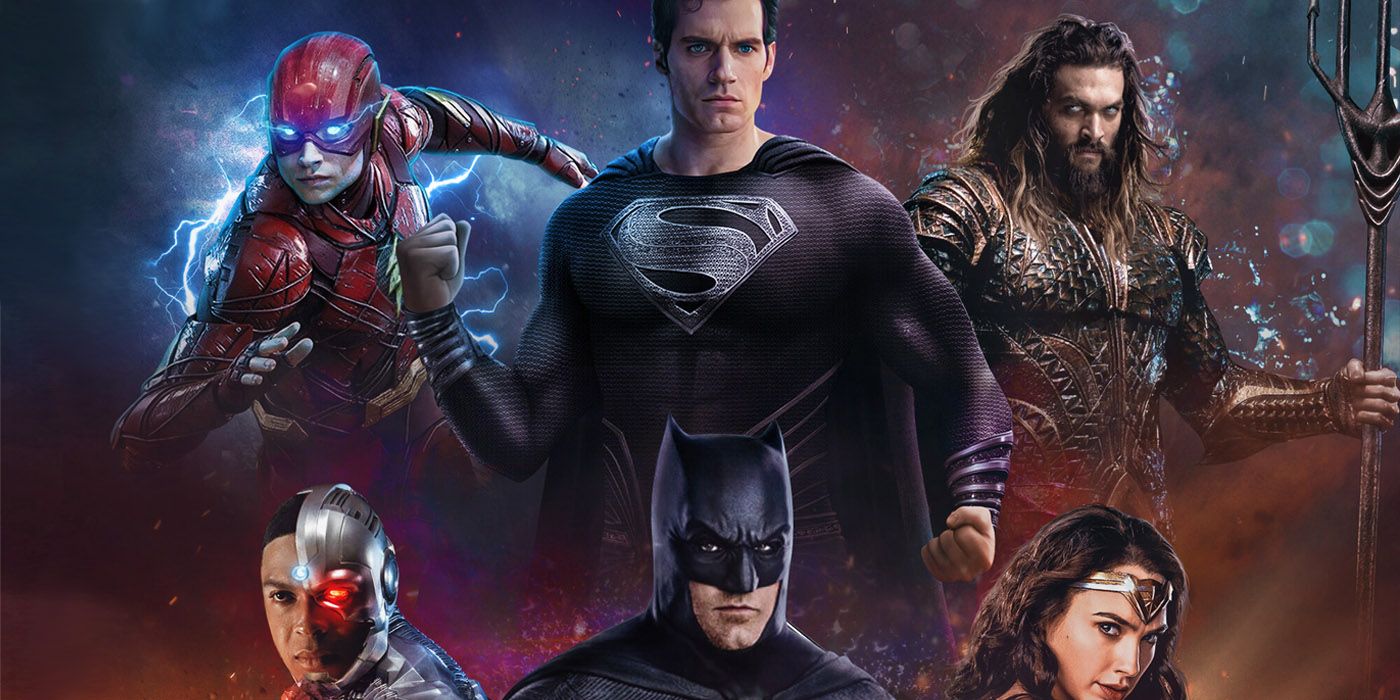
Let’s be real for a second. In 2017, we all walked into theaters expecting a miracle and walked out feeling like we’d just watched a two-hour car crash in slow motion. It was messy. The colors were weirdly neon, the jokes felt forced, and Batman—well, Batman just didn’t feel like Batman. For a long time, that was just the reality we lived in. A "what could have been" scenario that usually stays buried in studio vaults forever.
But then something weird happened.
The internet wouldn't let it go. Usually, when a movie bombs, it just dies. Not this one. Instead, we got Zack Snyder’s Justice League, a four-hour black-and-gray monolith that shouldn't exist but does. It’s 2026 now, and while the "SnyderVerse" is technically a ghost of the past, the impact of that 2021 release is still being felt across every streaming service and fan community on the planet. Honestly, it changed how we think about movies.
The Myth of the "Snyder Cut" vs. The Reality
People used to swear the Snyder Cut was a fairy tale.
Critics and industry insiders laughed at the hashtag. They said there was no finished film, just some grainy storyboards and a bunch of raw footage that would cost way too much to assemble. They weren't totally wrong, but they weren't right either. Zack Snyder actually had a nearly finished assembly, though it lacked the $70 million worth of visual effects and scoring that eventually made it to HBO Max.
When you sit down and watch the 242-minute version—yes, it’s four hours, grab a snack—it’s basically a completely different movie. It isn't just "longer." It's a different story.
The 2017 theatrical version was like a "Greatest Hits" album put together by someone who hated the band. Joss Whedon, brought in after Snyder stepped away due to a family tragedy, tried to "Marvel-ize" a world that was built to be operatic and dark. The result was a Frankenstein’s monster. In contrast, the 2021 version restored the "Age of Heroes" logic.
Suddenly, Victor Stone (Cyborg) wasn't just a sidekick with a few lines. He was the heart of the whole thing. Ray Fisher’s performance finally made sense because we saw his origin, his grief, and his ultimate power.
Why a 4-Hour Movie Actually Worked
You’d think a four-hour runtime would be a death sentence. It’s a lot to ask of anyone.
Interestingly, Samba TV data from the time showed that while about 2.2 million households tuned in during the first week, only about 36% actually finished the whole thing in one sitting. That sounds like a failure until you realize how people actually watch stuff now. We binge. We pause. We treat a movie like a miniseries. Snyder even broke the film into "Parts" with title cards, which was a genius move in hindsight.
It allowed the story to breathe.
The Cyborg and Flash Factor
The biggest crime of the original theatrical release was what it did to Cyborg and The Flash. In the Whedon cut, Barry Allen was mostly there for comic relief—tripping over things and being "brunch" obsessed. In the Snyder version? He saves the entire multiverse by entering the Speed Force in a sequence that is, frankly, one of the best-looking things in modern superhero cinema.
- Victor Stone: From a background character to the "God of Digital Information."
- Barry Allen: Shows the actual terrifying power of a speedster.
- Steppenwolf: Gone is the "sad CGI man in a skirt," replaced by a spike-covered monster who actually feels threatening.
The nuance matters. In the 2021 version, the heroes aren't just fighting a guy in a cape; they are fighting the inevitability of Darkseid. Seeing Darkseid on screen—even if he was just looming in the background—gave the stakes a weight that the 2017 version completely lacked.
The Cultural Shift: Fan Power or Toxic Precedent?
We can't talk about Zack Snyder’s Justice League without talking about the fans. #ReleaseTheSnyderCut was a movement. It was passionate, it was relentless, and yeah, sometimes it was pretty toxic.
But it also raised over $500,000 for the American Foundation for Suicide Prevention.
This is where the conversation gets complicated. On one hand, it’s a beautiful story of fans sticking up for a director’s vision. On the other, it terrified studios. It proved that if you scream loud enough online, you can force a multi-billion dollar corporation to change its mind. Since then, we've seen similar movements for the "Ayer Cut" of Suicide Squad or various "restorations" of canceled shows.
It changed the power dynamic between the creator, the studio, and the consumer. Forever.
What You Should Do Now
If you haven't seen it yet, or if you're thinking about a rewatch, don't try to power through all four hours at once. It wasn't really designed for that, despite being a single film.
How to actually enjoy Zack Snyder’s Justice League:
- Treat it like a 4-episode miniseries. Watch up to Part 4, take a break, then finish the rest the next night.
- Pay attention to the aspect ratio. It’s in 4:3 (square-ish). This was Snyder’s choice for IMAX screens. Don't try to "stretch" it to fit your TV; you'll lose the top and bottom of the frame where all the detail is.
- Watch for the Martian Manhunter. There are subtle clues throughout the film leading up to his reveal that are easy to miss if you're scrolling on your phone.
The "SnyderVerse" might be over in the official DC timeline, but this movie stands as a weird, beautiful, and massive anomaly in film history. It's a reminder that sometimes, the "director's cut" isn't just a marketing gimmick—it's the whole damn point.
Check your streaming settings to ensure you’re getting the 4K HDR version if your TV supports it; the desaturated color palette looks significantly better with high dynamic range than it does in standard definition.



