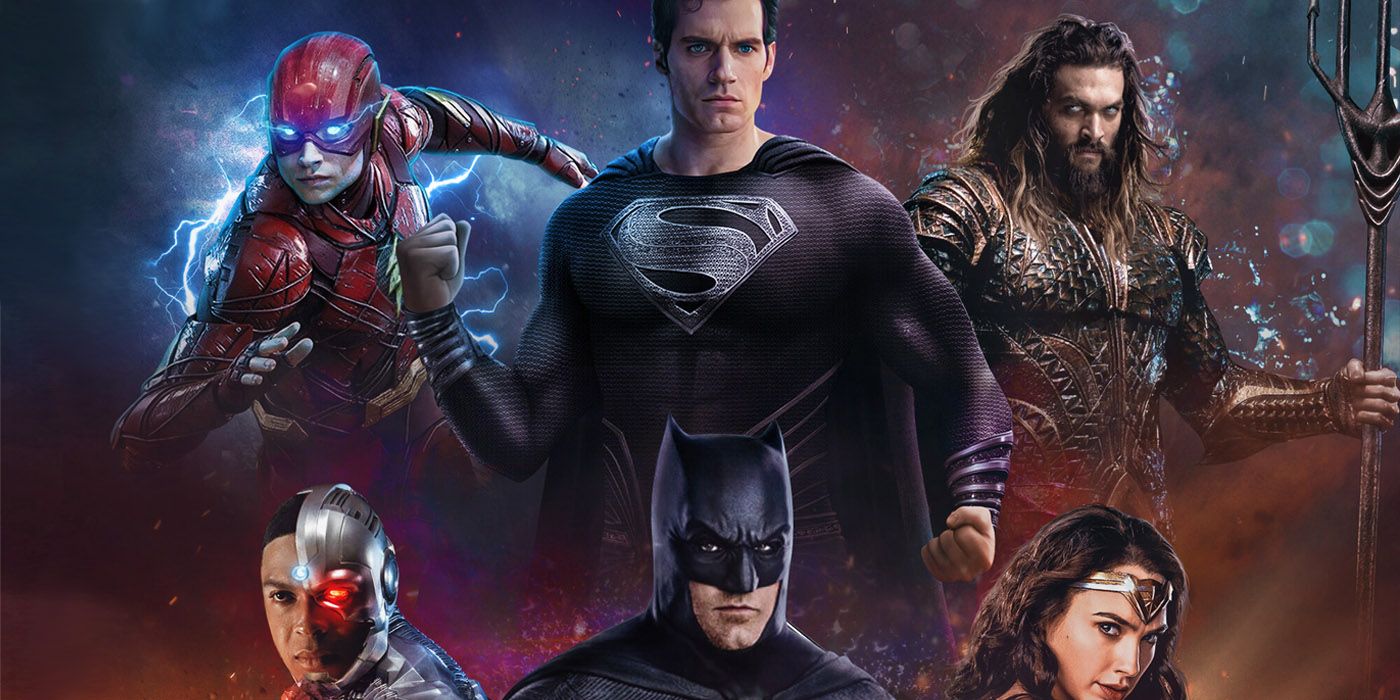
Look, let’s be real. If you told anyone in 2017 that a four-hour, R-rated, black-and-gray superhero epic would eventually stream on a major platform because of a bunch of hashtags, they’d have laughed you out of the room. It sounded like a fever dream. Honestly, it was a fever dream. But Zack Snyder’s Justice League exists. It’s real. And even years later, in 2026, it stands as this weird, towering monument to what happens when a director’s vision gets absolutely steamrolled by a studio and then resurrected by a digital uprising.
Most people think they know the story. Director leaves, replacement director comes in, movie flops, fans get mad. That’s the surface level. But the actual history of the "Snyder Cut" is way messier and, frankly, more interesting than the movie itself.
What Really Happened With Zack Snyder’s Justice League
To understand why this thing is a 242-minute beast, you have to look at the wreckage of 2017. Zack Snyder had finished principal photography. He was deep in post-production. Then, personal tragedy struck—the loss of his daughter, Autumn. He stepped away. Warner Bros. brought in Joss Whedon, the guy who made The Avengers, to "finish" it.
Except he didn't just finish it. He gutted it.
The studio wanted a two-hour runtime. They wanted jokes. They wanted "bright." Basically, they wanted Marvel. What they got was a Frankenstein’s monster that satisfied nobody. When the theatrical cut hit, it felt hollow. Fans noticed immediately. It wasn't just the weird CGI mustache removal on Henry Cavill—though that was a nightmare—it was the soul. Characters like Cyborg, who was supposed to be the "heart of the movie," were reduced to almost nothing.
Then the movement started. #ReleaseTheSnyderCut wasn't just a trend; it was a crusade. Fans bought billboards in Times Square. They flew planes over Comic-Con. They raised over $100,000 for the American Foundation for Suicide Prevention. That part matters. It gave the movement a purpose beyond just wanting to see a movie.
The Massive Differences You Might’ve Missed
If you’ve only seen the Joss Whedon version, you haven't actually seen the movie. The 2021 release, Zack Snyder’s Justice League, is a different species. It’s shot in a 4:3 aspect ratio. Why? Because Snyder wanted it to feel like an IMAX experience, tall and looming. It’s weird at first, but you get used to it.
The biggest shift is Steppenwolf. In the theatrical cut, he’s a generic CGI guy in a skirt who likes "Mother." In the Snyder Cut, he’s a desperate exile covered in reactive, spiky armor. He’s trying to pay off a debt to Darkseid, the big bad who was completely erased from the 2017 version. Darkseid is the DC equivalent of Thanos, and seeing him "stride across their bones" actually gives the stakes some weight.
The Cyborg Factor
Ray Fisher’s Victor Stone is the biggest winner here. In the original, he’s just a grumpy robot. In the Snyder Cut, we see his entire life. The car accident. His mother. The scene where he uses his powers to help a struggling single mother by manipulating her bank account is one of the most human moments in any superhero film. It turns him from a sidekick into a god-tier protagonist.
The Speed Force Climax
Remember when The Flash just ran around saving a Russian family in 2017? That was Whedon. In Snyder’s version, the League actually loses. The Mother Boxes sync up. The world starts to disintegrate. Barry Allen has to push past the speed of light, entering the Speed Force to reverse time itself. "Make your own future. Make your own past. The time is now." It’s a massive, operatic sequence that was replaced by a joke about a truck in the first version.
Is It Too Long? Honestly, Maybe.
Let’s be intellectually honest. Four hours is a lot. It’s a commitment. There are slow-motion shots of people drinking tea that feel like they last three minutes. There’s an Icelandic folk song that goes on forever. Snyder didn't edit this for a theater; he edited it as a "thank you" to the people who fought for it.
It’s an indulgence. But for a movie that was once called a "piece of shit" by executives behind closed doors, that indulgence feels earned. It’s not a corporate product; it’s a director’s diary.
The Legacy in 2026
We’re living in a different world now. The "Snyderverse" is technically over. James Gunn has taken the reins of DC. But Zack Snyder’s Justice League changed how studios interact with fans. It proved that "the director's cut" isn't just a DVD extra anymore—it’s a powerful tool for streaming platforms. HBO Max (now Max) spent about $70 million just to finish the effects and score for this version. That’s more than the budget of some entire movies.
It also showed the dark side of fandom. The toxicity, the harassment of executives, the bot-driven campaigns—all of that is part of the story too. You can't talk about the triumph without talking about the mess.
How to Actually Approach This Movie
If you’re going to watch it, don’t try to do it in one sitting unless you’ve got a massive bowl of popcorn and a lot of caffeine. It’s actually divided into six chapters and an epilogue. Think of it as a miniseries.
- Chapter 1-2: The world in mourning and the recruitment.
- Chapter 3-4: The League forms and the resurrection of Superman.
- Chapter 5-6: The final battle and the time-travel payoff.
- The Epilogue: The "Knightmare" sequence with Jared Leto’s Joker (which was actually filmed during the 2020 reshoots).
If you want the best experience, watch it on the biggest screen possible. The 4:3 ratio is designed to fill your vertical field of vision. And pay attention to the score by Tom Holkenborg (Junkie XL). It’s aggressive, tribal, and a world away from the generic orchestral stuff in the theatrical version.
Actionable Insight: If you're a filmmaker or a creator, study the two versions side-by-side. It is the ultimate masterclass in how editing, color grading, and music can take the exact same raw footage and turn it into two completely different stories. One is a forgettable Saturday morning cartoon; the other is a modern myth. Whether you love Snyder’s style or hate it, you have to respect the sheer audacity of it.
The lesson here is simple. If you're going to make something, make it yours. Even if it takes four years and a million tweets to see the light of day.



