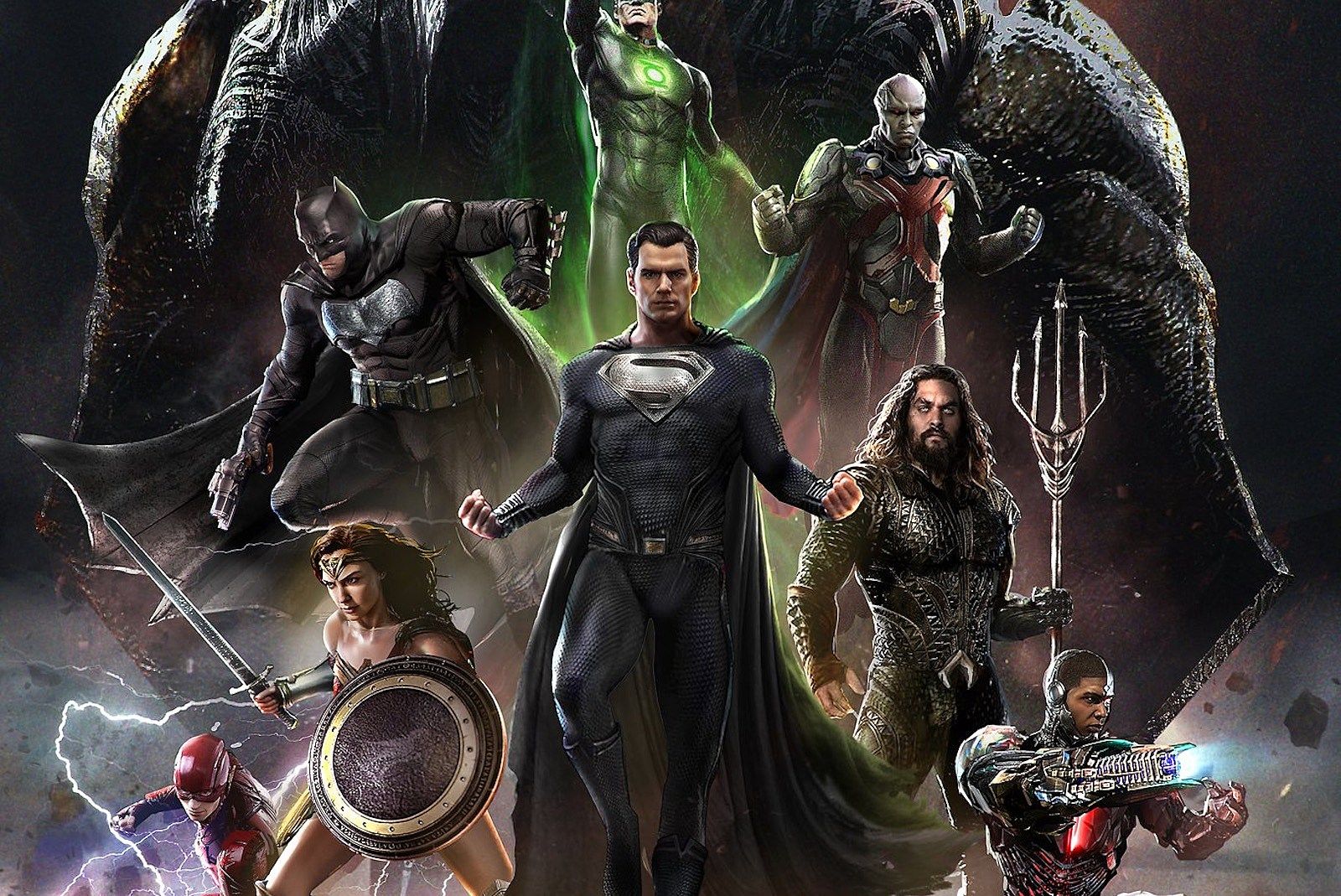
A few years ago, the idea of a four-hour R-rated superhero movie with a square-ish aspect ratio felt like a fever dream or some weird internet hoax. Now, it's just a part of film history. Honestly, it’s hard to believe how much drama went into Zack Snyder's Justice League. If you weren’t glued to Twitter in 2020, you might have missed the chaos.
Basically, the 2017 theatrical version was a mess. Everyone knew it. Joss Whedon stepped in after Zack Snyder had to leave because of a family tragedy—the death of his daughter, Autumn. What followed was a Frankenstein’s monster of a film. It was bright, it was short, and it felt like it was trying way too hard to be Marvel.
Then the fans stepped in. They shouted. They bought billboards. They even flew planes over Comic-Con. It worked.
The "Snyder Cut" vs. Theatrical: It’s Not Just a Longer Movie
Most people think "Director’s Cut" and assume it’s the same film with ten minutes of deleted scenes. Not here. These are two different movies using the same title. Zack Snyder's version is four hours and two minutes long. Whedon’s was exactly two. You do the math.
Snyder didn't use a single frame of Whedon’s footage.
The tonal shift is massive. While the 2017 version had Flash falling on Wonder Woman for a cheap joke, the 2021 version (Zack Snyder’s Justice League) treats these characters like modern-day gods. It's operatic. It’s heavy.
Why the Square Box?
If you pull it up on your TV and see black bars on the sides, don't panic. Your TV isn't broken. Snyder shot it in a 4:3 aspect ratio (specifically 1.33:1). He wanted it to fill a giant IMAX screen vertically. Superheroes, as he puts it, are vertical figures. They stand tall. He didn't want to crop the top and bottom of the frame just to fit a wide-screen TV. You're actually seeing more of the picture this way, even if it feels "smaller" at first.
Cyborg: The Heart the Movie Forgot
Ray Fisher’s Victor Stone, aka Cyborg, was basically a background character in the theatrical cut. In Snyder’s version, he is the emotional core. We see his life as a star athlete. We see the horrific accident. We see the resentment he feels toward his father, Silas Stone, for "turning him into a monster."
There is a specific scene where Cyborg manipulates the global financial system to help a struggling mother. It’s quiet. It’s powerful. It shows that he’s not just a walking Swiss Army knife—he’s a person struggling with god-like power. Without this, the movie loses its soul.
The theatrical cut also removed Ryan Choi (who fans know as The Atom) and Iris West. Snyder put them back. He even gave Steppenwolf a makeover. The villain went from a guy in weird grey armor to a spiky, shimmering nightmare who actually has a motivation: he’s trying to get back into the good graces of Darkseid.
Darkseid and the Big Picture
We finally got to see Darkseid. For DC fans, this was the equivalent of seeing Thanos for the first time. He isn't just a name-drop; he appears in the "History Lesson" flashback, and we see him looming at the end of the film.
The stakes feel real because the movie explores the "Knightmare" future. This is a timeline where Darkseid wins, Superman turns evil, and Batman has to team up with the Joker (played by Jared Leto) to try and fix the world. It’s bleak as hell. But it’s what Snyder always intended for his five-film arc.
The $70 Million Gamble
Warner Bros. spent roughly $70 million just to finish this version. That wasn't for filming the whole thing—most of it was shot back in 2016. The money went to visual effects, a new score by Junkie XL (replacing Danny Elfman’s more traditional music), and about four or five minutes of new footage shot during the pandemic.
Was it a success? The numbers are tricky. HBO Max (now Max) never gave out "box office" style numbers, but third-party data from companies like Samba TV suggested it was a massive hit for the platform. However, only about 36% of viewers actually finished the four-hour marathon in the first week. It’s a lot to ask of someone on a Tuesday night.
What People Still Get Wrong
- It’s not a sequel. It’s a replacement.
- Snyder didn’t get paid. He famously waived his fee for the Snyder Cut to ensure he had total creative control.
- It was almost a miniseries. At one point, they thought about releasing it in four parts. Snyder fought for it to be a single movie experience.
The Legacy of the SnyderVerse in 2026
Now that James Gunn is running the show at DC with his new "Superman" and a fresh universe, the Snyder Cut exists in a weird bubble. It’s a "dead-end" masterpiece. It leads to sequels that will likely never happen.
But it proved something. It proved that fans have power. It proved that a director's vision, no matter how long or "niche," has a place in the streaming era.
If you're going to watch it, give yourself an afternoon. Turn off your phone. The movie is divided into chapters, so there are natural places to pause and grab a snack.
How to Experience it Properly
- Watch the "Justice is Gray" version if you want to see it in black and white. It highlights the textures of the suits and the heavy shadows Snyder loves.
- Check out the score separately. Junkie XL’s "The Crew at Warpower" is a high-energy track that defines the movie's vibe.
- Don't skip the Epilogue. It's about 20 minutes long and sets up a version of the DC Universe we may never see again, including a cameo by Martian Manhunter.
The movie isn't perfect. It's long. Some of the slow-motion scenes feel like they last forever. But it's authentic. In a world of "content" designed by committees, Zack Snyder's Justice League stands out because it's exactly what one person wanted to make. That's rare for a $300 million blockbuster.
To get the most out of it, watch Man of Steel and the Batman v Superman: Ultimate Edition first. It’s a trilogy. If you jump straight into the Snyder Cut, you’ll miss the character growth Bruce Wayne goes through—from a cynical killer to a guy who finally believes in heroes again.
Next Steps To fully understand the evolution of this story, you should track down the Batman v Superman: Dawn of Justice (Ultimate Edition). It restores 30 minutes of footage that makes the plot actually make sense and sets the stage for the darker tone of the Justice League. After that, look into the American Foundation for Suicide Prevention, an organization the Snyder family and the fan movement have heavily supported, raising over $500,000 in honor of Autumn Snyder.



