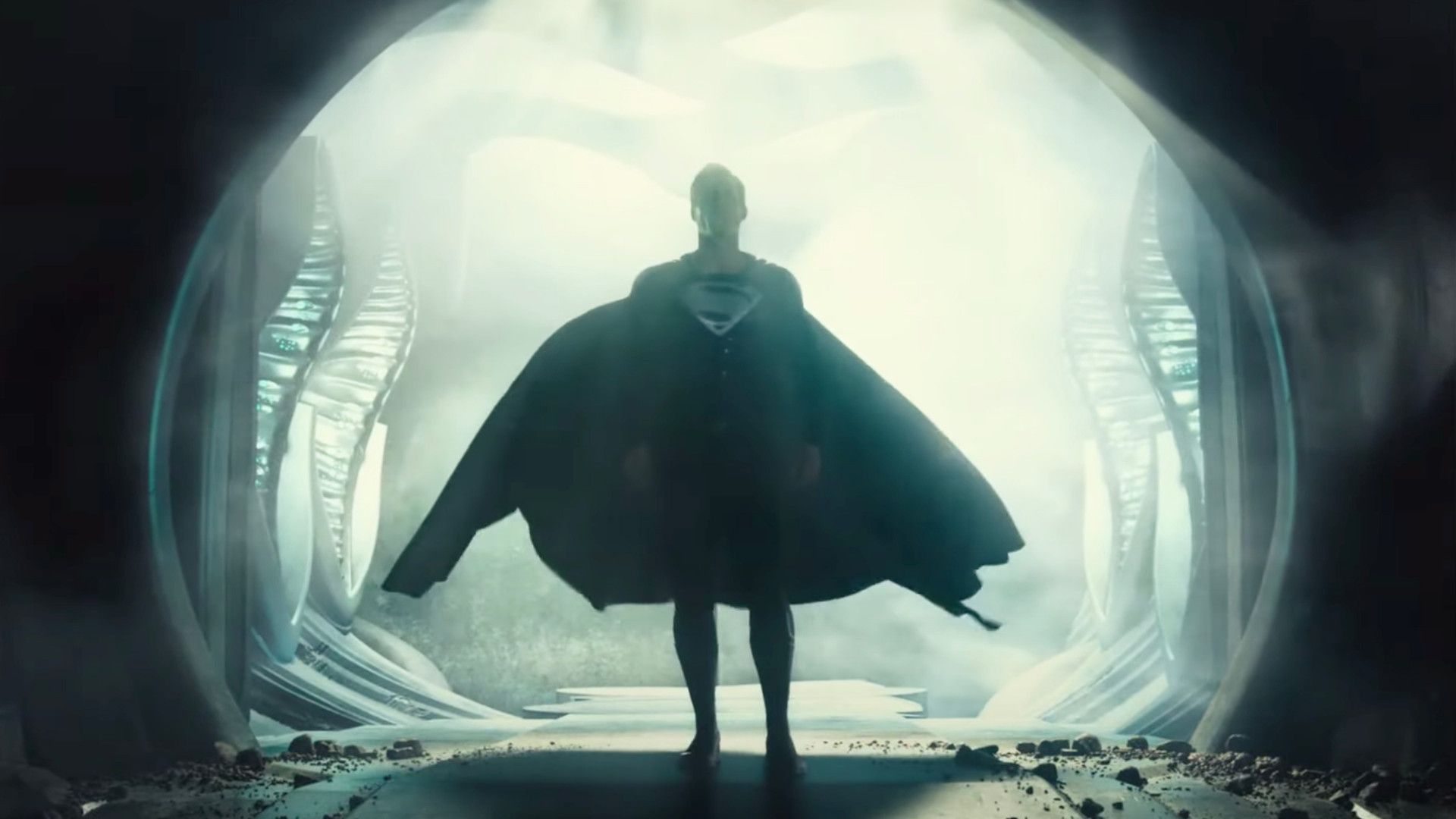
It was never supposed to happen. Honestly, the existence of Zack Snyder’s Justice League is a fluke of history, a weird collision of toxic fan culture, genuine tragedy, and a brand-new streaming service that was desperate for "content" to lure in subscribers. Most people remember the mustache. You know the one. Henry Cavill had a contract for Mission: Impossible – Fallout that wouldn't let him shave, so Joss Whedon’s 2017 theatrical cut tried to digitally scrub his upper lip. It looked haunting. It looked like a fever dream.
But beyond the bad CGI, there was a broken story. Meanwhile, you can explore similar events here: The Brutal Truth Behind the Summer Box Office Mirage.
When Zack Snyder stepped away from the project in 2017 following the death of his daughter, Autumn, the studio didn't just finish his movie. They gutted it. They brought in Whedon to lighten the tone, trim it to exactly two hours, and add jokes about brunch. It flopped. It felt like a Frankenstein’s monster of competing visions. Then came the hashtags. #ReleaseTheSnyderCut started as a fringe movement and turned into a global phenomenon that eventually forced Warner Bros. to hand over roughly $70 million to let Snyder finish his vision.
The result? A four-hour, R-rated, 4:3 aspect ratio behemoth that changed how we think about director's cuts forever. To understand the bigger picture, check out the detailed article by Entertainment Weekly.
The Massive Differences You Actually Noticed
If you sat through the 2017 version and then the 2021 Zack Snyder’s Justice League, the first thing that hits you is the color palette. The theatrical version was bright, almost neon in places, trying to mimic the "Marvel formula." Snyder’s version is de-saturated. It’s moody. It looks like a moving painting, which is kind of his whole thing.
Then there’s Cyborg.
Ray Fisher’s Victor Stone was basically an extra in the first version. In the Snyder Cut, he is the "heart of the movie." We see his life as a star athlete, the car accident that killed his mother, and the agonizing process of his father, Silas Stone, using an alien Mother Box to save him. It’s heavy stuff. Without that backstory, the ending of the movie makes zero sense. When Victor finally stands up to the machine and says, "I'm not broken, and I'm not alone," it actually lands because we’ve seen him grieving for three hours.
Steppenwolf got a makeover, too. In 2017, he looked like a guy in a rubber suit who really liked "Mother." In the 2021 cut, his armor is a reactive, spike-covered exoskeleton that pulses when he’s angry. He’s also a much more pathetic villain. He’s in exile. He’s trying to pay off a "blood debt" to Darkseid, the real big bad.
Darkseid is the Thanos of the DC universe, and he was completely absent from the first film. Seeing him stand on the surface of Apokolips, surrounded by DeSaad and Granny Goodness, gave the story the stakes it was missing. It wasn't just a fight for Earth; it was an opening salvo in a multiversal war.
Why the 4:3 Aspect Ratio Wasn't Just a Gimmick
People complained about the black bars on the sides of their TVs. It's understandable. We’ve been trained to think "epic" means "widescreen." But Snyder shot the film on IMAX film stock. He wanted a "square" image because superheroes are vertical figures. Think about it. Batman standing on a gargoyle. Superman flying. These are tall images.
By using the 1.33:1 aspect ratio, Snyder fills the frame with the height of the characters. When you see the League standing together at the end, they look like gods on a pedestal. It’s a choice that feels pretentious to some, but it's purely about the composition of the frame. It makes the heroes feel larger than life, literally outgrowing the standard cinematic box.
The Flash and the "At the Speed of Force" Sequence
The climax of Zack Snyder’s Justice League is fundamentally different from the 2017 version. In Whedon’s cut, the Flash is mostly comic relief. He saves a family in a truck. It’s fine. It’s small.
In the Snyder Cut, the heroes lose.
The Mother Boxes synchronize. The Unity happens. A shockwave of anti-matter begins to disintegrate the planet. Cyborg, Superman, and Wonder Woman are incinerated in a split second. It’s a genuine "holy crap" moment. Barry Allen has to push himself beyond the speed of light to reverse time.
The music here—Tom Holkenborg’s (Junkie XL) score—is incredible. Barry is talking to his father in his head, telling him he has to make his own future. He runs so fast he enters the Speed Force, and we see the world literally un-exploding around him. It’s one of the best-looking sequences in modern superhero cinema. It also sets up his solo movie far better than a joke about being afraid of bugs ever could.
The Elephant in the Room: The "Snyder Cut" Movement
We have to talk about the fans. You can’t discuss this movie without acknowledging the campaign that brought it to life. It was a double-edged sword. On one hand, the fans raised over half a million dollars for the American Foundation for Suicide Prevention (AFSP). That is an objective good. They used their passion to fund mental health awareness in honor of Autumn Snyder.
On the other hand, the movement was often aggressive. Critics who didn't like the film were swarmed on social media. Executives at Warner Bros. reported receiving threats. It created a weird precedent. Can fans just bully a studio into spending millions of dollars whenever they don't like a movie?
The industry is still grappling with this. We saw similar energy with the Sonic the Hedgehog redesign, but nothing on this scale. The "Snyder Cut" proved that a dedicated fanbase can actually move the needle, for better or worse. It’s a case study in digital age consumer power.
Is It Actually a Good Movie?
Four hours is a lot. It’s a commitment. There are slow-motion shots of people throwing spears or even just walking across a room that linger for way too long. Snyder loves his "God-pose" shots.
However, as a piece of myth-making, it works.
It treats these characters with a reverence that most modern blockbusters are afraid of. It’s not "grounded." It’s a space opera. It’s Lord of the Rings with capes. If you like your superheroes to be flawed, mourning, and slightly terrifying, this is the definitive version. If you prefer the quippy, lighthearted vibe of the early MCU, you’ll probably find this exhausting.
The "Knightmare" sequence at the end, featuring Jared Leto’s Joker and a post-apocalyptic Batman, feels like a teaser for a movie we’ll never see. It’s a cliffhanger that leads nowhere. That’s the tragedy of the whole thing. It’s a complete vision of a dead universe. James Gunn has since taken over the DCU, and he’s rebooting everything with Superman in 2025. This movie is a monument to what could have been.
Practical Steps for the Ultimate Viewing Experience
If you're planning to dive into Zack Snyder’s Justice League for the first time or even a rewatch, don't try to power through it in one go unless you have a high caffeine tolerance.
- Watch it in chapters. The movie is literally broken into six parts plus an epilogue. Use them. Treat it like a limited series.
- Check your settings. Ensure your TV isn't trying to "stretch" the image to fit the screen. Those black bars on the side are supposed to be there.
- Listen for the motifs. Junkie XL’s score uses specific themes for each hero. Wonder Woman’s "Ancient Lamentation" theme is a bit overused, but the Flash’s theme is a standout.
- Skip the 2017 version. Honestly, there is no reason to watch the theatrical cut anymore unless you're a film student studying how to ruin a project in post-production.
The legacy of this film isn't just about the plot. It's about artist intent. Whether you love Snyder’s style or hate it, there is something respectable about a creator getting to finish what they started. It’s a messy, bloated, beautiful, and deeply personal film that shouldn't exist, but it does. And the world of cinema is a little more interesting because of it.



