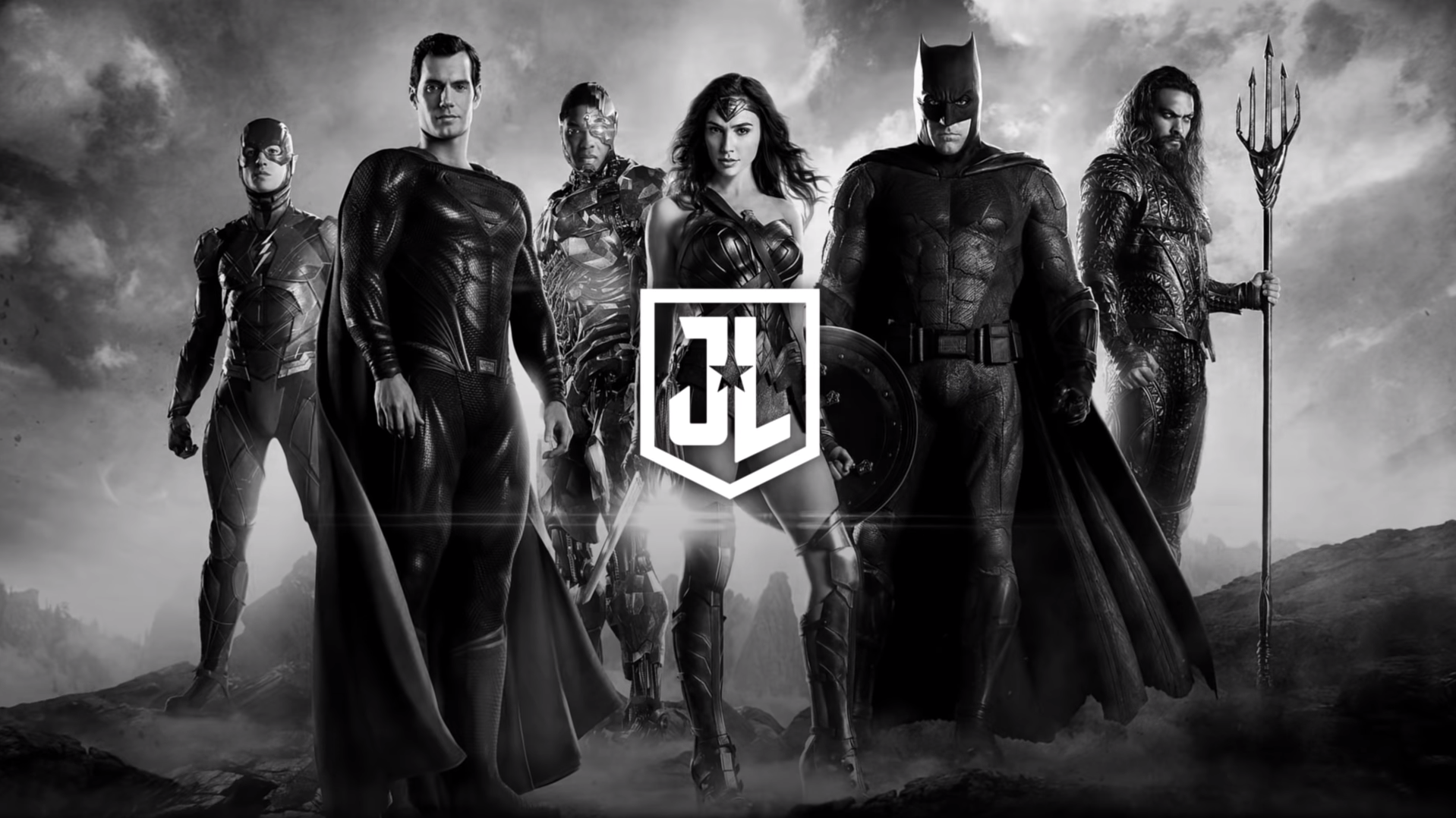
Honestly, it’s hard to remember a time when a movie was as much of a lightning rod as Zack Snyder’s Justice League. You’ve got the 2017 theatrical version—often nicknamed "Josstice League" by the fans—and then you have this four-hour behemoth that basically broke the internet back in 2021. Even now, years later, people are still arguing about whether it’s a masterpiece or just an overblown director's cut. But if you actually sit down and look at the facts of how this thing came to be, it’s a miracle it exists at all.
Most of us know the basic tragedy. Zack Snyder had to step away from the original production in May 2017 after the heartbreaking loss of his daughter, Autumn. Warner Bros. brought in Joss Whedon to "finish" the job, but they didn’t just finish it. They gutted it. They wanted a two-hour movie that felt like a Marvel flick, so they reshot about 80 pages of script. The result was a weird, Frankenstein-style mess with a CGI-erased mustache and a tone that felt like it was having an identity crisis.
Zack Snyder’s Justice League: The Movie That Wasn't Supposed to Exist
For years, the "Snyder Cut" was treated like a myth. A Bigfoot sighting for film nerds. Executives at Warner Bros. reportedly told people the cut didn't exist, or that it was just a pile of unfinished storyboards. They were wrong. Sorta. Snyder actually had a nearly four-hour assembly cut that he’d taken home on a laptop. It wasn't finished—the VFX were raw, the music wasn't mixed—but the bones were there.
The movement to get it released, #ReleaseTheSnyderCut, was something else. It wasn't just people tweeting. Fans bought billboards in Times Square and flew planes over the Warner Bros. lot. It was intense. Some of it got pretty toxic, but a huge portion of the fanbase also raised over $500,000 for the American Foundation for Suicide Prevention. That’s the part that usually gets left out of the "crazy fan" narrative.
When HBO Max finally greenlit the project in 2020, they didn't just dump the old footage. They gave Snyder around $70 million to finish it properly. He didn't even take a salary for it; he wanted total creative control instead. He brought back Junkie XL for a massive, pounding score and even shot a brand-new "Knightmare" scene with Jared Leto’s Joker just to give the fans one last surprise.
What Actually Changed in the Four-Hour Cut?
If you haven’t seen it, the runtime is intimidating. 242 minutes. That’s basically two movies back-to-back. But it’s not just "more" of the same movie; it’s a completely different experience. Basically, Snyder replaced almost everything Whedon did.
- Cyborg is the Heart: In the 2017 version, Ray Fisher’s Cyborg felt like an afterthought. In the Snyder Cut, he’s the main character. You see his mother, his accident, and his struggle with his new body. It makes the ending actually mean something.
- The Villain Redesign: Steppenwolf went from looking like a generic CGI guy in a hat to a spiky, shimmering nightmare. He also has a real motivation now: he’s an exile trying to get back into the good graces of Darkseid.
- Darkseid is Actually There: Speaking of Darkseid, the big bad of the DC universe was totally cut from the theatrical version. Here, he’s the looming threat behind the scenes, and you see him in a massive flashback battle fighting the Old Gods and Green Lanterns.
- The Flash’s Speed Force: Instead of just moving a Russian family in a truck, Ezra Miller’s Flash has a sequence where he literally enters the Speed Force to reverse time and save the world from exploding. It’s arguably the best scene in the movie.
The aspect ratio is another thing that throws people off. It’s in a boxy 1.33:1 format. Snyder shot it that way because he wanted it to be shown on IMAX screens eventually. On your TV, it means black bars on the sides rather than the top and bottom. It feels more vertical, making the heroes look like towering monuments.
Why the Numbers Still Cause Fights
There’s this weird gap between how fans talk about the movie and how the industry viewed its success. WarnerMedia (before the Discovery merger) was always a bit cagey with the data. According to Samba TV, about 1.8 million households tuned in during the first four days. By comparison, Godzilla vs. Kong did 3.6 million in its first five days.
Does that mean it failed? Not really. You have to consider that Zack Snyder’s Justice League was a four-hour R-rated director's cut of a movie that had already been out for years. It wasn't a "new" theatrical release. Despite that, it was the fourth-most-streamed movie on the platform in 2021. It also drove a massive spike in HBO Max subscriptions during that first quarter. Internationally, it crushed records on platforms like Binge in Australia and Crave in Canada.
The critics were also way kinder this time. The theatrical version sits at a miserable 39% on Rotten Tomatoes. The Snyder Cut? A solid 71%. Most critics agreed that while it was way too long, it actually had a soul and a coherent vision.
The "Knightmare" and the Sequel We Never Got
The ending is what keeps the "Restore the Snyderverse" crowd going. Snyder added a 15-minute epilogue set in a post-apocalyptic future where Darkseid has won, Superman has gone evil (thanks to the Anti-Life Equation), and Batman is leading a ragtag resistance.
This was supposed to lead into Justice League 2 and 3. In Snyder’s original plan, Darkseid would kill Lois Lane, causing Superman to lose his mind. Batman would eventually have to sacrifice himself to reset the timeline. It sounds crazy, but the storyboards—which were actually displayed at an exhibit in Dallas—show a massive, Lord of the Rings-style war where all the nations of Earth team up with the Green Lantern Corps for a final stand.
But with James Gunn now leading DC Studios and a total reboot underway with Superman (2025), that vision is officially dead in the water. Zack Snyder has moved on to Rebel Moon at Netflix, and the "Snyderverse" is, for all intents and purposes, a closed chapter.
If you’re planning on watching it for the first time or doing a rewatch, don’t try to power through it in one go unless you’ve got a lot of snacks and a very comfortable chair. The movie is conveniently broken into six chapters and an epilogue. Think of it like a high-budget miniseries.
The best way to experience it is to focus on the character arcs—specifically Cyborg and Flash—rather than just the action. It's a deeply earnest, almost operatic film that cares more about its mythos than it does about being "fun" or "quippy." Whether you love it or hate it, there will probably never be another production story quite like this one in Hollywood history.
Actionable Next Steps:
- Check the Chapters: If you’re short on time, watch Chapters 1-4 one night and 5-Epilogue the next. The natural break happens after the "Change Machine" sequence.
- Compare the Scores: Listen to Danny Elfman’s 2017 score versus Junkie XL’s 2021 score on Spotify. It’s a masterclass in how music completely changes the "vibe" of the same characters.
- Watch the Black & White Version: If you want a more "artistic" feel, look for the "Justice is Gray" edition on Max. It highlights the cinematography in a way the color version sometimes hides.



