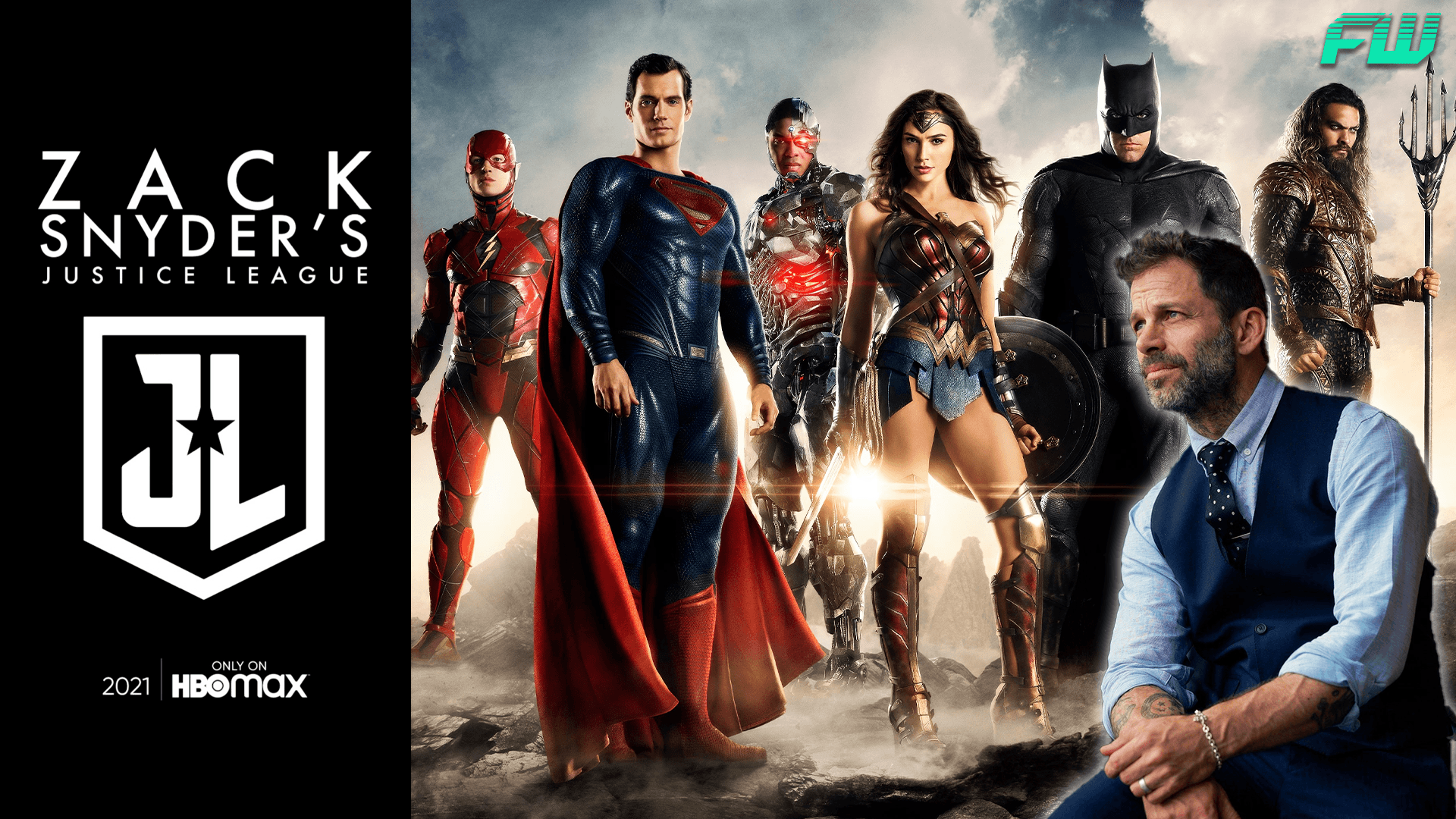
Look, let’s be honest. Most people think Zack Snyder’s Justice League is just a "longer version" of that movie that flopped in 2017. You know, the one with the weird CGI upper lip on Henry Cavill. But calling the 2021 Snyder Cut an "extended version" is like calling a skyscraper an "extended bungalow." It’s fundamentally a different beast.
The story of how this thing even got made is basically a Hollywood myth at this point.
Zack Snyder had to walk away from the original production in 2017 after the tragic death of his daughter, Autumn. The studio, Warner Bros., brought in Joss Whedon to "finish" it. They wanted jokes. They wanted it under two hours. They wanted it to be Marvel. What they got was a Frankenstein’s monster that satisfied absolutely nobody.
Then something weird happened. A hashtag, #ReleaseTheSnyderCut, started trending. For years. It wasn't just bots; it was a massive, loud, and sometimes controversial fan movement that eventually forced a billion-dollar corporation to cave.
The $70 Million "Director's Cut"
Most director's cuts are just the same movie with ten minutes of deleted scenes featuring characters talking in hallways. Not this one. Warner Bros. (now under the Netflix-Warner merger shadow of 2026) eventually handed Snyder around $70 million to finish his vision.
That wasn't for "new" filming, mostly.
Snyder used that cash to finish thousands of visual effects shots that were sitting on hard drives in a half-rendered state. He brought back Junkie XL to write a completely new, thunderous four-hour score, replacing the more traditional Danny Elfman music from the theatrical version. He even shot a brand-new "Knightmare" epilogue featuring Jared Leto’s Joker, just to give fans a glimpse of where the sequels were headed.
Why the 4:3 Aspect Ratio Actually Matters
If you turned on the movie in 2021 and wondered why there were black bars on the sides of your TV, you weren't alone. Snyder chose a 1.33:1 aspect ratio. Basically a square.
Why? Because he shot it for IMAX.
In a world where every superhero movie tries to feel "wide" and cinematic, Snyder wanted it to feel "tall." He wanted the heroes to look like giants. It’s a polarizing choice, sure. But in the context of the film’s operatic tone, it actually works. It makes the frames feel crowded and urgent.
The Cyborg Factor
If you saw the 2017 version, you probably thought Cyborg was just "the tech guy."
In Zack Snyder’s Justice League, Ray Fisher’s Victor Stone is the literal heart of the story. His entire origin—the car accident, his mother’s death, the resentment toward his father—was gutted in the theatrical cut. In the Snyder Cut, we see him as a tragic, Frankenstein-like figure who has to learn to love himself before he can save the world.
Honestly, the fact that his "Father, twice over" scene was ever cut is a crime against storytelling.
Steppenwolf vs. Darkseid: A Villain Upgrade
Let’s talk about the big bad. In 2017, Steppenwolf looked like a generic video game boss from 2005. He had no motivation other than "destroying the world."
Snyder’s version gives him armor made of shifting silver spikes and a desperate, pathetic need to please his boss. That boss is Darkseid. Finally seeing Darkseid on screen—the DC equivalent of Thanos—changed the stakes completely.
The "History Lesson" sequence where we see Darkseid (as Uxas) being defeated by the Old Gods, Green Lanterns, and humans is arguably one of the best action beats in modern comic book movies. It feels like a myth.
The Flash and the "One Rule"
In the theatrical cut, Barry Allen’s big contribution to the finale was... moving a truck full of Russian civilians. It was a joke.
In the 2021 version, the League actually loses. The Mother Boxes unite. The world literally begins to disintegrate.
The only reason anything survives is because Barry pushes himself past the speed of light, reversing time through sheer force of will. It’s a stunning sequence, both visually and emotionally. It’s the moment the character finally stops being the "comic relief" and becomes a god.
What Really Happened with the SnyderVerse?
By 2026, the landscape has shifted. With the recent reports of Netflix’s massive acquisition deal for Warner Bros. Discovery assets, the "Restore the SnyderVerse" crowd has found a second wind.
Gal Gadot has been posting throwback 2016 images, and Snyder himself has been sharing Leica-shot photos of his Wonder Woman concepts. It feels like 2016 all over again. But here’s the reality: James Gunn is deep into his own DCU "Gods and Monsters" slate.
The Snyder Cut exists as a beautiful, four-hour anomaly. It’s a closed loop, even if the ending teases a "Justice League 2" we might never see. It’s a reminder that sometimes, the creator’s vision—no matter how long or self-indulgent—is better than a movie designed by a corporate committee.
Actionable Insights for Fans and Filmmakers
If you’re looking to dive back into this world or understand why it still dominates the conversation in 2026, keep these things in mind:
- Watch it in chapters. It’s divided into six parts for a reason. Don't try to power through four hours in one sitting unless you’ve got a very comfortable couch.
- Focus on the background. The "Snyder Cut" is packed with "Easter Eggs" that actually mean something, like the Ryan Choi (The Atom) cameo or the Martian Manhunter reveal.
- Appreciate the stakes. This wasn't just about a movie; it changed how fans interact with studios. For better or worse, the "fan-led campaign" is now a legitimate power move in Hollywood.
- Compare the climax. If you have the stomach for it, watch the final 20 minutes of both versions back-to-back. The difference in choreography and emotional payoff is a masterclass in how editing can save or ruin a film.
The Snyder Cut isn't perfect. It’s long. It’s loud. It’s very, very gray. But it’s authentic. In an era of "content" that feels like it was generated by an algorithm, having a massive, flawed, singular vision like this is something worth holding onto.
Whether or not Netflix actually "restores" anything, Zack Snyder’s Justice League stands as a rare win for the artists over the suits. That alone makes it matter.



