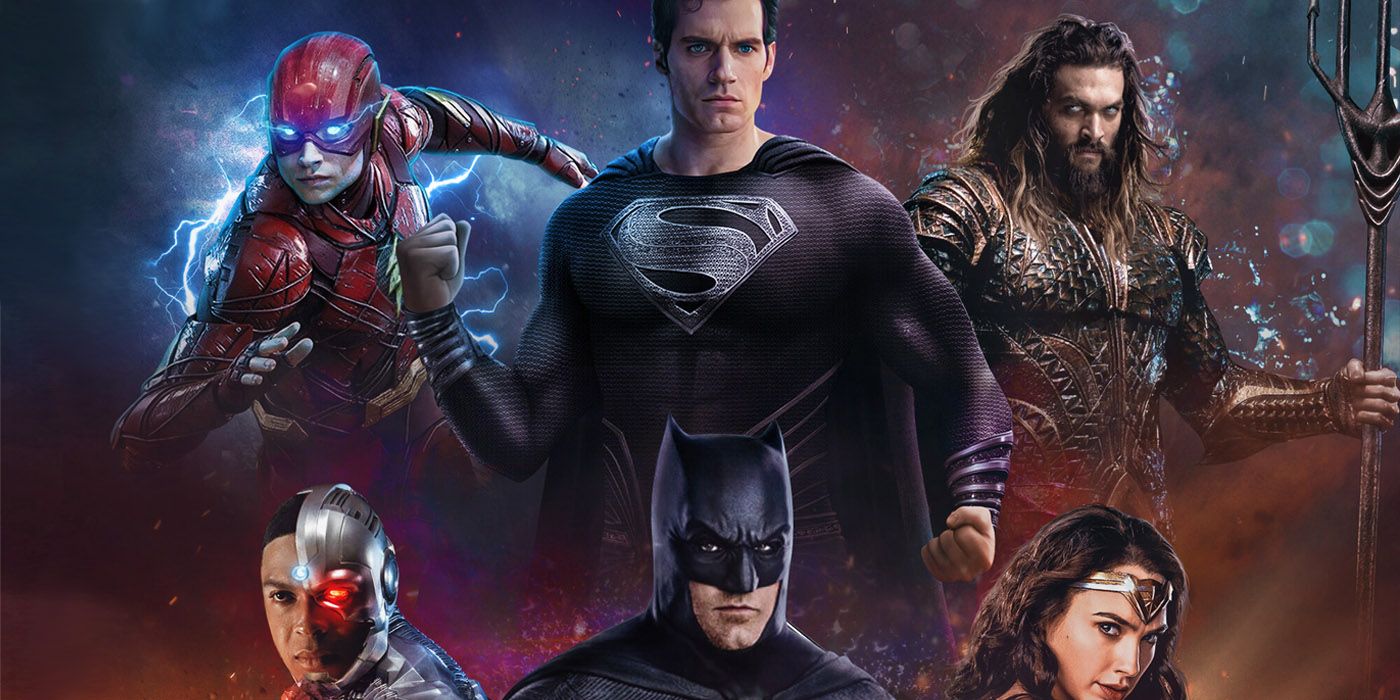
Let's be real for a second. The story of Zack Snyder's Justice League is actually more of a miracle than a movie. If you told anyone in 2017 that a four-hour, R-rated, black-and-white-friendly director's cut of a failed blockbuster would eventually drop on a major streaming service, they’d have laughed you out of the room. It just doesn't happen. Hollywood is built on "moving on." Studios bury their mistakes under tax write-offs and PR spin.
Yet, here we are.
It’s been years since the "Snyder Cut" finally saw the light of day in 2021, and honestly, the conversation hasn't really stopped. Even now, in 2026, as the DC Universe undergoes yet another massive reboot under James Gunn, the shadow of Snyder's 242-minute epic still looms large. People still argue about it. They still meme it. They still use it as a case study for "toxic" fandom versus "dedicated" fandom.
But behind the hashtags and the internet wars, what actually happened? Why does this specific version of a movie about gods and monsters still feel so heavy?
The 2017 "Frankenstein" Disaster
To understand why the 2021 version matters, you have to remember the absolute train wreck that was the 2017 theatrical release. It was a mess. A total tonal disaster.
Zack Snyder had to step away from the project during post-production after the tragic death of his daughter, Autumn. This is the part that often gets lost in the "studio vs. director" drama. It was a human tragedy first. Warner Bros. then hired Joss Whedon—the guy who made The Avengers for Marvel—to "finish" it. But "finishing" it meant something very different to the executives. They wanted a light, two-hour, Marvel-flavored popcorn flick.
They got a Frankenstein’s monster.
Remember Henry Cavill’s upper lip? It’s legendary for all the wrong reasons. Because Cavill was filming Mission: Impossible – Fallout and had a contractually obligated mustache, Whedon’s team had to digitally "shave" him for the reshoots. The result was an uncanny valley nightmare that basically signaled to the audience: "This movie is broken."
The 2017 cut stripped out almost everything that made the story feel grounded. It cut Cyborg’s entire origin. It turned Steppenwolf into a generic, horned punching bag with zero motivation. It added weird jokes about "brunch" and a random Russian family that took up way too much screen time.
It flopped. Hard.
Why Zack Snyder's Justice League Is a Different Beast
When Zack Snyder's Justice League finally arrived on HBO Max, it wasn't just a "longer version." It was a reconstruction.
Basically, Snyder didn't use a single frame of Whedon’s footage. Not one. He went back to the original assembly, finished the VFX for characters like Darkseid, and even brought back Jared Leto for a brand-new "Knightmare" sequence that wasn't in the original plan.
The most striking difference? The aspect ratio.
Snyder chose a boxy 1.33:1 format. It looks "square" on your modern TV, which annoyed a lot of casual viewers. But there was a reason for it. He shot it for IMAX. He wanted the heroes to look like towering statues—verticality over horizontality. It’s an artistic choice that screams, "I am not making a TV movie."
The Heart of the Machine
In the 2017 version, Ray Fisher’s Cyborg was a sidekick. In the Snyder Cut, he is the protagonist.
This is the "beating heart" Snyder always talked about. We see Victor Stone’s life before the accident. We see his mother. We see the pain of a son who thinks his father only sees him as a science project. When Victor finally realizes he is "not alone" and manages to stop the Mother Boxes from syncing (the "Unity"), it actually feels earned.
It's not just a guy in a silver suit. It’s a tragic figure finding a reason to live.
The Villain Upgrade
Steppenwolf in 2017 looked like a PlayStation 2 boss. In 2021, he’s a desperate exile covered in reactive, spiky armor that looks like it’s breathing.
He’s also not the "big bad" anymore. He’s a middle manager trying to get back into the good graces of Darkseid. Seeing Darkseid standing on the other side of a boom tube, staring down the Justice League, changed the stakes completely. It turned a contained story into a cosmic epic.
The Data: Did People Actually Watch It?
This is where things get controversial. Fans claim it was a massive, record-breaking hit. Critics of the movement point to data suggesting many people didn't finish it.
The truth is somewhere in the middle.
Samba TV reported that while millions of households started the movie, only about 36% of U.S. viewers finished all four hours in the first week. Is that a failure? Not necessarily. It’s four hours long! Most people treat a four-hour movie like a miniseries. Snyder even broke it into chapters—like "Part 4: Change Machine"—to encourage people to take breaks.
Financially, it was a subscriber magnet for HBO Max. It drove 3 million new sign-ups in early 2021. For a movie that cost about $70 million to "finish" (on top of the original $300 million budget), that’s a win for a streaming service looking for "sticky" content.
What Most People Get Wrong About the "Snyder Cut"
There’s a narrative that the movie only exists because of "toxic bots."
While the online campaign was definitely intense—and sometimes crossed the line—the reality is more nuanced. The #ReleaseTheSnyderCut movement raised over half a million dollars for the American Foundation for Suicide Prevention. That’s a real-world impact that has nothing to do with movie trailers or Rotten Tomatoes scores.
Another misconception? That Snyder "hates" the characters or wants them to be "dark for the sake of being dark."
If you actually watch Zack Snyder's Justice League, it’s surprisingly hopeful. It’s about a group of loners coming together to form a family. It ends with a sunset and a sense of victory. Yes, it’s violent. Yes, Superman wears a black suit (to absorb more solar radiation, which is a comic book deep cut). But the "dour" label often feels like it's applied by people who only watched the trailers.
The Actionable Legacy: What Now?
So, why should you care about this in 2026?
The release of this movie changed how we think about "the theatrical version." It proved that there is a market for uncompromising, director-led visions, even in the "assembly line" world of superheroes.
If you haven't seen it yet, or if you're planning a rewatch, here is how to actually enjoy it without feeling like you're doing homework:
- Treat it like a miniseries. The chapter breaks are there for a reason. Watch two chapters a night.
- Watch it on the biggest screen possible. The 1.33:1 ratio is weird at first, but it rewards scale.
- Pay attention to the score. Junkie XL’s music is night and day compared to Danny Elfman’s 2017 work. It’s heavy, operatic, and weirdly beautiful.
- Look for the "Knightmare" hints. The movie sets up a sequel that will probably never happen (involving a corrupted Superman and a dead Batman), but the clues are scattered throughout the film like a dark puzzle.
The "SnyderVerse" might be over in terms of new movies, but Zack Snyder's Justice League stands as a unique monument in film history. It's the only time a massive corporation blinked and let a creator have the final word.
Whether you love the "slow-mo" or hate the runtime, you have to respect the sheer audacity of it. It’s a four-hour apology for a movie that shouldn't have existed in the first place, and somehow, it’s one of the best things DC ever put on a screen.



