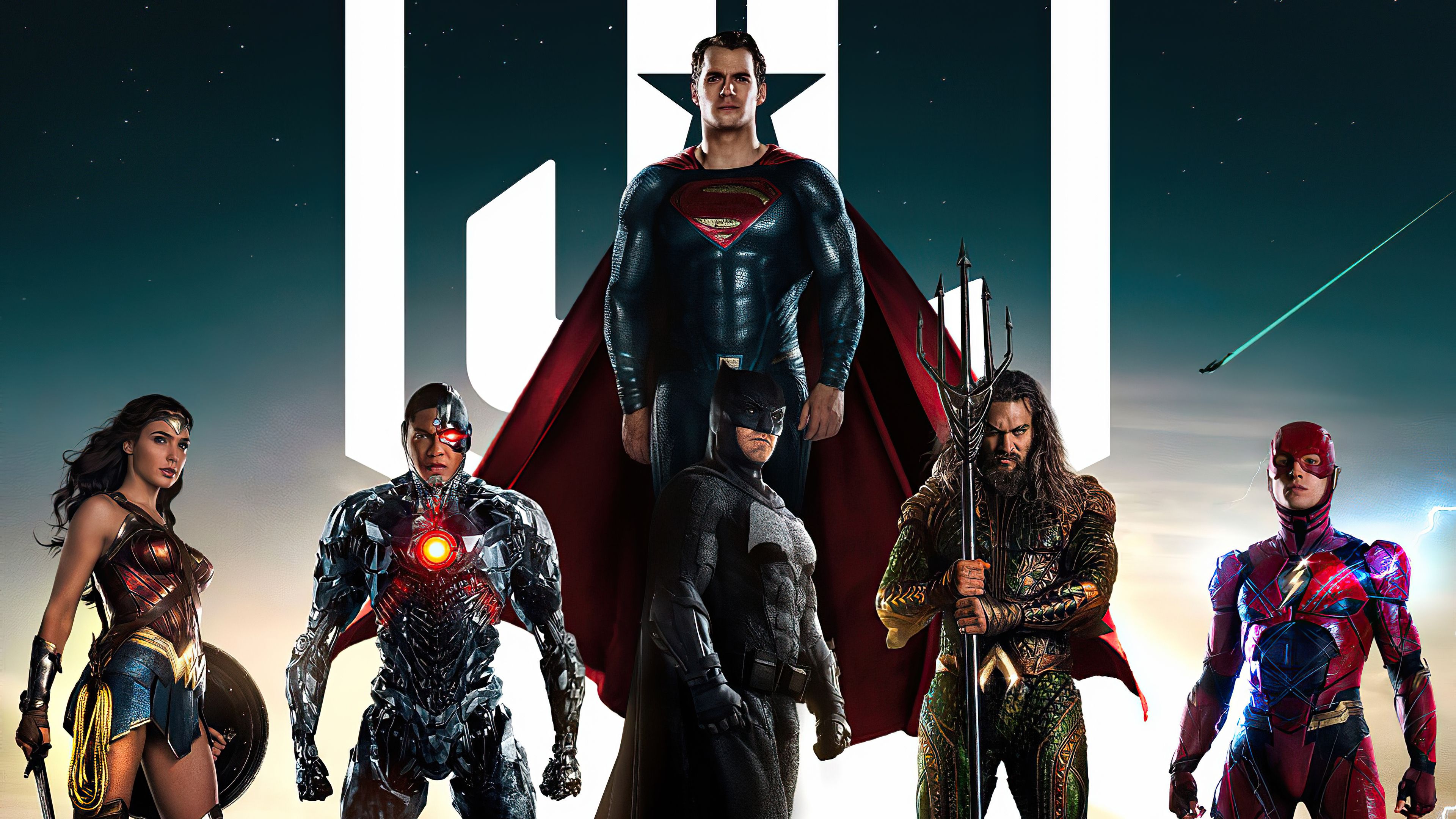
It was a total mess. Honestly, back in 2017, when the original theatrical version of the Justice League hit theaters, fans were mostly just confused. We saw a movie that felt like two different people were fighting for the steering wheel, and that’s because they were. Zack Snyder left the project following a family tragedy, and Joss Whedon stepped in to "fix" it. The result? A weird, neon-colored, joke-heavy Frankenstein’s monster that satisfied almost nobody. For years, people argued about whether a "Snyder Cut" even existed. Then 2021 happened.
The Justice League movie 2021—officially titled Zack Snyder's Justice League—is a rare beast in Hollywood history. It represents one of the only times a major studio has handed over tens of millions of dollars to a director to go back and finish a movie they were essentially fired from years prior. It’s four hours long. It’s in a 4:3 aspect ratio, which looks like an old square TV screen but was actually a choice to maximize the height of the IMAX frame. It’s dark, it’s violent, and it’s deeply strange. But for a specific subset of the internet, it was the ultimate vindication.
The Long Road to the Justice League movie 2021
You have to understand the context of the #ReleaseTheSnyderCut movement to get why this movie matters. It wasn't just a hashtag. It was a massive, multi-year campaign involving billboards in Times Square and planes flying over Comic-Con. Warner Bros. initially stayed quiet. They figured the 2017 version was a sunk cost.
Everything changed with the launch of HBO Max. The streaming service needed "prestige" content that would force people to subscribe. Suddenly, finishing Snyder's vision wasn't just a fan request; it was a business strategy. The studio reportedly spent around $70 million to finish the visual effects, record a new score with Junkie XL, and even bring back Jared Leto for a brand-new "Knightmare" scene.
What we got wasn't just an "extended edition." It was a fundamentally different film. While the 2017 version felt like a shallow Saturday morning cartoon, the 2021 version is a sprawling epic that treats its characters like modern mythological gods. It takes its time. Sometimes, maybe too much time. You could probably trim thirty minutes of slow-motion Icelandic singing and still have a cohesive story, but that’s the Snyder experience. It’s maximalist.
How the Story Actually Changed
The plot beats are technically the same: Superman is dead, Batman (Ben Affleck) is grumpy, and an alien named Steppenwolf is trying to find three Mother Boxes to destroy the Earth. However, the Justice League movie 2021 adds layers that make these motivations actually make sense.
In the theatrical cut, Steppenwolf was a generic CGI villain with no clear goal. In the 2021 version, he’s a disgraced general trying to win back the favor of his master, Darkseid. This adds a layer of desperation to his character. He’s not just evil; he’s a guy trying to get back home. Speaking of Darkseid, his inclusion is the biggest change. He is the "Thanos" of the DC Universe, and seeing him on screen gave the movie the stakes it was missing.
Then there is Cyborg. Ray Fisher’s Victor Stone was basically a background character in 2017. Snyder has called Cyborg the "heart" of his movie, and the 2021 cut proves it. We see his life before the accident, his complicated relationship with his father, Silas Stone, and his struggle to accept his new body. Without this footage, the movie is just a series of fight scenes. With it, it becomes a story about trauma and healing.
The Technical Shift: 4:3 and the R-Rating
People were really annoyed by those black bars on the sides of their TVs. I get it. We’ve spent twenty years buying wider and wider televisions, only for Zack Snyder to put the Justice League movie 2021 in a square box.
Snyder’s logic was that superheroes are vertical figures. When you crop a movie to widescreen (16:9 or 2.39:1), you lose the tops of their heads or their feet when they are flying or standing heroically. By using the 1.33:1 ratio, he captured the scale of the characters in a way that feels more like a comic book page. It’s a polarizing choice. If you’re watching on a massive iPad, it looks incredible. If you’re on a 70-inch OLED, it feels like a waste of screen real estate.
The rating change was also significant. The 2017 movie was a safe PG-13. The 2021 version is a hard R. Is it "edgy"? Yeah, kinda. There’s significantly more blood, particularly when Steppenwolf is swinging his axe, and Batman drops an F-bomb during the post-apocalyptic epilogue. It feels more in line with 300 or Watchmen than a standard Marvel flick. Whether that’s a good thing depends entirely on your tolerance for Snyder’s specific brand of "grimdark" aesthetic.
Why It Still Matters Today
The legacy of the Justice League movie 2021 is complicated. On one hand, it’s a triumph of fan power. It showed that if a community is loud enough (and spends enough money on charity, which the Snyder fans did), they can actually influence a multi-billion dollar corporation. On the other hand, it created a weird rift in the DC fandom that hasn't really healed.
Shortly after the movie came out, DC Studios underwent a massive overhaul. James Gunn and Peter Safran took over, effectively ending the "Snyderverse" to start a new DC Universe (DCU) beginning with Superman in 2025. This makes the 2021 film a dead end—a glorious, four-hour Cul-de-sac.
But even as a standalone piece of media, it’s a fascinating study in film editing. You can literally watch the 2017 version and the 2021 version side-by-side to see how the same raw footage can be manipulated to create entirely different tones. It’s like a masterclass in how much a director’s vision matters.
Actionable Insights for Fans and New Viewers
If you haven't sat down to watch the full four hours, or if you're planning a rewatch, keep these points in mind:
- Don't try to watch it in one sitting. The movie is conveniently broken into six chapters with titles. Treat it like a miniseries. Watch two chapters, grab a coffee, and come back. It’s much more digestible that way.
- Pay attention to the score. Tom Holkenborg (Junkie XL) replaced Danny Elfman’s 2017 score. The new music is aggressive, electronic, and uses specific motifs (like the Wonder Woman "ancient lamentation" theme) that define the characters much better.
- Watch the "Justice is Gray" version. If you want the ultimate "art house" superhero experience, HBO Max (Max) has a black-and-white version. It highlights the cinematography and makes the CGI blend better with the live-action elements.
- Look for the Flash sequence. The scene where Barry Allen (Ezra Miller) has to enter the Speed Force at the end of the film is widely considered one of the best sequences in modern superhero cinema. It was completely absent from the original theatrical cut.
The Justice League movie 2021 isn't a perfect film. It’s indulgent. It’s long. It has some questionable CGI in the final "Knightmare" scene that was shot in Snyder’s backyard during the pandemic. But it is a singular, uncompromising vision. In an era of "movies by committee," there is something deeply refreshing about a film that feels like it was made by a person, flaws and all.
To get the most out of the experience, focus on the character arcs of Cyborg and The Flash, as they are the biggest beneficiaries of the restored footage. If you're looking for the definitive version of these characters, this is the one that stays truest to the source material's "gods among us" themes. Stop comparing it to the MCU. It’s doing its own thing, and that's exactly why it has such a devoted following years later.



