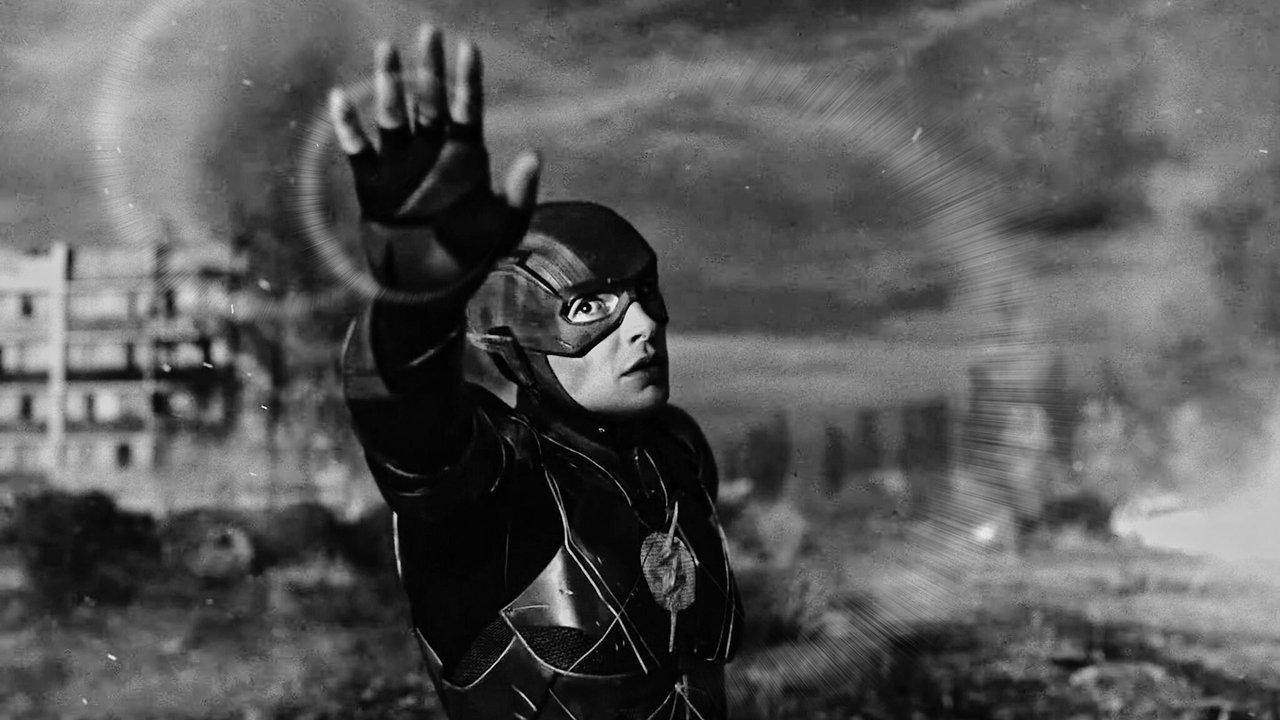
When the "Snyder Cut" finally dropped on HBO Max back in 2021, it wasn't just a longer movie. It was a massive reclamation project. For years, fans obsessively tracked every rumor about the Zack Snyder's Justice League cast, trying to figure out who was actually in the building and who had been left on the cutting room floor during the 2017 theatrical debacle.
Honestly? The difference is staggering.
In the original version, you had a Frankenstein’s monster of a film that gutted the heart of several characters. But when the four-hour epic arrived, we didn't just get more of the "Big Six"—we got a full-blown expansion of the DC mythos that included gods, monsters, and a certain Martian we’d been looking at for years without realizing it.
The Core Team: Reclaiming the Heart
If you ask Zack Snyder, the "heart" of his movie was always Ray Fisher’s Victor Stone, aka Cyborg.
In the 2017 theatrical cut, he was basically a grumpy robot with a couple of catchphrases. In the Snyder Cut, he's the emotional anchor. We finally saw his mother, Elinore Stone (played by Karen Bryson), and the tragic car accident that changed everything. His relationship with his father, Silas Stone (Joe Morton), actually had a payoff, including a self-sacrificial moment at S.T.A.R. Labs that sets up the entire finale.
Then there’s Ezra Miller as Barry Allen.
Most people remember the theatrical version for the "brunch" jokes. But the real meat of the performance was buried. We finally got the Kiersey Clemons cameo as Iris West, where Barry saves her from a high-speed car wreck. It was our first real look at how Barry experiences the world in slow motion, and it made his ultimate time-reversal at the end of the film feel earned rather than random.
The Heavy Hitters
- Ben Affleck (Batman/Bruce Wayne): This was a more weary, hopeful Bruce. He wasn't just cracking jokes about being rich; he was a man driven by a singular, almost suicidal guilt after the death of Superman.
- Henry Cavill (Superman): Yes, the black suit is there. But more importantly, the weird CGI upper lip from the reshoots is gone. This is the Superman that feels like a continuation of Man of Steel and Batman v Superman.
- Gal Gadot (Wonder Woman): Her scenes are way more brutal. The opening bank sequence isn't just a quick action beat; it’s a showcase of her power, ending with a literal "boom" that the theatrical version softened significantly.
- Jason Momoa (Aquaman): We got a lot more of the Atlantean lore, including the restoration of Willem Dafoe as Vulko. This actually bridged the gap to his solo movie much better than the 2017 version did.
The Villains and the "New" Faces
The biggest shift in the Zack Snyder's Justice League cast wasn't the heroes, though. It was the hierarchy of evil.
For the first time in live-action, we got Darkseid.
Played by Ray Porter, Darkseid was the looming shadow the entire trilogy was building toward. Porter didn't just do a voice; he did the motion capture, bringing a heavy, Shakespearean weight to the ruler of Apokolips. He wasn't alone, either. We saw Peter Guinness as DeSaad, the twisted priest who acts as a go-between for Steppenwolf and his master.
Speaking of Steppenwolf, Ciarán Hinds finally got to play the version he signed up for. Instead of the weirdly human-looking CG guy from 2017, we got the "spiky armor" version. He sounded different, too—more desperate, like an exiled general trying to buy his way back home.
The Surprises Most People Missed
One of the coolest reveals was Harry Lennix. Since 2013, he’d played General Swanwick. Fans had a theory that he was actually Martian Manhunter, and Snyder confirmed it by bringing him back for two key scenes. One where he disguises himself as Martha Kent to talk to Lois, and the final scene where he visits Bruce’s lake house.
And let's not forget Zheng Kai as Ryan Choi. In the comics, he becomes The Atom. In this movie, he's the Director of Nanotechnology working with Silas Stone. He was completely cut out of the 2017 version, but here, he's positioned as a major future player.
That "Knightmare" Sequence
The most talked-about part of the cast expansion happened right at the end. Snyder shot a few minutes of brand-new footage during the pandemic—mostly on green screens—to finish his "Knightmare" vision.
This gave us Jared Leto’s Joker.
It’s a completely different vibe than his Suicide Squad appearance. No "damaged" tattoo on the forehead, just a long-haired, post-apocalyptic survivor trading barbs with Batman. It’s a ten-minute scene that carries the weight of a decade of rivalry. We also saw Joe Manganiello’s Deathstroke with a mohawk, playing an uneasy ally to Batman, alongside Amber Heard’s Mera, who’s out for blood after Aquaman’s death.
Why This Cast Mattered (The Real Impact)
Look, at the end of the day, a movie is only as good as the people on screen. The reason the #ReleaseTheSnyderCut movement was so loud wasn't just about the director—it was about the actors.
Ray Fisher, in particular, was very vocal about how the 2017 reshoots handled his character and the atmosphere on set. Seeing the full scope of the Zack Snyder's Justice League cast perform the original script felt like a validation of their work. It proved that the performances weren't the problem in 2017; it was the editing and the tone-shifting.
If you're looking to dive deeper into the lore:
- Watch the "Justice is Gray" version: It’s the black and white cut of the movie. It highlights the cinematography and the actors' expressions in a way the color version sometimes masks.
- Compare the Silas Stone scenes: Watch the theatrical death vs. the Snyder Cut sacrifice. It’s the best way to see how much a character's "cast" importance can change with a different edit.
- Check out the "Road to Justice League" extras: There’s a lot of footage of the actors during the initial 2016 production that shows how much they put into these roles before the studio changes happened.
The Snyder Cut stands as a weird, beautiful anomaly in film history. It's a four-hour testament to a cast that stayed loyal to a vision, even when it looked like that vision would never see the light of day. It’s not just a superhero movie; it’s a record of what happens when you actually let actors finish the story they started.



