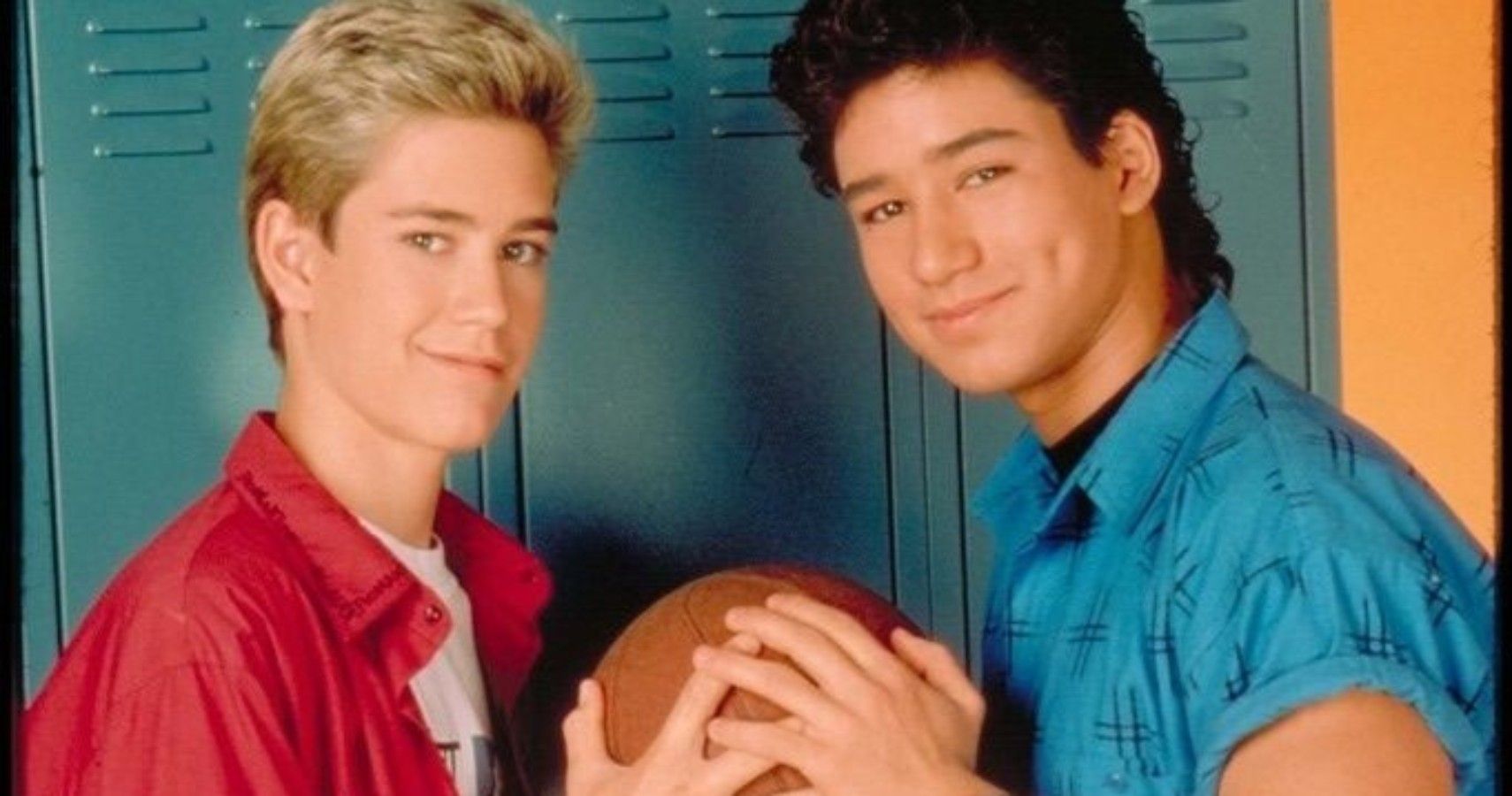
He was the guy every middle schooler in 1991 wanted to be. Zack Morris. The blonde hair, the giant brick phone, and that weirdly supernatural ability to freeze time just by saying "Time out!" to the camera. If you grew up during the Saturday morning NBC era, Zack wasn't just a character; he was a lifestyle. But honestly, looking back at him through a 2026 lens? Things get a little messy.
The legacy of Zack Morris is a weird tug-of-war between nostalgia and the realization that he was kind of a sociopath. You've probably seen the "Zack Morris Is Trash" videos. They aren't exactly wrong. From charging classmates to kiss his friends to straight-up gaslighting Mr. Belding every Tuesday, his "hijinks" were often borderline criminal. Yet, we couldn't stop watching. Why? Because Mark-Paul Gosselaar sold the hell out of it.
The Ferris Bueller Blueprint
Most people think Zack was just a generic "cool guy," but his DNA actually comes from a very specific place. Executive producer Peter Engel has admitted that Zack was heavily inspired by Ferris Bueller. That fourth-wall-breaking charm? Pure John Hughes.
But there’s a difference. Ferris wanted a day off to see the Sears Tower. Zack wanted to sell his soul for a pair of sneakers or a date with Kelly Kapowski. He was a schemer in a way that felt more like a junior Gordon Gekko than a regular teen. It’s funny because Gosselaar himself wasn’t even blonde. He had to dye his hair every two weeks for years just to maintain that "all-American" look. Talk about dedication to a character who would eventually be labeled "morally abhorrent" by the very actor who played him.
Why the "Zack Morris Is Trash" Narrative Stuck
For a long time, we just accepted Zack’s behavior as "classic Zack." Then the internet happened. Dashiell Driscoll created the Zack Morris Is Trash web series, and it fundamentally changed how we view Bayside High.
The Moments We Collectively Blocked Out:
- The "Running Zack" Incident: Let's be real, the episode where Zack wears a Native American headdress and face paint to a track meet hasn't aged well. Gosselaar has since called it "cringeworthy" and admitted he doesn't even remember filming the more offensive parts.
- The Pimping Incident: In "The Lisa Card," Zack literally organizes a "kissing booth" where people pay to kiss Lisa Turtle without her being fully on board with the plan at first. In 1989, it was a "zany scheme." Today? It’s a HR nightmare.
- The Time Out: Think about the power. Zack can literally stop time. He uses this god-like ability to steal tests, manipulate conversations, and move people around like chess pieces.
It’s easy to dunk on him now, but the show was a product of its time. It was a Saturday morning sitcom designed to sell cereal and brightly colored sweatshirts. It wasn’t The Wire. But the fact that we’re still arguing about his morality thirty years later says something about the character's impact.
The Governor of California: The 2020 Pivot
When the Saved by the Bell reboot hit Peacock a few years back, they leaned hard into the "Zack is a jerk" theory. They made him the Governor of California. Naturally, he only ran for office to get out of a $75 parking ticket. That’s peak Zack.
The reboot was smart because it acknowledged that a guy like Zack Morris wouldn't grow up to be a normal suburban dad. He’d be a powerful, slightly out-of-touch politician who still thinks he can charm his way out of a budget crisis. Seeing him interact with his son, Mac Morris (who is basically Zack 2.0 but with more self-awareness), was a meta-commentary on the entire original series. It basically asked: "What happens when the 'cool' kid never learns a lesson?"
Gosselaar vs. Morris: A Complicated Relationship
Mark-Paul Gosselaar is a far cry from the character that made him famous. He’s spent most of 2024 and 2025 talking about how difficult it is to revisit the show. On his podcast, Zack to the Future, he’s been watching the episodes for the first time—literally, he hadn't seen them since they aired.
It turns out, he doesn't remember much. He remembers the beach shoots because they were fun, but the actual plot points? Gone. He’s been vocal about how "torturous" it is to watch his younger self. There's a certain irony there. The man who gave us the ultimate icon of confidence is actually his own harshest critic. He’s even gone as far as calling Zack a "s---head" in recent interviews.
The Bayside Reality Check
If you’re planning a rewatch, go in with your eyes open. Zack Morris wasn’t a hero. He was a chaotic neutral force of nature in a neon-colored world. He treated Screech like a disposable tool, manipulated Kelly’s feelings, and caused thousands of dollars in property damage.
But he also gave us a version of high school that felt aspirational. We wanted the friendship group. We wanted The Max. We wanted to believe that if we just had enough charisma, we could freeze the world and fix our problems.
What you should do next: If you want to see the "real" Zack without the nostalgia goggles, go watch the "Running Zack" or "The Lisa Card" episodes on a streaming service. Then, immediately jump to the 2020 reboot. It provides the necessary closure by showing that the world eventually caught up to Zack's nonsense. Seeing the character evolve from a teenage scammer to a disgraced (but still charming) governor is the only way to truly understand the Bayside legend.



