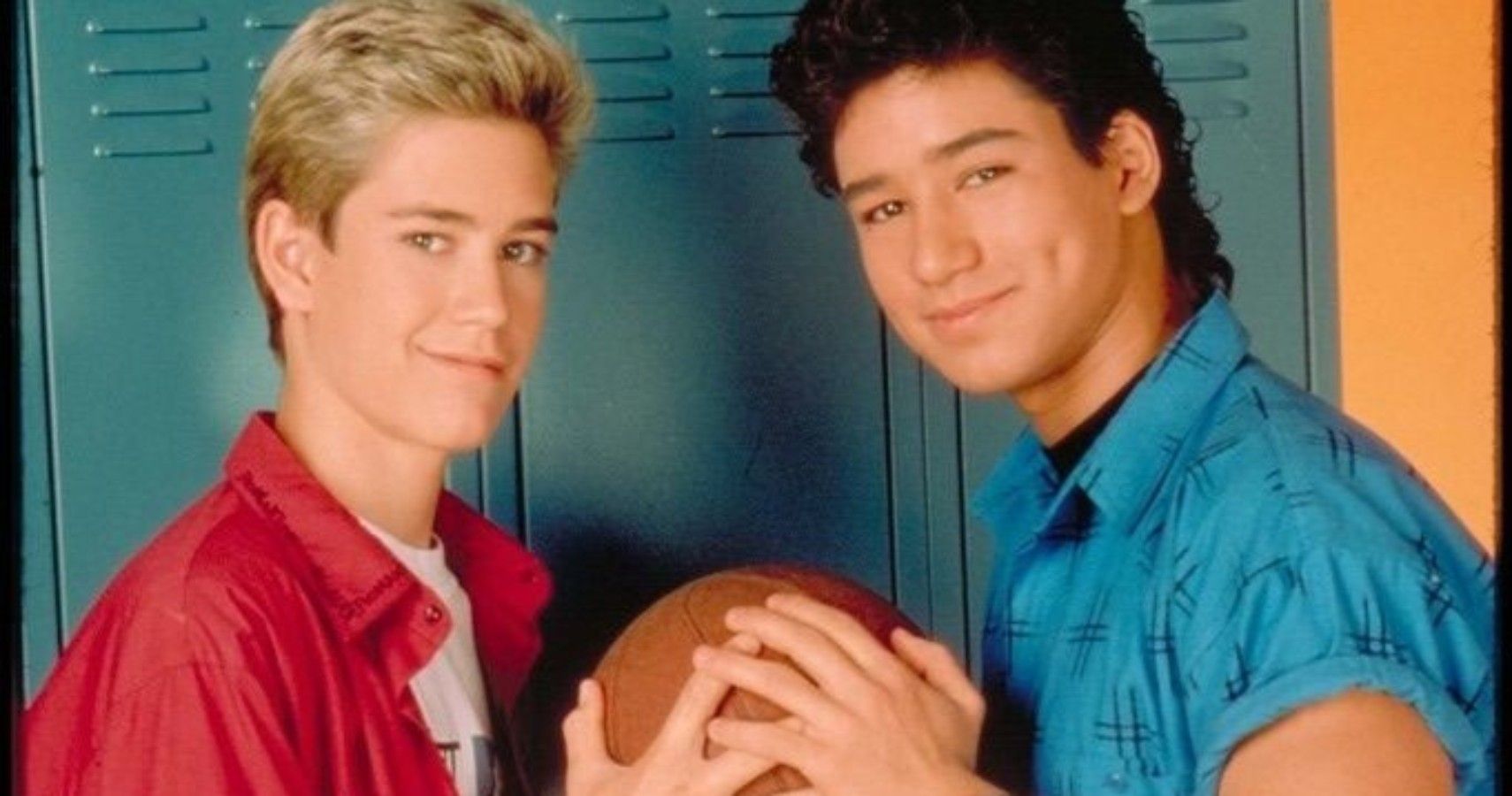
Let’s be real for a second. If you grew up in the 90s, you probably wanted to be Zack Morris from Saved by the Bell.
He had the hair. He had the brick-sized cell phone. He had the uncanny ability to stop time just by saying "Time out!" to the camera. Most importantly, he had that smirk that suggested he was always three steps ahead of everyone else, especially poor Mr. Belding. In similar updates, read about: Eurovision is Not a Song Contest and the Boycott Narrative is a Gift to the Brand.
But if you actually sit down and watch the show as an adult in 2026, things get weird. Fast.
Honestly, Zack Morris was kind of a monster. I’m not just talking about typical teenage rebellion or being a "class clown." We are talking about a guy who literally sold his friends’ secrets, manipulated his way into girls' bedrooms, and once convinced the entire school that A.C. Slater was dying just so he could win a bet. Variety has also covered this critical topic in extensive detail.
Why did we like him? How did Mark-Paul Gosselaar make this absolute menace the golden boy of Saturday morning television?
The Zack Morris Magic: Charm vs. Chaos
The character of Zack Morris didn't actually start at Bayside High. He first appeared in a short-lived show called Good Morning, Miss Bliss, which was set in Indiana. When that show flopped, NBC took the best parts—Zack, Screech, Lisa, and Mr. Belding—and moved them to the sunny Palisades in California.
This change was crucial.
In California, Zack became the "cool" schemer we know today. He wasn't just a kid getting into trouble; he was an entrepreneur of chaos.
Think about the "Zack Attack" era. On the surface, it’s a feel-good story about a group of friends forming a band. But if you look at the mechanics of his plans, Zack was basically a teenage Machiavelli. He was constantly running scams. Remember the time he used subliminal messages to get Kelly to go to the prom with him?
That’s not romance. It's borderline psychological warfare.
Yet, we rooted for him. Part of that is the "Gosselaar Effect." Mark-Paul Gosselaar brought a natural charisma to the role that made the most heinous behavior seem like "just Zack being Zack." Even Gosselaar has admitted in recent interviews, including his "Zack Morris is Trash" commentary, that he finds his old character’s actions pretty reprehensible.
Breaking the Fourth Wall
One reason we felt so close to Zack was his ability to break the fourth wall.
By talking directly to us, he made the audience his co-conspirators. When he called a "Time Out," the world froze, but we remained in the loop. We weren't just watching a kid trick his principal; we were helping him do it.
It’s a classic narrative trick. It builds intimacy. It makes the protagonist’s flaws feel like "our" little secrets.
Is Zack Morris Actually Trash?
A few years ago, the internet collectively realized that Zack from Saved by the Bell was, well, problematic. The "Zack Morris is Trash" series on Funny Or Die went viral because it highlighted the absurdity of his actions.
- He once faked a terminal illness for Slater.
- He bugged the girls' sleepover with a "static-filled" radio to listen to their private conversations.
- He sold "secret formula" acne cream that actually gave people chemical burns.
- He bet on the birth of Mr. Belding’s baby.
When you list it out like that, it sounds like the resume of a future supervillain.
But there’s a nuance here that the "trash" narrative ignores. Saved by the Bell was a Saturday morning sitcom. It operated on cartoon logic. In that universe, Zack’s schemes were meant to be over-the-top because that’s where the comedy came from.
He also usually got his comeuppance. He’d get caught, he’d lose the girl (temporarily), or he’d end up with a mountain of detention. There was almost always a "moral of the story" moment where Zack had to apologize to Jessie, Lisa, or Kelly.
Does that excuse the behavior? Not really. But it places it in a context that isn't quite as dark as the modern memes suggest.
The Evolution: From Bayside to the Governor’s Mansion
If you haven't seen the 2020 Saved by the Bell reboot, you are missing out on the ultimate meta-commentary on Zack Morris.
In the reboot, Zack is the Governor of California.
It’s the most logical progression for a guy who could talk his way out of anything. As Governor, he’s still the same self-absorbed guy, but now his schemes have statewide consequences. He only ran for office because he wanted to get out of a $75 parking ticket.
That is the most "Zack Morris" thing to ever happen.
The reboot actually addresses the "Zack Morris is Trash" sentiment head-on. It acknowledges that his privilege allowed him to fail upward while others, like Slater and Jessie (who became faculty members at Bayside), actually had to work for a living.
Why the Character Still Works in 2026
Even with all the criticism, Zack remains a cultural icon. Why?
Because he represents a specific brand of 90s optimism. He believed that no matter how big the mess, he could fix it. He believed life was a game he could win if he just found the right angle. In a world that often feels heavy and complicated, there's something weirdly nostalgic about a guy who thinks he can solve any problem with a "Time Out" and a fake ID.
He’s the ultimate "love to hate" character.
Zack Morris Facts Most People Forget
People talk about his hair and his phone, but there are some deeper cuts that explain who he was.
- The SAT Score: Zack actually got a 1502 on his SATs. He was a genius who just didn't want to try. This makes his constant scheming even more frustrating because he could have been anything.
- The Indigenous Roots Episode: One of the most controversial episodes involved Zack discovering he had "Native American" heritage. It’s widely considered one of the most tone-deaf episodes in sitcom history.
- The Relationship with his Father: Zack’s dad was rarely around, often portrayed as a busy businessman who threw money at problems. It sort of explains why Zack felt the need to act out for attention.
How to Re-watch Saved by the Bell Today
If you’re going back to watch the old episodes, don’t look at it as a serious drama.
Look at it as a time capsule.
Notice the fashion. The neon windbreakers. The high-top sneakers. Appreciate the chemistry between the "Bayside Six." Despite Zack being a nightmare friend, the bond between the cast was real. You can see it in the way they play off each other.
And if you’re looking for the best Zack Morris moments, skip the "Very Special Episodes" about drugs (sorry, Jessie, we know you were so excited) and go for the pure heist episodes. The ones where Zack has to be in three places at once. That’s where the character really shines.
Actionable Takeaways for the Super-Fan
- Watch the Reboot First: If you’re introducing a younger person to the show, start with the 2020 reboot. It provides the necessary "self-aware" lens to appreciate the original.
- Listen to "Zack to the Future": This is Mark-Paul Gosselaar’s podcast where he watches the show for the first time in decades. It’s fascinating to hear him cringe at his own character.
- Check the Credits: Look for Peter Engel. He was the executive producer who shaped the "Zack" persona. Understanding his vision of the "charming rogue" explains why the show felt the way it did.
Zack Morris wasn't a role model. He was a cautionary tale wrapped in a very charismatic package. He was the king of Bayside, for better or worse.
Next time you’re feeling overwhelmed, just try saying "Time out!" to the room. It won't work, obviously. But for a split second, you'll feel like you’re back in 1991, and everything is going to be just fine.
Next Steps for Bayside Fans:
- Audit the "Zack Morris is Trash" series on YouTube to see the funniest breakdowns of his most criminal acts.
- Binge the 2020 Peacock reboot to see how Zack handles being the Governor of California.
- Research Mark-Paul Gosselaar's recent roles in shows like Found to see how much he has evolved away from the blonde-streaked teenager.



