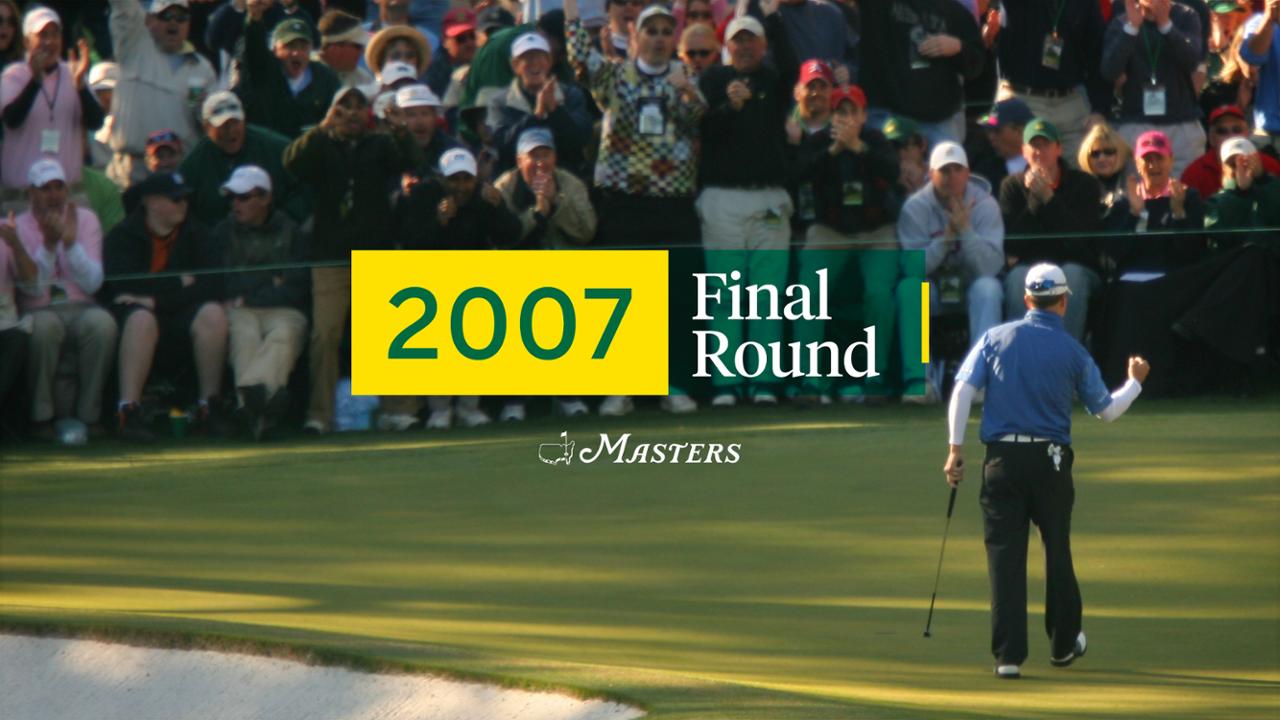
The 2007 Masters was weird. Honestly, there isn't a better word for it. Usually, when you think of Augusta National, you picture Tiger Woods or Phil Mickelson overpowering the course, reaching par-fives in two, and painting the sky with high-arching iron shots that stop on a dime. But in 2007, the weather turned the cathedral of golf into a refrigerator. It was freezing. The wind was howling. The greens were basically paved parking lots.
And in the middle of this chaos stood a guy from Iowa named Zach Johnson.
Before that week, Zach Johnson wasn't exactly a household name. He was a grinder. He was the "wedge guy." While the big hitters were trying to muscle their way through the Georgia pines, Johnson was playing a completely different sport. He didn't go for a single par-five in two shots the entire week. Not one. In the modern era of golf, that sounds like a death sentence for your scorecard. Instead, it was a masterclass in strategy that led to one of the most improbable Green Jacket ceremonies in the history of the tournament.
Why the 2007 Masters Felt Different
Augusta National is famous for its "sub-air" system and manicured perfection, but the 2007 tournament felt like a US Open broke out at a garden party. The scoring was brutal. By the time Sunday rolled around, the leaders weren't looking for birdies; they were just trying to avoid a total collapse.
The scoring average was the highest it had been in decades. You had guys like Retief Goosen and Rory Sabbatini hanging around, and of course, Tiger Woods was lurking. Tiger was the defending champion of the PGA and the heavy favorite. Everyone expected him to eventually pull away. But the 2007 Masters winner didn't need to outdrive Tiger. He just needed to outthink the field.
Zach Johnson finished the tournament at +1 (289). That number is significant because it tied the record for the highest winning score in Masters history, matching Sam Snead in 1954 and Jack Burke Jr. in 1956. It was a war of attrition.
The Strategy That Broke the Mold
Let’s talk about the par-fives. Usually, if you don't birdied the par-fives at Augusta, you're packing your bags early. Johnson's caddie, Damon Green, and Zach had a very specific plan. They knew Zach couldn't consistently reach the long holes in two, especially with the heavy, cold air and the firm turf.
So, they laid up. Every. Single. Time.
By laying up to his favorite distance—around 80 to 90 yards—Johnson turned the most dangerous holes on the course into a simple game of pitch-and-putt. He played the par-fives in 11-under par for the week. Think about that for a second. He was 12-over par on the rest of the course and still won the tournament. It was a statistical anomaly that proved course management beats raw power when the conditions get nasty.
The Sunday Charge
Sunday was a rollercoaster. Johnson started the day two shots back of Stuart Appleby. While Appleby and others struggled in the final pairing, Johnson went to work on the back nine. He birdied 13, 14, and 16. That birdie on 16 was the dagger. He hit a stunning tee shot on the par-three and drained the putt, moving to 2-under for the day while the rest of the leaderboard was bleeding strokes.
Tiger Woods had his chances. He always does. But Tiger had a frustrating day with the putter and a bizarre moment where he broke a club hitting a tree. It felt like the golf gods were favoring the guy who kept his ball in the fairway and his head on straight. When Johnson tapped in for par on 18, he had to wait. He sat in the clubhouse watching the legends of the game fail to catch him.
What People Get Wrong About Zach’s Win
A lot of people call this win a "fluke" because of the weather. That’s nonsense. To win at Augusta with a score of 289 requires more mental toughness than winning with a 270. You have to endure. You have to accept that you're going to make bogeys.
- The Putter: Johnson’s SeeMore putter became world-famous overnight. It was that center-shafted mallet that he used with robotic precision.
- The Iowa Factor: Coming from the Midwest, Johnson was used to playing in the wind and the cold. While the "country club" players were shivering, he looked right at home.
- The Gap Wedge: His third shots into the par-fives were consistently inside ten feet. That isn't luck; it's elite-level wedge play.
The Legacy of the 2007 Victory
This win changed how people looked at Zach Johnson. He wasn't just a "short hitter" anymore; he was a Major Champion. He eventually went on to win the Open Championship at St. Andrews in 2015, proving that his 2007 Masters win was no accident. He’s a guy who wins on the most historic courses in the world by being smarter than the guys who hit it 40 yards past him.
It also changed how players approach Augusta. You started to see more guys willing to lay up on 13 and 15 if the wind wasn't right. Johnson provided a blueprint for the "average" hitter to compete with the giants.
Lessons From the 2007 Masters Winner
If you're a golfer, or even if you're just a fan of sports strategy, there is a lot to learn from what happened in April 2007. Success isn't always about having the most talent or the fastest swing.
- Play to your strengths. Johnson knew he was the best wedge player in the field. He forced the course to let him use his wedges as often as possible.
- Ignore the "standard" way of doing things. Everyone said you had to go for the greens in two. Zach said "no thanks" and won anyway.
- Temperament matters. In 40-degree weather with 20mph winds, the person who stays calm wins. Johnson never looked rattled.
- Know your numbers. Every layup was calculated. He didn't just hit it "somewhere down there." He hit it to the exact yardage that gave him a full swing with his favorite club.
The 2007 Masters remains one of the most unique chapters in golf history. It was the year the "little guy" from Cedar Rapids took down the biggest names in the sport on the biggest stage. It serves as a reminder that in golf, the scorecard doesn't care how far you hit your driver. It only cares how many times you hit the ball.
How to Apply the Zach Johnson Strategy to Your Own Game
You don't have to be a pro to use the 2007 Masters logic. Next time you're on a long par-four or a par-five that feels out of reach, stop trying to kill the ball.
Take a look at your favorite yardage. Is it 100 yards? Is it 85? Instead of hacking a 3-wood into a greenside bunker, hit a 7-iron to your "money" distance. Give yourself a full swing with a wedge. You’ll be surprised how much your handicap drops when you stop trying to play like prime Tiger Woods and start playing like 2007 Zach Johnson.