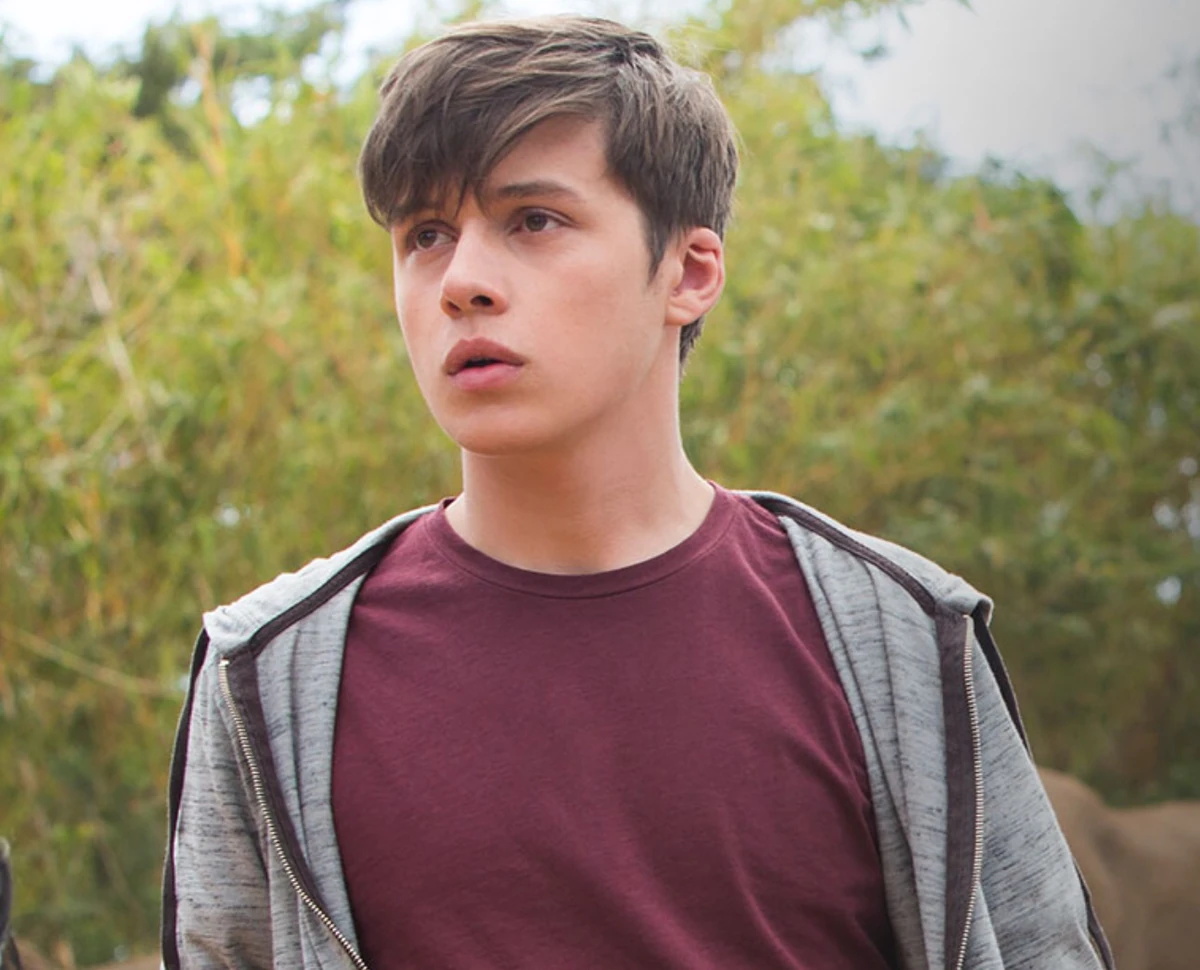
Honestly, if you rewatch the 2015 blockbuster today, you might realize that Zach in Jurassic World is one of the most misunderstood characters in the entire rebooted franchise. He starts off as the quintessential "too cool for school" teenager, eyes glued to his phone, ignoring the literal prehistoric miracles surrounding him. It’s a trope. We’ve seen it before. But there is a specific trajectory to Nick Robinson’s portrayal of Zach Mitchell that actually mirrors the audience's own desensitization to spectacle.
He’s annoying. At first, anyway.
When we first meet Zach, he’s leaving his girlfriend at the airport with a look of pure apathy. He doesn’t want to be on Isla Nublar. He doesn't want to hang out with his dinosaur-obsessed younger brother, Gray. He is the human personification of "I'd rather be literally anywhere else." However, beneath that teenage veneer of boredom, director Colin Trevorrow planted some pretty specific character beats that explain why Zach acts the way he does—and why his survival instincts eventually kick into high gear.
The Problem With Zach in Jurassic World
Most viewers walked away from the first film thinking Zach was just a jerk. Why was he staring at those girls in the park while his brother was crying? Why was he so dismissive of his aunt, Claire Dearing?
The reality is a bit more nuanced. Zach represents the "Modern Guest." In the logic of the film, Jurassic World has been open for years. Dinosaurs aren't "magic" anymore; they're just attractions. They are biological assets in a zoo. Zach’s boredom isn't just a character flaw; it’s a meta-commentary on how we, as a real-world audience, had become bored with dinosaur movies since the 1993 original. We needed "bigger, louder, more teeth," and so did Zach.
Then the Indominus Rex broke out.
Suddenly, the kid who couldn't be bothered to look up from his screen had to become a protector. There’s a pivotal moment in the Gyrosphere—a vehicle designed for safety that becomes a glass coffin—where the dynamic shifts. Zach stops being the self-absorbed teen and starts being a brother. He realizes his parents are getting a divorce. He realizes Gray is terrified. And he realizes that if he doesn't step up, they’re both dead.
Survival and the Mitchell Brothers
It is worth noting that Zach is actually pretty resourceful once the screaming starts.
When the Indominus attacks the Gyrosphere, Zach is the one who notices the cracked glass. He’s the one who orchestrates the escape. While some fans find it unrealistic that two kids could jump off a waterfall and fix a twenty-year-old Jeep Wrangler Sahara (1992 model, for those keeping track), it serves a specific narrative purpose. It connects the new generation to the old. Zach finding the "old park" isn't just nostalgia bait; it's the moment he engages with the world around him instead of his digital one.
Think about the technical skills involved. Zach mentions he's taking "auto shop." It’s a quick throwaway line early in the movie that pays off when they’re in the garage of the original Visitor Center.
He isn't a hero in the way Owen Grady is. Owen is a superhero. Zach is just a kid who knows how to jump-start a battery and keep his brother from hyperventilating. That's a different kind of bravery. It's grounded.
Why the Fanbase Is Divided
If you spend any time on Reddit or Jurassic fan forums, you’ll see the same complaints. "Zach was mean to Gray." "Zach was creepy." "Zach didn't have a character arc."
I’d argue the opposite.
Character arcs don't always have to end with a person becoming a totally different human being. Zach doesn't become a paleontologist by the time the credits roll. He’s still a teenager. But he’s a teenager who has looked death in the face and decided that family matters more than a cell phone signal. When they reunite with Claire and Owen, and later with their parents at the Costa Rican airfield, the Zach we see is physically and emotionally exhausted. He’s holding onto Gray. That’s the growth.
It’s also important to look at the deleted scenes and the original script drafts. In some versions, Zach's cynicism was even more pronounced. The theatrical cut actually softened him quite a bit. Nick Robinson plays him with a certain "checked-out" quality that makes the eventual payoff—when he finally stands up to protect Gray against the Raptors and the Indominus—feel earned.
The Legacy of the Mitchells
Interestingly, Zach and Gray are completely absent from Fallen Kingdom and Dominion.
This was a point of contention for many. How do you have a "Jurassic World" and not mention the kids who survived the 2015 incident? From a storytelling perspective, their absence makes sense. Their story was about the breakdown and partial repair of the Mitchell family unit. Bringing them back just to be chased by more dinosaurs might have felt redundant.
However, their presence is felt in the way the franchise shifted focus toward Maisie Lockwood in the later films. Zach was our first look at how "normal" people—not scientists, not hunters, not billionaires—react to a total system failure in a dinosaur park.
Key Takeaways from Zach’s Journey
Looking back at the 2015 film, there are a few things we can learn from how Zach Mitchell was handled as a character:
- The "Boredom" was Intentional: Zach was written to reflect a cynical audience. His transition from apathy to terror was meant to mirror the film’s goal of making dinosaurs scary again.
- Brotherhood over Survival: His primary motivation shifted from self-preservation to protecting Gray. This is most evident during the scene in the restricted area where he refuses to leave Gray behind even when a predator is feet away.
- Technical Literacy: The film actually sets up his ability to fix the Jeep early on. It wasn't a "deus ex machina" moment, even if it felt like one to some viewers.
- The Divorce Subplot: Zach’s coldness at the start of the film is a shield. He knows his parents are splitting up (he sees the mail/legal documents), and he’s processing that trauma by distancing himself from everyone.
Moving Beyond the Screen
If you’re analyzing Zach's role in the series for a project or just because you’re a die-hard fan, the best thing to do is watch the "Old Park" sequence again. Watch his face when they enter the overgrown rotunda. For the first time, he isn't looking at a screen or a girl or a map. He’s looking at history.
To truly understand the impact of the Mitchell brothers, you should compare their experience with that of Lex and Tim from the 1993 original. Lex and Tim were fans. Zach was a skeptic. The "skeptic's journey" is often harder to write, which is why some people still find Zach a bit grating.
If you want to dive deeper into the lore, check out the Jurassic World: Camp Cretaceous series on Netflix. While the Mitchells don't appear, the show does an incredible job of showing what was happening to other teenagers on the island at the exact same time Zach and Gray were wandering through the woods. It adds a whole new layer of perspective to the chaos Zach was trying to navigate.
The next time you sit down for a rewatch, try to look at Zach through the lens of a kid who knows his world at home is ending. It makes his fight for survival on the island feel a lot more personal. He wasn't just trying to outrun a dinosaur; he was trying to save the only thing he had left.
Next Steps for Jurassic Fans:
- Review the 1992 Jeep Wrangler restoration scenes: Compare the engine components shown in the film to a real-life YJ model to see how much the production team got right (and wrong).
- Analyze the "Modern Guest" theory: Look at the background extras in the Main Street scenes. You'll notice almost everyone is on their phone, just like Zach was, proving the park had lost its "wow" factor for everyone.
- Explore the Mitchell Family Timeline: Check out the tie-in website (which was live during the movie's release) to see the "official" blog posts and park updates that provide context for why the Mitchells were sent to the park in the first place.