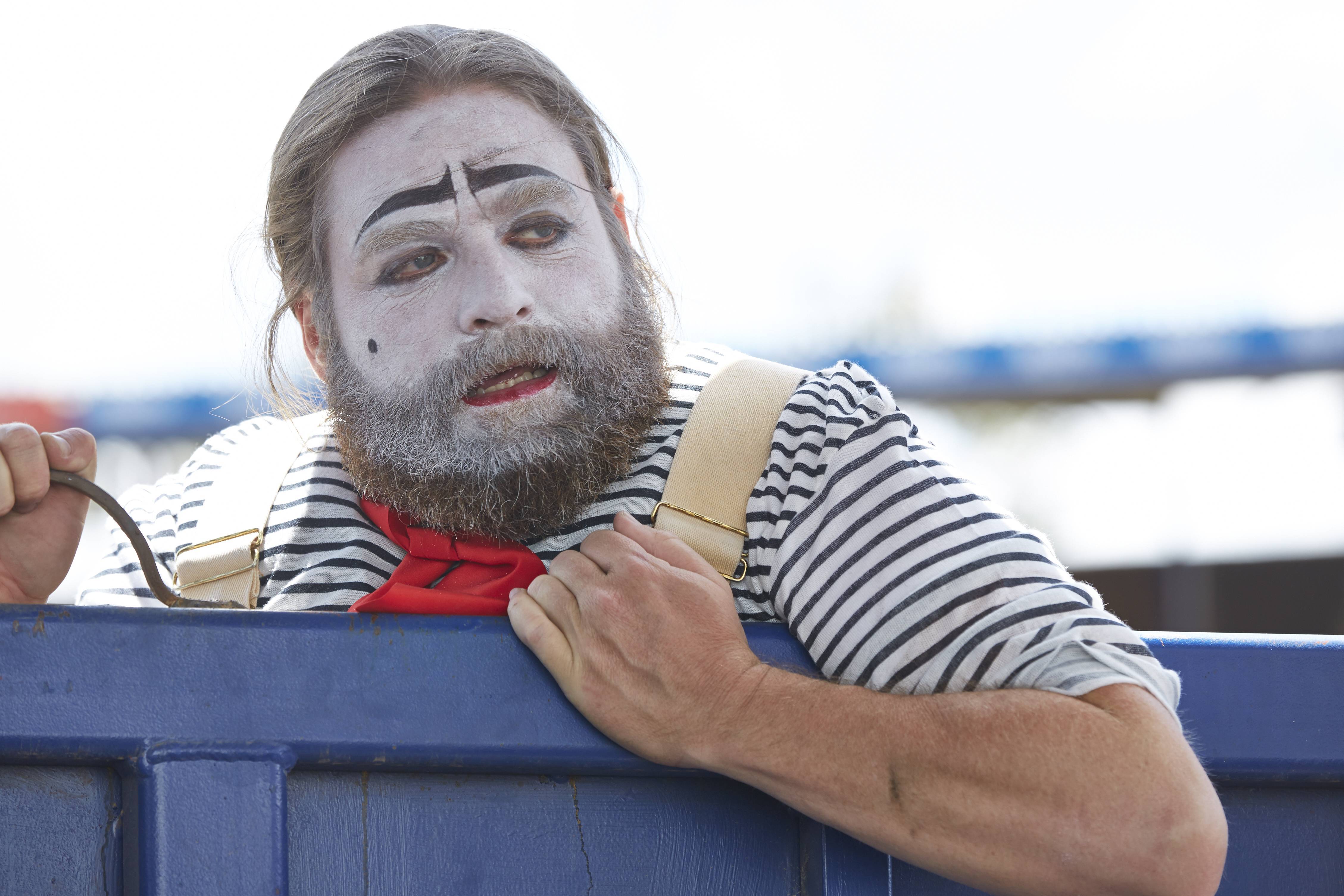
Chip Baskets wants to be a clown. Not the kind that makes balloon animals at a four-year-old’s birthday party in a damp suburban backyard. He wants to be a clown—the French kind, the Pierrot kind, the kind that embodies the tragicomedy of the human spirit. But he fails. He flunks out of a prestigious Parisian academy because he doesn’t speak French. He ends up back in Bakersfield, California, working at a rodeo where the "art" involves getting trampled by bulls while people eat nachos.
This is the premise of the Zach Galifianakis TV show Baskets, and if you think that sounds depressing, you’re right. It is. But it’s also one of the most oddly beautiful things ever put on television.
Most people see a Zach Galifianakis project and expect The Hangover. They want the beard, the chaos, and the loud, absurdist yelling. While Baskets has plenty of absurdity, it’s a quiet, slow-burn exploration of failure. Honestly, it’s a miracle it lasted four seasons on FX. In an era where "prestige TV" usually means dragons or detectives, a show about a guy who thinks a Costco membership is a personal failure feels like a radical act.
Why the Zach Galifianakis TV Show Baskets Hits Different
The show is built on a foundation of awkwardness. It was co-created by Galifianakis, Louis C.K. (who was later removed from the production after sexual misconduct admissions), and Jonathan Krisel. Krisel, who directed much of Portlandia, brought a specific visual language to the series. Bakersfield isn’t glammed up. It’s dusty. It’s beige. The lighting often feels like the inside of a Target at 10:00 PM on a Tuesday.
Galifianakis plays two roles: Chip and his twin brother, Dale.
Chip is the dreamer. He’s arrogant, pretentious, and deeply committed to a craft that nobody around him understands or wants. Dale is the opposite. He’s the dean of a "career college" (basically a strip-mall vocational school), and he’s a passive-aggressive nightmare. Watching Zach play against himself is a masterclass in subtlety. You forget they have the same face within five minutes because the posture and the vocal fry are so distinct.
But here is the thing: Zach isn't even the best part of his own show.
The Secret Weapon: Louie Anderson as Christine
If you haven't seen the show, the casting of the late Louie Anderson as the matriarch, Christine Baskets, might seem like a gimmick. It’s not. It is one of the most sincere, heart-wrenching performances in sitcom history. Anderson didn't play "a man in a dress." He played a mother. He based the performance on his own mom and sisters, and he did it with such dignity that he won an Emmy for it in 2016.
Christine is the emotional anchor. While Chip is busy being an "artiste," Christine is just trying to navigate her Costco addiction and her fluctuating health. She loves her ungrateful sons with a ferocity that is both moving and suffocating. The show shifts from a "failed clown comedy" to a family drama about halfway through the first season, and that’s when it truly finds its soul.
Martha and the Art of Being a Doormat
Then there's Martha. Martha Kelly plays Martha, an insurance adjuster who basically becomes Chip's driver and punching bag. Her delivery is so deadpan it makes a wooden plank look animated.
- The Dynamic: Chip treats her terribly.
- The Reality: Martha stays because she has nothing else going on.
- The Result: A friendship that is deeply toxic yet somehow the only support system either of them has.
Their chemistry is bizarre. Martha's monotone voice provides the perfect counterbalance to Chip's high-strung tantrums. She’s the person who picks him up when he gets kicked by a bull, and she’s the one who listens to his rants about the "purity of the mime." She doesn't judge. She just exists in his orbit.
The Bakersfield Aesthetic
Location matters here. Setting the Zach Galifianakis TV show Baskets in Bakersfield was a stroke of genius. It’s the "anti-Hollywood." It represents the industrial, working-class reality of California that rarely makes it to the screen. The show treats the city with a mix of mockery and genuine affection. It’s a place where dreams go to be realistic.
The cinematography captures the heat. You can almost feel the sun-bleached asphalt and the stale air of a half-empty casino. This isn't a show that relies on sets; it relies on the feeling of a specific place. It’s about people who are stuck, not because of some grand conspiracy, but because life is just... heavy.
What People Get Wrong About the Humour
People call Baskets a "cringe comedy." That’s a bit of a lazy label. Cringe comedy usually relies on the audience feeling superior to the characters. In Baskets, you don't feel superior. You feel for them. When Chip tries to order a "Schweppes" in a fancy French cafe and gets mocked, it’s not just funny—it’s a small, daily humiliation we’ve all felt in some form.
The show is actually a "tragicomedy" in the truest sense. It follows the lineage of Beckett or Buster Keaton. It’s about the "Little Man" fighting against a world that doesn't care about his silk ruffles or his greasepaint.
Why It Still Matters in 2026
Looking back at the series now, especially since it ended in 2019, its themes of family dysfunction and the pursuit of "art" in a commercial world feel even more relevant. We live in a world of side hustles and personal branding. Chip Baskets refuses to brand himself. He just wants to be a clown. There’s something noble in his failure.
It also reminds us of the incredible range of Zach Galifianakis. Before this, he was the guy from the "Between Two Ferns" sketches. After this, he’s an actor who can carry a heavy, emotional narrative about loneliness.
Final Insights on the Baskets Legacy
If you’re looking to dive into the Zach Galifianakis TV show Baskets, don’t expect a laugh track. Expect to feel a little bit uncomfortable. Expect to see some of the most beautiful shots of a rodeo you’ve ever seen. And most importantly, expect to fall in love with Christine Baskets.
The show ended exactly when it needed to. It didn't overstay its welcome. It told the story of a family finding a way to coexist despite their massive egos and crushing disappointments.
Your Next Steps for Watching
- Start with Season 1, Episode 1: The pilot sets the tone perfectly. If you don't like the "French clown school" sequence, you might struggle, but stick with it until Episode 4.
- Watch for Louie Anderson: Pay attention to the subtle ways he uses his hands and eyes. It’s a masterclass in acting.
- Look for the "Easter Eggs": The show loves the brand "Kirkland." It’s almost a character itself.
- Check the Streaming Services: As of 2026, the series is usually available on Hulu or Disney+ (depending on your region), as it’s an FX production.
Basically, go watch it. It’s weird, it’s sad, and it’s one of the best things Zach Galifianakis has ever done.



