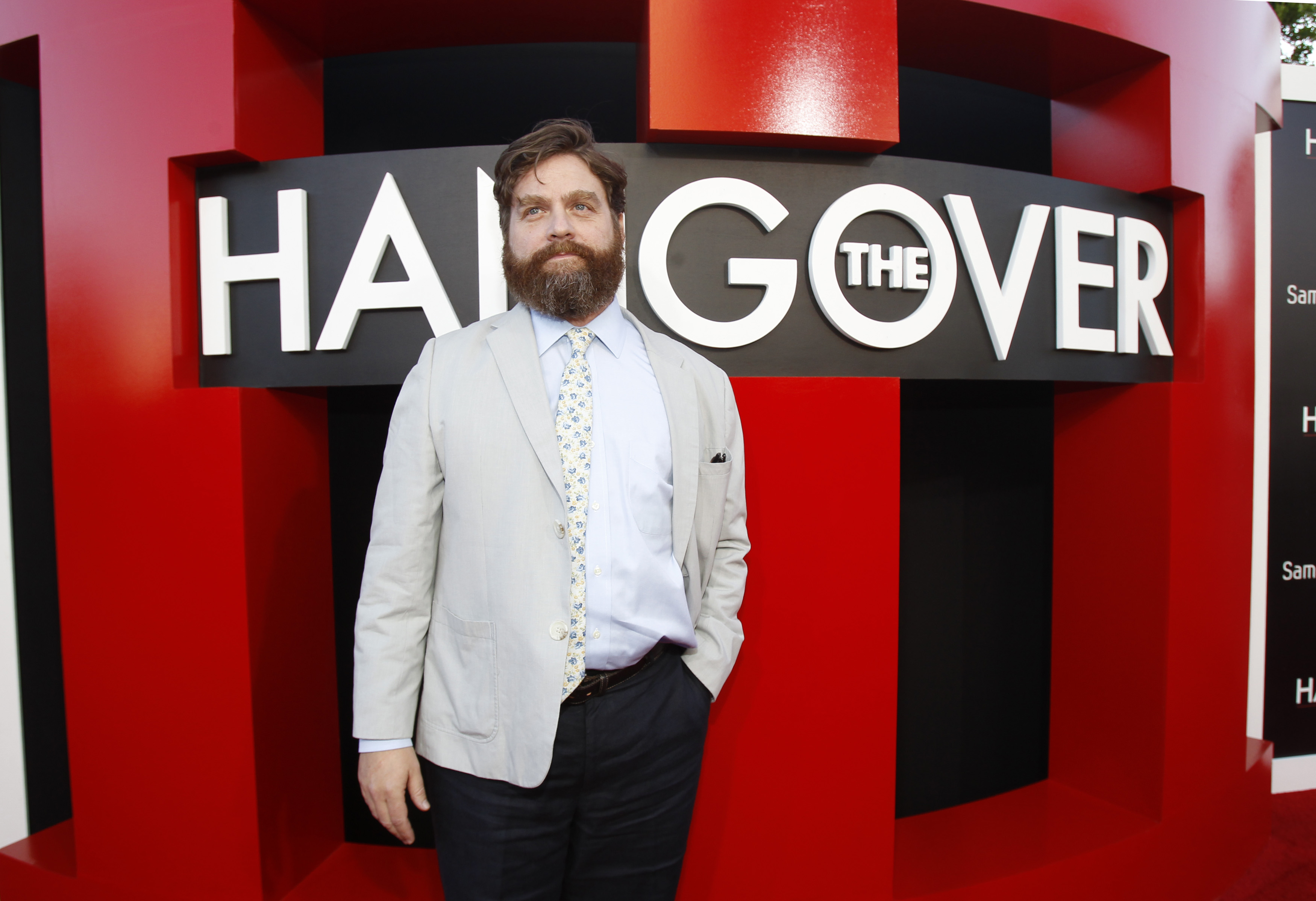
Before he was the guy from The Hangover or the guy sitting between those two dusty ferns, Zach Galifianakis was just a dude with a beard and a Casio keyboard. Honestly, if you only know him as Alan Garner, you're missing the best part of his brain. His stage shows aren't just jokes; they are performance art pieces that feel like they might fall apart at any second.
He basically invented a vibe.
It's that specific brand of "anti-comedy" where the silence is just as important as the punchline. He’ll sit there, staring at a front-row audience member for a full minute, and it’s somehow funnier than a scripted monologue.
The Purple Onion and the Birth of a Style
If you want to understand Zach Galifianakis stand up, you have to start with the 2006 special, Live at the Purple Onion. This wasn't recorded in a massive stadium. It was filmed at a small, historic club in San Francisco. It feels cramped. It feels sweaty. It’s perfect.
In this special, Galifianakis spends a huge chunk of time playing a piano while he talks. He isn't playing "songs" in the traditional sense. He's playing soft, lounge-style background music that makes his dry, often dark one-liners feel even weirder.
"I was named after my grandad. Yes, my name is Zach Grandad Galifianakis."
That joke shouldn't work. But because he delivers it with total sincerity while tinkling the ivories, it kills.
He also introduced the world to Seth Galifianakis, his "twin brother" character. Seth is a Southern, ultra-religious, Funyun-eating version of Zach that serves as a bizarre counterpoint to the cynical comedian on stage. It showed that his stand-up wasn't just about being funny; it was about character work and world-building.
What Makes His Stand-Up Different?
Most comedians want you to like them. Galifianakis seems like he wants to make you a little bit worried for him.
- The Large Pad of Paper: One of his most famous bits involves a giant easel. He flips through pages with pre-written jokes, often while a choir or a specific piece of music plays. It removes the "performance" element and turns the comedy into something mechanical and strange.
- Confrontational Silence: He is the king of the "stare-down." If a joke bombs, he doesn't move on. He leans into the failure. He makes the audience sit in the discomfort until the discomfort itself becomes the joke.
- The Piano Bed: Using music not as a parody (like Bo Burnham or Weird Al) but as a "wash" of sound to change the mood of the room.
Early Days: From Hamburger Harry's to VH1
It wasn't always easy. He started out in New York in the mid-90s, performing at a place called Hamburger Harry's in Times Square. Can you imagine? Eating a burger while a guy with a thick North Carolina accent tells jokes about his cat?
He eventually got a show on VH1 called Late World with Zach. It only lasted nine weeks. It was way too weird for 2002. He would have guests on and just... not interview them correctly. He was doing the Between Two Ferns bit years before the internet was ready for it.
He spent years on the road with the Comedians of Comedy tour alongside Patton Oswalt, Maria Bamford, and Brian Posehn. This was the "indie rock" era of stand-up. They weren't playing the big corporate clubs; they were playing rock venues to kids in flannel shirts. That’s where he really honed the persona.
Why People Still Search for His Old Sets
Even now, years after he became a massive movie star, people go back to his early sets. There's a raw honesty in it. Most of his jokes are one-liners, which is a hard style to pull off. It's high risk. If the one-liner doesn't land, you have nothing to fall back on except the next one.
Galifianakis handled this by making the "bombing" part of the act. He'd stop the show to berate himself or talk about how his career was over. It made him relatable. You weren't just watching a guy tell jokes; you were watching a guy struggle with the concept of telling jokes.
Key Moments You Should Watch
- The 1999 Dailymotion Clips: You can see him without the iconic beard. He’s thinner, younger, but the timing is already there.
- The SNL Monologues: He’s hosted Saturday Night Live multiple times, and his monologues are basically mini-stand-up specials. He usually brings out the piano and the large pad of paper, proving that even on the biggest stage in the world, he isn't changing his roots.
- The Kanye West "Can't Tell Me Nothing" Video: This isn't stand-up, but it captures his comedic energy perfectly. Kanye loved his stand-up so much he just gave him the budget to make an alternative music video on his farm in North Carolina.
The Evolution of the "One-Man Wolf Pack"
There’s a misconception that he stopped being a "stand-up" when he started acting. That’s not true. He just changed the medium. Between Two Ferns is essentially a long-form stand-up bit where the guest is the heckler.
He uses the same tools:
- Mismatched timing.
- Total lack of social awareness.
- Sudden, inexplicable anger.
Honestly, his influence is everywhere now. You see it in the way younger comics use TikTok or how they interact with their audiences. That "I don't really want to be here" energy? That's pure Galifianakis.
Actionable Steps for Fans and Aspiring Comics
If you're looking to dive deeper into this style of comedy, don't just watch the clips. Analyze the structure.
- Watch 'Live at the Purple Onion' in its entirety: Don't just watch the YouTube highlights. The transitions between the stand-up and the road-trip footage are where the real genius lies.
- Study the timing of the silence: Notice how long he waits before breaking the tension. It’s usually three seconds longer than any other comic would dare to wait.
- Look for the subversion: Every time you think a joke is going one way, he intentionally trips over the ending.
Zach Galifianakis redefined what a "stand-up" looks like. He took it away from the brick wall and the microphone stand and brought it into a world of absurdist theatre. Whether he's playing the piano or just staring at you with those wide, blinking eyes, he’s reminding us that comedy is most powerful when it’s just a little bit wrong.
To get the full experience, track down the original DVD of the Comedians of Comedy documentary. It shows the grind of the road and how this specific, weird style was built in the trenches of small-town dive bars and rock clubs before it ever hit the mainstream.



