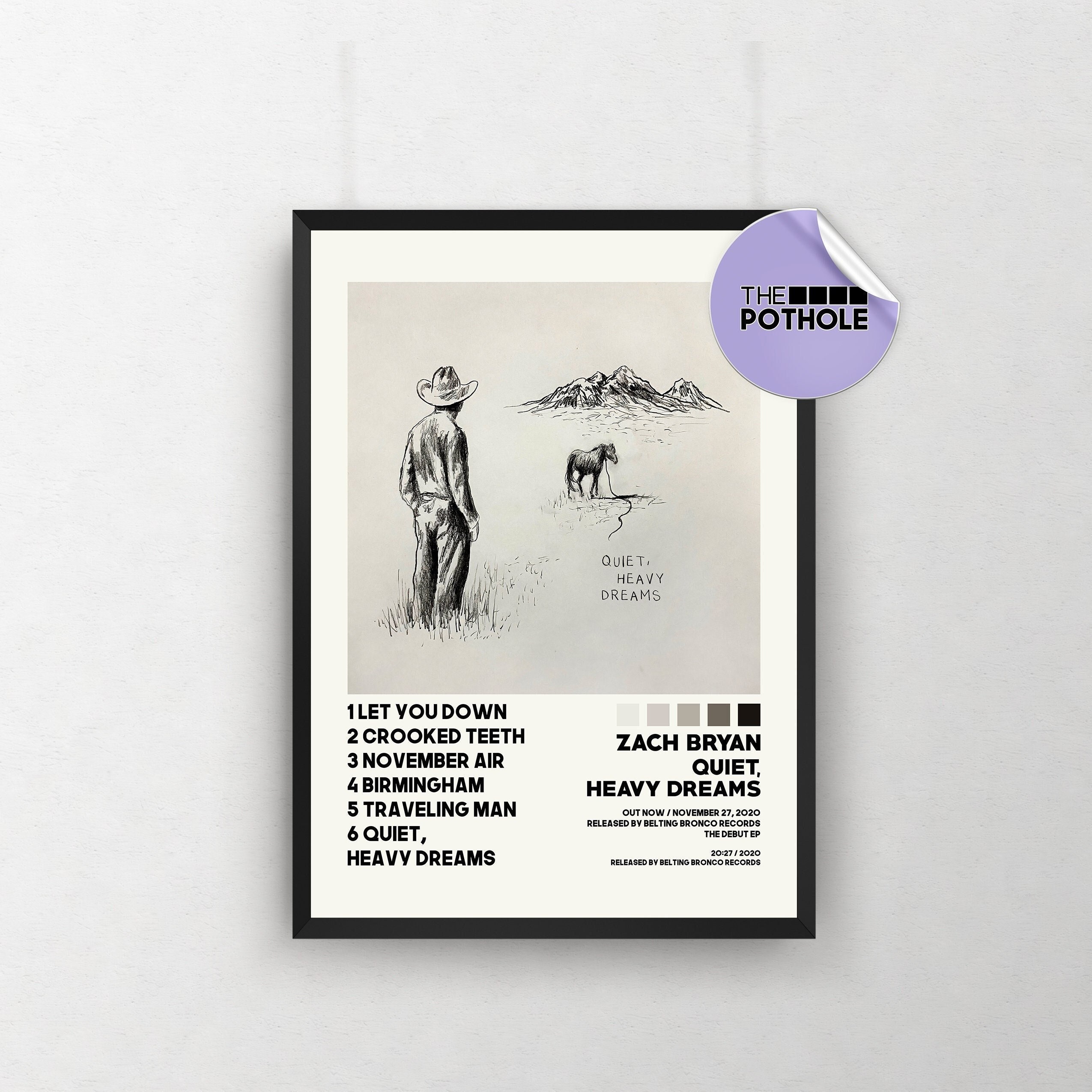
He was still in the Navy then. It feels like a lifetime ago, honestly, considering how Zach Bryan is basically the biggest thing in music right now, but back in late 2020, he was just a guy with a cult following and a very loud Twitter account. He dropped Quiet, Heavy Dreams on November 27, 2020, right in the middle of that weird, stagnant holiday season. Most people were still reeling from Elisabeth, which had come out earlier that year, but then he hits us with this six-track EP that felt... different. It wasn't just more of the same "guy in a barracks with a guitar" vibe. It was the first time we really saw him lean into being a storyteller rather than just a diarist.
It's raw.
If you've listened to his newer stuff like The Great American Bar Scene, you can hear the seeds of that massive stadium sound being planted right here in a horse barn in Washington state. That’s where he recorded it. No fancy Nashville studio. Just Zach, a few microphones, and Eddie Spear, the producer who has worked with heavy hitters like Chris Stapleton and Brandi Carlile. Spear managed to polish the edges just enough so you could hear the brilliance, without rubbing off the grit that made Zach famous in the first place.
What Zach Bryan: Quiet Heavy Dreams actually means
A lot of folks get the title track wrong. They think it’s just about being tired. It’s not. Zach actually tweeted out back then that the cover art—that lone cowboy figure—is a metaphor for the whole project. It’s about the "want and the longingness." It’s about a person trying to become who they actually want to be while they're stuck doing something else.
You have to remember: he was an active-duty member of the US Navy while writing this. He was working 12-hour shifts. He was exhausted. When he sings the title track, "Quiet, Heavy Dreams," he’s literally talking about a man working himself to the bone, dreaming of a woman and a life that might not even exist yet. It’s "heavy" because those dreams weigh on you when they aren’t your reality yet.
The EP kicks off with "Let You Down." It’s a gut-punch. He’s basically warning someone that he’s going to ruin them because he’s too focused on his work or his own demons. It sets the tone for the whole twenty-minute journey. It’s not a happy record, but it’s a deeply honest one.
The songs you probably missed
Most people know "Crooked Teeth" because it’s got that driving, foot-stomping rhythm that makes you want to drive too fast on a backroad. It’s got this weirdly catchy "medieval minstrel" groove, as some critics called it. But the real soul of the EP is tucked away in the middle.
- November Air: This is arguably one of the most emotional songs he’s ever written. He’s singing directly to his late mother, DeAnn. He mentions the western wind and the "cowboys who didn't stand a chance." It’s a song about grief that doesn't feel performative. It feels like you’re eavesdropping on a prayer.
- Birmingham: This is a straight-up outlaw country murder ballad. It’s about a man who "did what he had to do" and is now on the run. The fiddle work on this track is incredible—it’s haunting. It showed that Zach could write fiction just as well as he could write his own life story.
- Traveling Man: This one features some heavy harmonica and layered harmonies. It’s the "road song" of the EP. It’s about the restlessness of being 24 and feeling like you need to be everywhere at once.
Why the production matters
Before Quiet, Heavy Dreams, Zach’s stuff was very lo-fi. DeAnn and Elisabeth were basically field recordings. They were beautiful because they were messy. But this EP was the middle ground. It wasn't "over-produced" (the big fear fans had at the time), but it introduced richer accents. You had drums. You had clearer violin tracks. You had multiple vocal layers.
Spear knew what he was doing. He kept the "barn sound"—you can almost feel the wood and the cold air in the recordings—but he made sure the instruments didn't get in the way of Zach’s voice. That voice, man. It’s quivering, it’s loud, and it sounds like it’s breaking half the time. That’s why people compare him to Tyler Childers or even Elliott Smith. It’s the "savant-like" ability to make a simple acoustic guitar feel like a full orchestra of emotion.
Honestly, this EP was the bridge. It was the moment the industry realized he wasn't just a "viral Navy guy." He was a writer.
The lasting legacy of the EP
Looking back from 2026, it’s wild to see how much of his current identity started here. The "Belting Bronco" label, the rejection of the glossy Nashville machine, the obsession with imagery-driven "story songs." He didn't want to be a pop-country star. He wanted to be a folk singer who happened to play loud.
There’s a specific kind of "homesickness for a person you haven't even seen" that permeates this record. It’s a theme that shows up later in his self-titled album and American Heartbreak. If you want to understand the DNA of Zach Bryan’s songwriting, you have to start with these six songs. They are the concentrated essence of everything he’s built since.
Next Steps for the Listener
If you really want to appreciate the evolution, do a "production-run" listen. Start with the raw version of "Condemned" from DeAnn, then jump straight to "Crooked Teeth" on this EP, and finish with something from The Great American Bar Scene. You’ll hear exactly how he learned to balance that "barn-style" grit with professional clarity. Also, pay close attention to the lyrics of "November Air"—it’s the most direct window into the grief that fuels his best work. It’s a short EP, only about 20 minutes, so it’s perfect for a solo night drive when you actually want to feel something.


