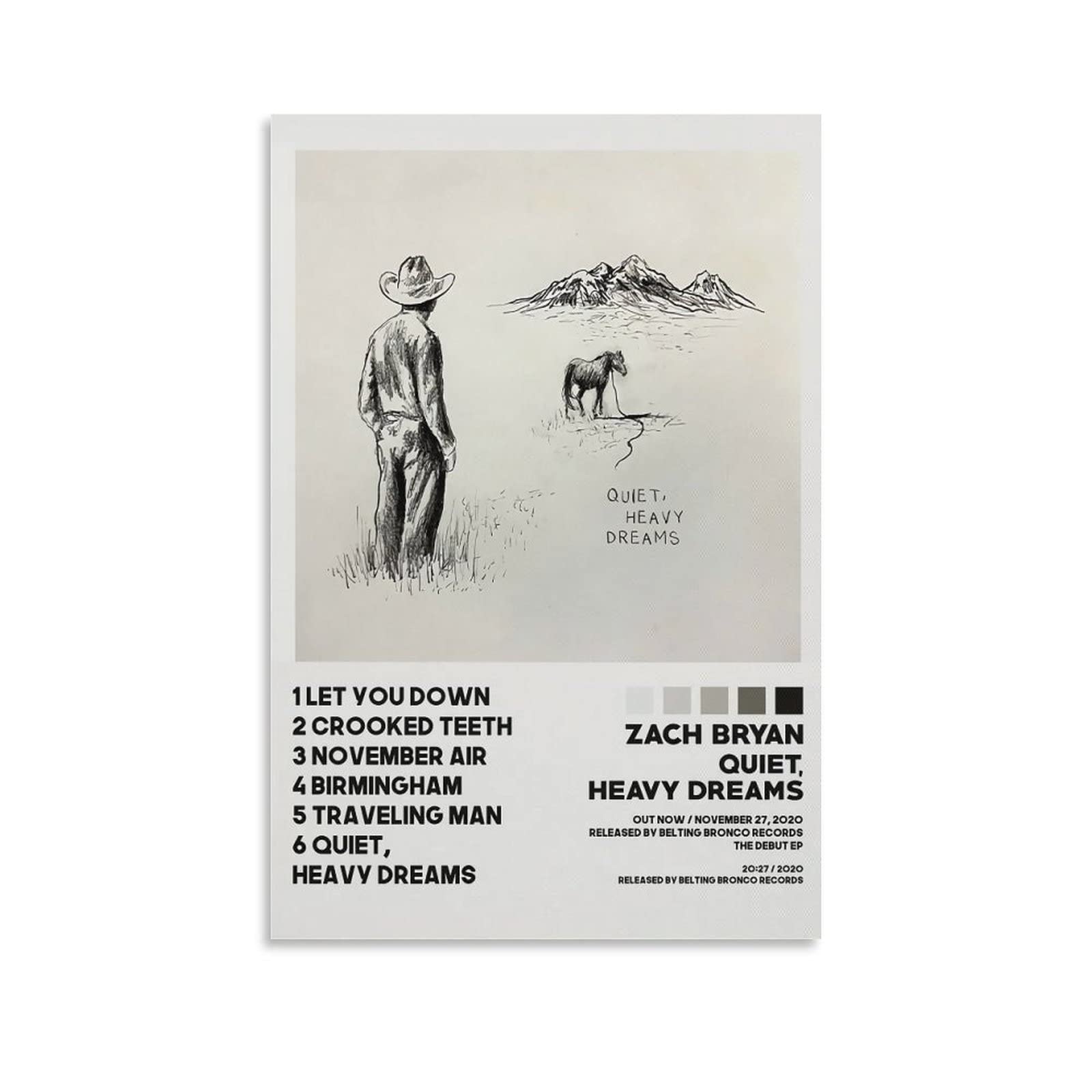
Zach Bryan doesn't do things the way Nashville wants him to. You’ve probably noticed that by now. His music is raw, often sounding like it was recorded in a kitchen—which, to be fair, a lot of it was—and his visuals follow that same "take it or leave it" energy. But there is a lot more going on with a Zach Bryan album cover than just a blurry photo or a quick snapshot. People tend to look at them as throwaways. They think it’s just a guy who forgot to hire a graphic designer.
Honestly? That’s the point.
When you look at the self-titled Zach Bryan cover from 2023, you’re seeing a grainy, sepia-toned profile of a man who looks tired. It’s not a polished studio headshot. It was shot by Trevor Pavlik, a photographer who has captured some of the most intimate moments of Zach’s meteoric rise. It feels like a memory that’s starting to fade around the edges. That specific visual choice tells you exactly what the 16 tracks inside are going to do to your head. It’s quiet. It’s heavy.
The Drama Behind the Elisabeth Cover
If you’ve been a fan for a minute, you know the Elisabeth (2020) situation. This is where things get messy and very human. Originally, the cover featured a tender, candid photo of Zach and his then-wife, Rose Elisabeth Madden. It was the visual heartbeat of the record. They married in 2020, but the marriage didn't last, ending just a year later.
Then came June 2024.
Fans opened their streaming apps and realized the photo was gone. Just... poof. In its place was a stark, black square with his name. No more Rose. No more "Elisabeth" title on the image. He even pulled the title track and "Anita, Pt. 2" from the digital version of the album. Some people call it petty; others see it as a guy just trying to move on from a ghost. Whatever you believe, it transformed the Zach Bryan album cover from a tribute into a void. It’s a rare move in the streaming era to literally "edit" your history in real-time.
American Heartbreak and the Power of the Mundane
The cover for American Heartbreak is massive, much like the 34-song tracklist it represents. You see Zach standing in front of a white background, wearing a simple t-shirt. It’s basic. It’s almost aggressively normal. Lucas Creighton, the photographer behind this and the "Something in the Orange" artwork, has a knack for making Zach look like a guy you’d see at a gas station in Oklahoma rather than a multi-platinum superstar.
There’s a theory floating around Reddit that the album is structured in three timelines. Does the cover reflect that? Maybe not literally. But its simplicity forces you to focus on the scale of the work. When you have 34 songs to get through, you don't need a busy cover. You need a blank slate.
Why the "Homegrown" Aesthetic Works
- Authenticity over Everything: In a genre filled with rhinestones and perfect teeth, a grainy photo of a dude smoking a cigarette stands out.
- The "iPhone" Vibe: A lot of his covers look like they were pulled from a camera roll. It makes the listener feel like they're part of the inner circle.
- No Labels: You rarely see "Parental Advisory" stickers or big label logos ruining the vibe.
The Great American Bar Scene
Fast forward to July 4, 2024. The Great American Bar Scene drops. The cover? It’s exactly what the title promises. It captures that dimly lit, hazy atmosphere of a place where people go to forget or remember. Trevor Pavlik was back behind the lens for this one. It feels like a companion piece to the self-titled record but with a bit more grit.
The album features heavyweights like Bruce Springsteen and John Mayer, yet the cover doesn't brag about it. There are no "FEATURING" stickers in neon letters. It’s just the scene. Zach’s visuals are consistently grounded in the "Flyover States" aesthetic—bars, fields, and old trucks.
What Most People Miss
People think these covers are accidents. They aren't. Zach is notoriously hands-on with his production, often self-producing his records to avoid the "over-edited" sound of modern country. He applies that same philosophy to his art. If a song sounds like a demo, the cover should look like a polaroid.
Look at the Summertime Blues EP. It’s a shot from behind, Zach on stage, looking out at a crowd that’s blurred into a sea of lights. It’s the perspective of the artist, not the fan. It flips the script. Instead of us looking at him, we’re looking with him.
How to Appreciate the Visuals
Don't just scroll past the thumbnail on Spotify. If you can, get the vinyl. The textures on the American Heartbreak or Zach Bryan physical releases are different. You can see the grain. You can see the imperfections that digital compression kills.
Actionable Insights for the Zach Bryan Fan
If you're trying to track down the "original" versions of his art or understand the evolution, here is what you actually need to do:
- Check the Vinyl Pressings: The physical copies of Elisabeth still have the original artwork with Rose. If you want that piece of history, the secondary market (like Discogs) is your only bet since the digital version was scrubbed.
- Follow the Photographers: If you like the "look" of a Zach Bryan album cover, follow Trevor Pavlik and Lucas Creighton. They are the architects of his visual brand.
- Look for the Details: On the Boys of Faith EP cover, notice the lighting. It’s natural, likely "golden hour" or dusk. It’s a signal for the folk-leaning, stripped-back tracks inside.
Zach’s art is a direct reflection of his refusal to play the game. The covers are grainy, sometimes edited out of existence, and always personal. They aren't meant to be pretty; they're meant to be true. Whether it's a black square or a blurry profile, it tells you exactly who the man behind the guitar is at that specific moment in time.



