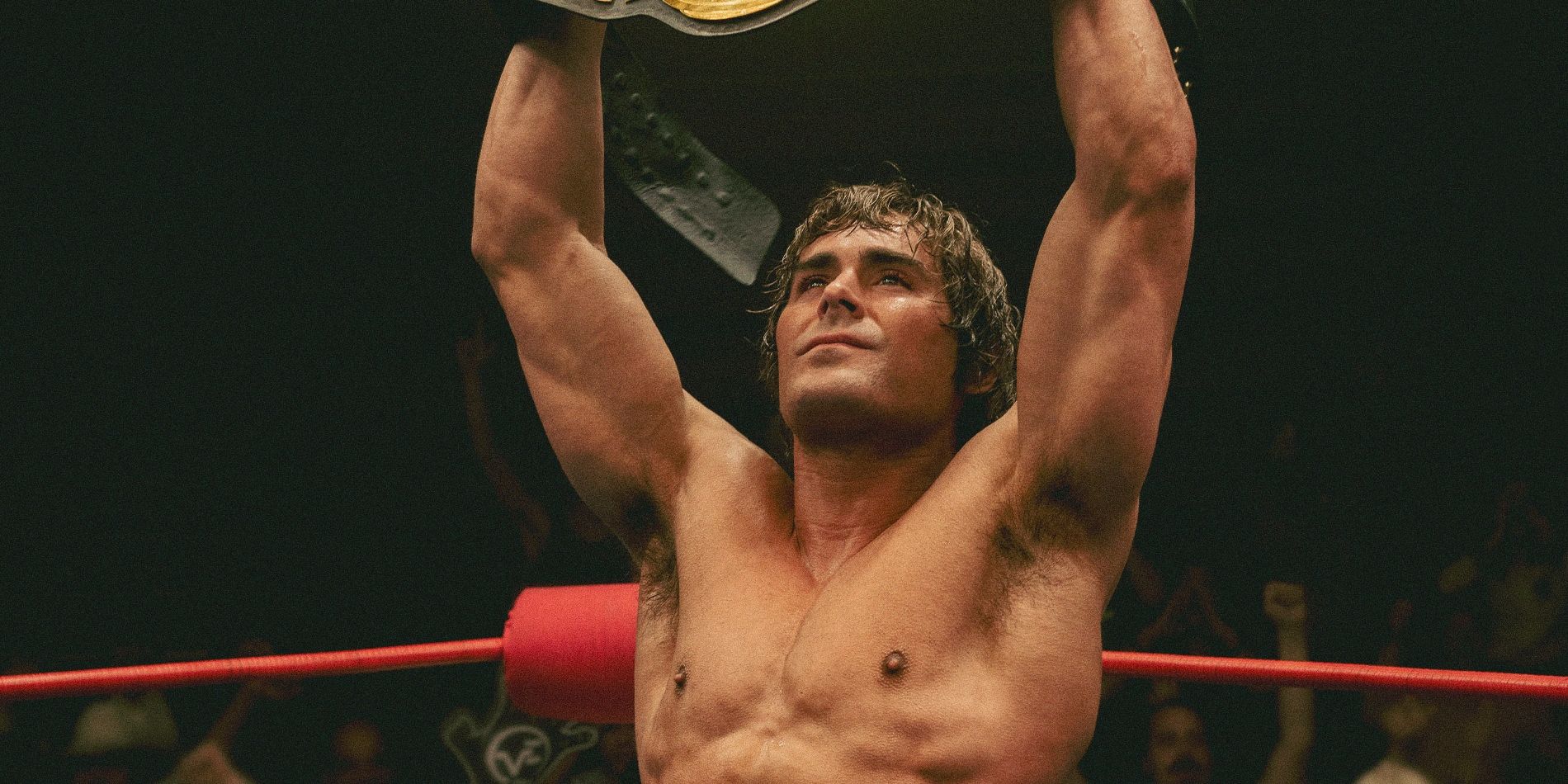
Zac Efron spent years being the guy from the posters in your middle school locker. Then he became the guy in the raunchy R-rated comedies. But nothing—honestly, nothing—could have prepared audiences for what he did in The Iron Claw.
It wasn’t just the hair. The bowl cut was, admittedly, a lot to take in. It was the fact that he essentially erased himself to become Kevin Von Erich.
The Physicality of Zac Efron The Iron Claw Transformation
You’ve probably seen the photos. He looks like a Greek statue that someone carved out of granite and then forced into tiny wrestling trunks. To get that look, Efron didn't just "hit the gym." He went into a dark place of caloric surpluses and high-volume lifting.
He was eating every two hours.
Think about that for a second. Imagine having to scarf down elk, chicken, and sweet potatoes while your body is already screaming that it's full. He worked with trainer Farren Morgan to pack on a massive amount of "clean" bulk. We're talking compound lifts like overhead squats and weighted hanging leg raises. He had to look like a man who spent his entire life in a Texas wrestling ring, and he nailed it.
But here’s the thing: the muscle wasn’t just for vanity.
In the world of the Von Erichs, physicality was a language. Their father, Fritz, ranked his sons based on their prowess and their "potential" to bring home the NWA World Heavyweight Championship. For Kevin, his body was his only currency in a house where love was conditional.
What the Movie Changed About the Real Story
If you think the movie was a tear-jerker, the real-life history of the Von Erich family is actually much darker. Director Sean Durkin had to make some tough calls.
One of the biggest talking points? The "missing" brother.
In real life, there was a sixth brother named Chris. He was the youngest, the smallest, and he desperately wanted to be a wrestler like his siblings. But his bones were brittle, and he just couldn't keep up. He eventually took his own life, just like Kerry and Mike. Durkin decided to cut Chris from the film because, frankly, he felt the audience wouldn't be able to handle that much tragedy in two hours. He folded parts of Chris's personality into Mike's character instead.
- The Barefoot Legend: In the film, Kevin wrestles barefoot from the jump. Real-life Kevin actually wore boots until about 1982.
- The Discovery: The movie shows Kevin finding Kerry after his suicide. In reality, it was their father, Fritz, who found him.
- The Kids: Kevin and Pam’s first two children were actually girls, not boys as shown in the final, emotional "I used to be a brother" scene.
These aren't just nitpicks. They change the texture of the story. But Efron’s performance acts as the glue that holds these narrative shifts together. He plays Kevin with this sort of quiet, repressed sweetness that makes the eventual "curse" feel even more unfair.
Why the Performance Still Matters in 2026
Critics at the time called it a snub when Efron didn't get the Oscar nod many expected. Looking back, that feels even more true today. He managed to portray a man who was essentially a "human shield" for his younger brothers.
He was the one who stayed.
There's a specific scene where Kevin is sitting with his sons, and he just starts weeping. He says, "I used to be a brother." It’s arguably the most honest piece of acting Efron has ever done. He’s not playing a heartthrob. He’s playing a survivor who is mourning a life that was stolen by a toxic family legacy and a sport that chews people up.
Wrestling isn't fake in the ways that matter. The bruises Efron sported on set were real. He told reporters he was "turning purple" in parts because of the bumps he took in the ring. He and co-stars Jeremy Allen White and Harris Dickinson did a lot of their own stunts, training until they couldn't breathe.
Actionable Insights for Fans and Aspiring Actors
If you're looking to understand the depth of Zac Efron The Iron Claw performance or want to apply his "method" to your own discipline, consider these takeaways:
- Commitment to the "Why": Efron didn't bulk up just to look good; he did it to understand the physical burden Kevin carried. If you're working on a project, find the physical "cost" of your goal.
- Research the Gaps: Don't just watch the movie. Read about the real Von Erich family. Understanding the "missing" brother, Chris, makes Efron's portrayal of Kevin’s loneliness even more poignant.
- Physical Literacy: If you're interested in the training, focus on functional compound movements. Efron’s "wrestler build" came from stability work, not just bicep curls.
- Emotional Restraint: Notice how Efron doesn't cry for most of the movie. The power is in the holding back. In your own creative work, sometimes what you don't show is more powerful than what you do.
The "Von Erich Curse" might have been a tabloid headline, but Efron turned it into a human story. He moved past the "Disney kid" labels once and for all. He showed us that Kevin Von Erich wasn't just a wrestler; he was a man who decided that the cycle of pain stopped with him. That's the real victory, and that's why the movie still hits just as hard years later.
To truly appreciate the film, you should look up the 1980s WCCW (World Class Championship Wrestling) tapes on YouTube. Seeing the real Kevin move in the ring—the way he literally flew through the air barefoot—makes you realize just how much detail Efron put into his footwork and presence. It wasn't just acting; it was a hauntingly accurate tribute.



