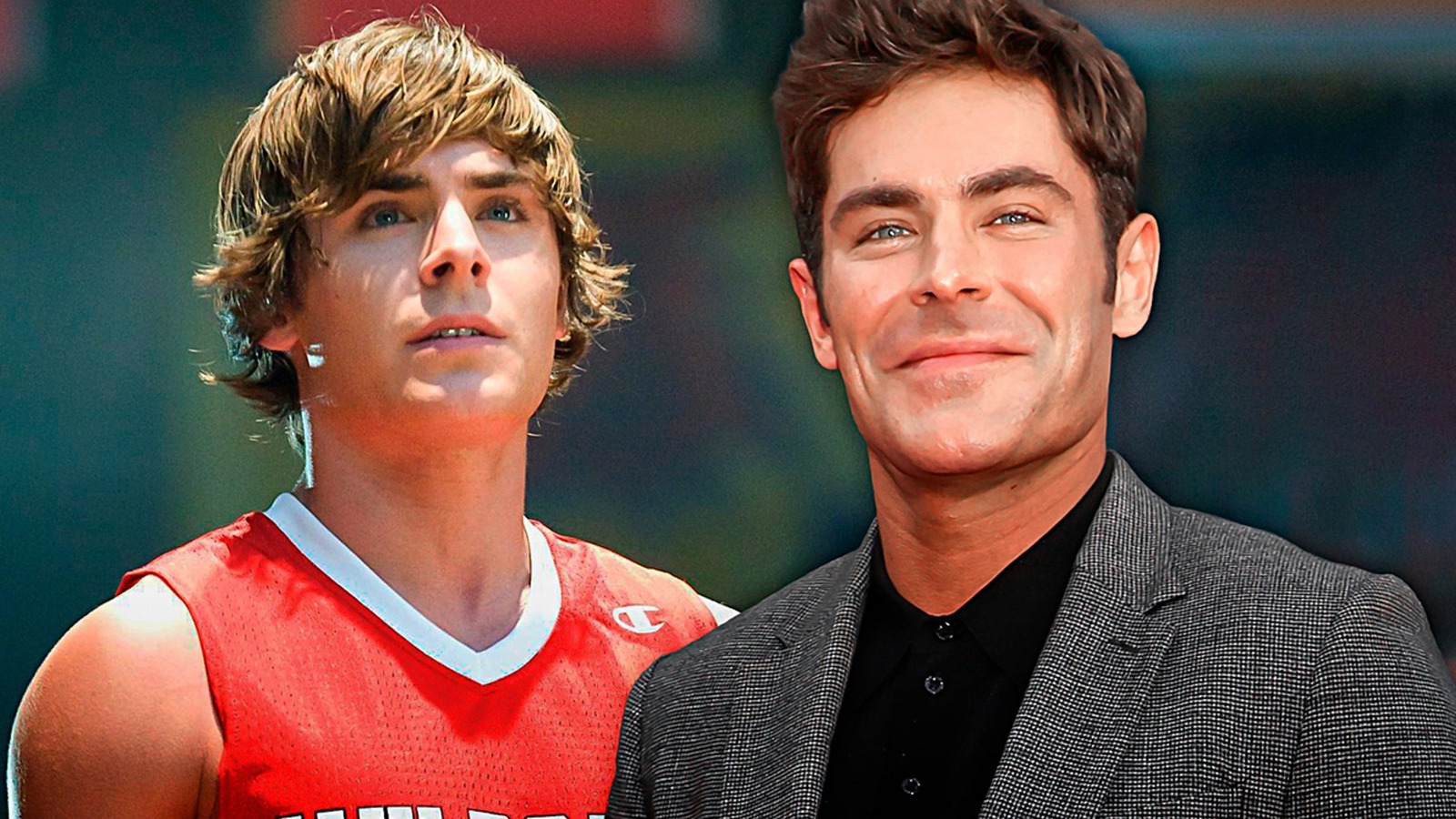
You’ve seen it. Or maybe you’ve just heard the frantic whispers on TikTok about it. A tan, chiseled, almost unrecognizable Zac Efron dressed in a sharp cream suit, striking a pose that screams 1970s disco. The big black letters across the middle are unmistakable: PRADA.
Social media went into a full-blown meltdown. People were mourning his "old face" again, accusing him of overdoing the fillers, and wondering why on earth Prada would choose a "Saturday Night Fever" aesthetic for 2025. Honestly, the internet can be a giant game of telephone where the truth gets lost in the first five seconds.
Here is the reality: The Zac Efron Prada ad isn't real. It never was.
The Viral Hoax Explained (Simply)
Basically, we all got played by a Facebook page called The Celeb Talk Girl. They posted the images with a caption about a "disco-inspired" line. It looked legit enough at a glance—the lighting was moody, the branding was spot-on, and the suit looked like something straight off a Milan runway.
But if you look closer, the red flags are everywhere. The skin texture is too smooth, the proportions are slightly "off," and the facial features look like a caricature of Efron’s actual face. It was entirely AI-generated. The account even admits in its bio that it posts "parodies and just the right amount of satire."
It’s kinda scary how fast these things spread. Within hours, the "ad" had migrated to X (formerly Twitter) and TikTok, where the satire label was stripped away and replaced with shock. This is a classic case of how AI-generated misinformation exploits our existing biases and curiosities about celebrity transformations.
Why Everyone Believed the Zac Efron Prada Ad
The reason this particular hoax caught fire is that it tapped into a pre-existing obsession with Zac Efron’s jawline.
Ever since that 2021 Earth Day video where his jaw looked significantly wider, the internet has been on a "face watch." People are primed to believe the wildest stories about his appearance because they think they’ve already seen a radical change.
The Real Story Behind the Jaw
Efron has actually addressed the surgery rumors multiple times, most notably in Men's Health. He didn't get elective plastic surgery to look like a Marvel character. He actually suffered a pretty horrific injury.
- The Accident: He was running through his house in socks (we've all been there, though maybe not with these stakes).
- The Injury: He slipped and smacked his chin against a granite fountain.
- The Result: He lost consciousness and woke up with his "chin bone hanging off" his face.
The reason his jaw looks different now is due to the masseter muscles. While he was recovering, those muscles—the ones we use for chewing—had to overcompensate. They grew massive. If you’ve ever seen a bodybuilder's bicep after intense training, it's a similar physiological response, just on a face. When he stops doing his specific physical therapy, the muscles bulge.
So, when a "Prada ad" shows up with an even more exaggerated jaw and puffed-up lips, our brains go, "Oh, here he goes again," instead of "Wait, is this a fake picture?"
What Zac Efron is Actually Doing in 2025 and 2026
While the Prada collaboration is a total fabrication, Zac isn't exactly hurting for high-fashion deals. If you want to see what a real Efron campaign looks like, look no further than Police Eyewear.
In early 2025, he was officially named the face of Police for their Spring-Summer collection. Those photos—shot by Brian Bowen Smith—are the real deal. They show a much more natural, albeit very fit, version of the actor. There’s no weird AI smoothing or "Saturday Night Fever" suits. It’s just Zac in some cool shades, leaning into a "modern masculinity" vibe.
Prada’s Real Roster
Prada, for their part, hasn't commented on the Efron hoax. They usually don't. Their actual campaign stars tend to be a bit more niche or "indie darling" (think Harris Dickinson, Troye Sivan, or Hunter Schafer). Jumping into the middle of a viral AI controversy isn't really their style.
The Problem with Celebrity AI Parodies
We're entering a weird era where we can't trust our eyes. The Zac Efron Prada ad is just one example. We've seen "photos" of the Pope in a Balenciaga puffer jacket and Katy Perry at a Met Gala she didn't even attend.
The danger isn't just that we get fooled by a fake fashion ad. It's that these images fuel toxic narratives. In Efron's case, the fake ad triggered a wave of "look-shaming." People were comparing him to Mickey Rourke and calling his appearance "sad." When you realize the image they were mocking was created by a computer program, the whole thing feels pretty gross.
How to Spot the Fakes
Next time you see a "shocking" celebrity campaign, check these things:
- Official Channels: Did the brand (Prada, Gucci, etc.) post it on their Instagram? If not, it’s probably fake.
- The Hands: AI still struggles with fingers. Look at the hands in the Efron "ad"—they’re often blurry or have weird joint placements.
- Source Material: Did it come from a "parody" account? Check the bio.
- Reputable Fashion News: Sites like Vogue, WWD, or Business of Fashion will report on major celebrity signings. If they're silent, the "news" is fake.
The Actionable Bottom Line
Don't let the algorithm bait you into "face-watching." The Zac Efron Prada ad is a ghost—a digital hallucination designed to get clicks.
What you can do next:
- Verify before sharing: If a celebrity looks "unrecognizable" in a new ad, spend thirty seconds on the brand's official website.
- Support the real work: If you're a fan of Zac, check out his actual partnerships, like the Police eyewear line, or his recent film work in The Iron Claw and A Family Affair.
- Report AI misinformation: Most platforms now have a "misleading" or "AI-generated" tag for reporting content that poses as real news.
We have to get better at discerning reality from "pop culture chaos." Zac Efron is still out here making movies and selling sunglasses; he just isn't doing it for Prada in a 1977 disco suit.