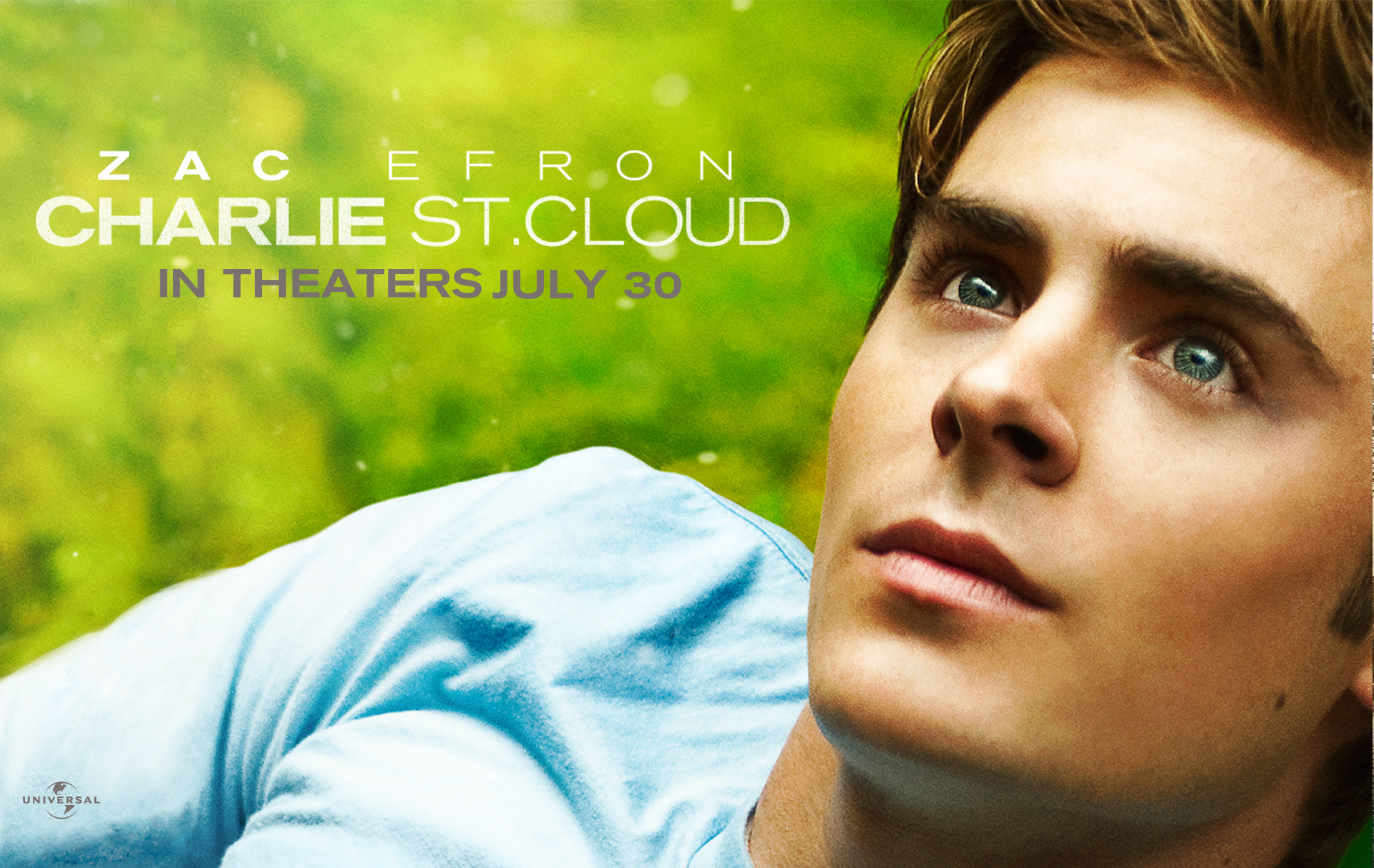
If you were around in 2010, you remember the hair. That perfectly coiffed, slightly sandy-blonde Efron swoosh that defined a generation of Disney fans. But Zac Efron in Charlie St. Cloud wasn't just another teen heartthrob project. It was supposed to be the moment. The big pivot.
Coming off the massive success of High School Musical and the surprisingly charming 17 Again, Efron was at a crossroads. He could have played it safe. Instead, he chose a supernatural drama about grief, sailboats, and a guy who literally spends his nights playing catch with his dead brother's ghost.
The Performance That Tried to Change Everything
Charlie St. Cloud is a character carrying a lot of weight. He’s a sailing prodigy with a scholarship to Stanford, but then a car accident kills his younger brother, Sam (played by Charlie Tahan). Charlie survives—technically he died and was revived by a paramedic—and he walks away with the ability to see the dead.
Honestly, it’s a heavy premise.
Most critics at the time were pretty brutal. They called it "schmaltzy." They said Efron was too "pretty" to be taken seriously as a grieving cemetery caretaker. But looking back, there’s a vulnerability there that people missed. Efron wasn't just leaning on his looks; he was trying to figure out how to be a "serious" actor. He spent weeks in Vancouver and Gibsons, British Columbia, learning to handle a sailboat for real. No green screens for the sailing shots—that was him on the water.
He also worked with acting coach Howard Fine to dig into the psychological side of loss. It’s a quiet performance.
Why the Movie "Failed" but Stayed Relevant
Financially, the movie wasn't a blockbuster. It cost about $44 million to make and only pulled in around $48 million worldwide. In Hollywood math, that’s a loss. But it found a second life on DVD and streaming. Why? Because it tapped into a very specific kind of emotional honesty that younger audiences actually connected with, even if critics hated the "supernatural romance" tags.
The chemistry between Zac Efron and Charlie Tahan is the actual heart of the film. Forget the romance with Tess (Amanda Crew) for a second. The scenes in the woods at sunset, where the brothers practice baseball because of a promise Charlie made before the accident? Those are the scenes that still get people.
It’s about the guilt of surviving.
- Director: Burr Steers (who also directed Efron in 17 Again)
- Source Material: Based on Ben Sherwood's novel The Death and Life of Charlie St. Cloud
- Filming Locations: The lush, foggy landscapes of British Columbia stood in for the Pacific Northwest.
- The "Efron Effect": This was the first time he really ditched the singing and dancing to prove he could carry a dramatic lead.
Breaking Down the "Pretty Boy" Stigma
One of the biggest hurdles for Zac Efron in Charlie St. Cloud was his own fame.
People wanted him to be Troy Bolton forever. When he showed up on screen with dirt under his fingernails and a haunted look in his eyes, some viewers just didn't buy it. But if you watch it now, especially after seeing him in The Iron Claw or Extremely Wicked, Shockingly Evil and Vile, you can see the seeds of his later career.
He was learning how to use his physicality. In this movie, it wasn't about being "buff"—though his workout routine with trainer Romana Braganza for this film was intense—it was about being "capable." A sailor’s build.
There's a scene where Charlie has to choose between his promise to Sam and saving Tess, who is lost at sea. It's high stakes and arguably a bit over-the-top, but Efron sells the desperation. He isn't just a poster on a wall anymore; he’s a guy breaking under the pressure of two different worlds.
The Book vs. The Movie
If you've read Ben Sherwood’s book, you know the movie took some liberties. The book is arguably darker. It spends more time on the technicalities of the "in-between" world. The movie, however, pivots hard into the romance.
Some fans of the novel felt the film version simplified the grief. They aren't wrong.
The movie focuses heavily on the "God gave you a second chance" angle, which can feel a little heavy-handed. But it captures the vibe of the Pacific Northwest perfectly. The fog, the sailboats, the quiet cemeteries. It’s a mood piece.
What We Can Learn From Charlie's Journey
The legacy of this film isn't the box office numbers. It’s the conversation it started about moving on.
We all have "ghosts"—promises we made to people we’ve lost, or versions of ourselves we can’t let go of. Charlie’s struggle to leave the woods and actually live is something anyone who has dealt with loss understands.
If you're revisiting this movie today, don't look for a masterpiece. Look for the transition. You're watching an actor fight to be seen as more than a commodity. It’s a film about second chances, both for the character and the star.
To get the most out of a rewatch or your first viewing, keep these things in mind:
- Watch the background: The cinematography by Enrique Chediak is actually stunning. The way he uses light during the "golden hour" scenes in the forest is intentional. It represents the thin line between day and night, life and death.
- Pay attention to the score: Rolfe Kent’s music is subtle but does a lot of the heavy lifting during the more emotional brother-to-brother scenes.
- Compare it to Efron's later work: If you’ve seen The Iron Claw, come back to this. You’ll see a fascinating evolution in how he portrays brotherly love and the burden of family expectations.
Take a Saturday night, dim the lights, and give it another shot. It’s better than the 2010 reviews let on.
Next Steps for Fans: If you want to see how Zac Efron's acting style evolved from this specific point, watch Me and Orson Welles (released around the same time) to see his range, or jump straight to The Iron Claw to see the ultimate culmination of his "brotherhood and grief" performances.



