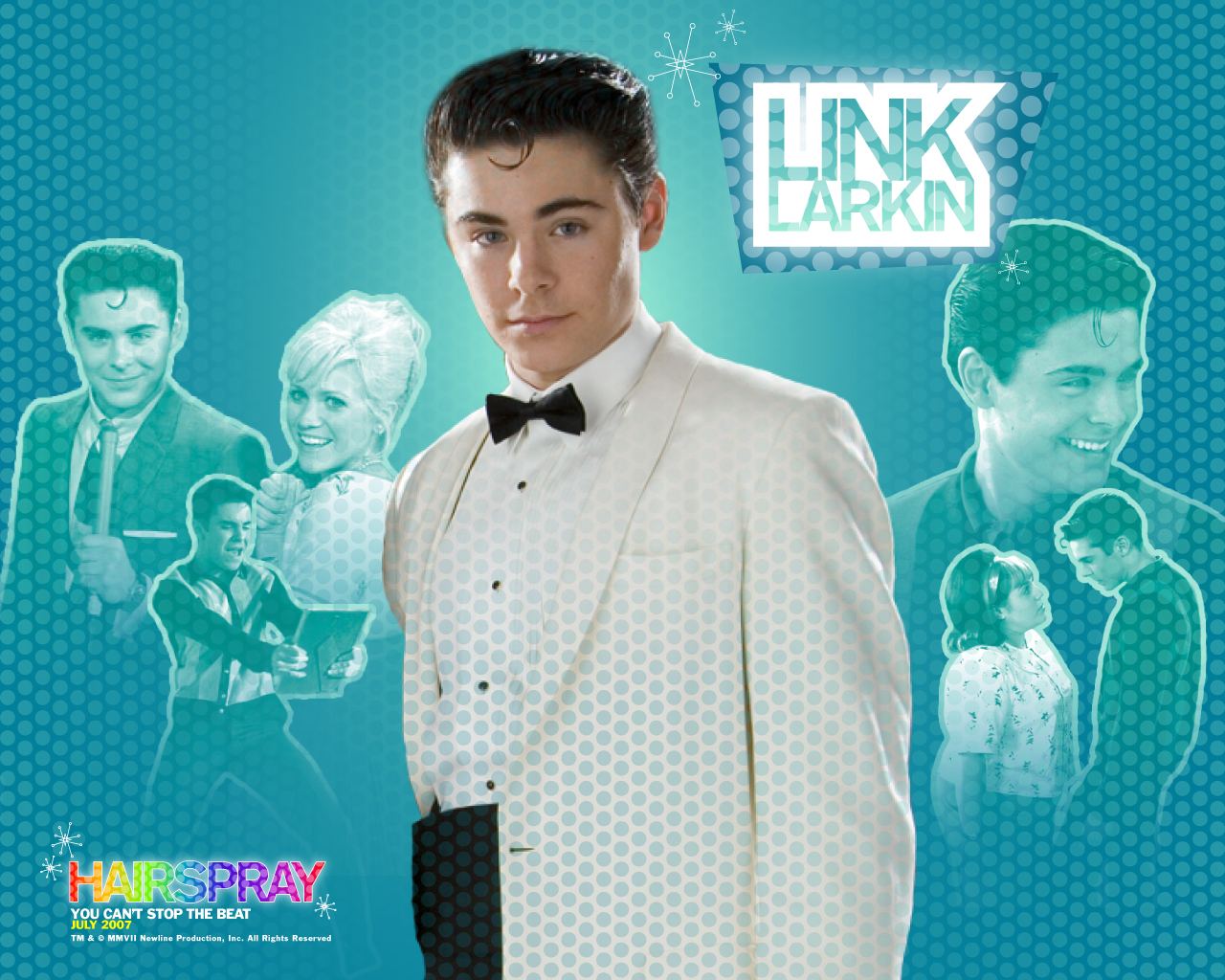
Honestly, it’s wild to think about now, but back in 2007, Zac Efron was at a massive crossroads. He was the High School Musical kid. The posters were on every bedroom wall, and the "Troy Bolton" shadow was so long it threatened to swallow his entire future career. Then came the Zac Efron Hairspray movie—a project that could have easily been just another teen musical but instead became a masterclass in how to transition from a Disney idol to a legitimate movie star.
People forget how much was riding on this.
Link Larkin isn't just a guy with a pompadour and a nice voice. In the 2007 adaptation of the Broadway smash, Efron had to play a "cool" kid who actually stood for something. If he failed, he was just Troy Bolton in a different wig. If he succeeded, he proved he could hang with heavyweights like John Travolta, Michelle Pfeiffer, and Christopher Walken. Spoiler: he totally nailed it.
The Audition That Almost Failed (Because He Smiled Too Much)
You’d think being the most famous teenager on the planet would make an audition a breeze. It didn't. Director Adam Shankman actually had a weirdly specific problem with Zac during the casting process.
The issue? Zac Efron smiled too much.
Shankman literally told him to stop. He wanted Link Larkin to have this "too cool for school" Elvis energy, not the "happy-to-be-here" Disney vibe. Zac has talked about this in interviews, mentioning how he had to try four or five times to get the smirk right instead of the full-blown grin. It’s kinda funny when you think about it. Most actors get notes to be more "personable," but Efron was so naturally charismatic he had to actively dial it back to find the character's edge.
Studying the King
To get the vibe right, Zac basically went to Elvis Presley boot camp. He spent night after night watching old clips of the King—specifically focusing on the head moves, the shoulder twitches, and those iconic hip thrusts.
It wasn't just about looking cool, though. He had to learn how to move like a 1960s heartthrob while performing "Ladies' Choice," a song written specifically for the film version that wasn't in the original Broadway show. If you watch that scene closely, you can see the Elvis influence in how he anchors his weight and uses his eyes. It’s calculated, but it feels effortless.
What People Get Wrong About Link Larkin
There’s a common misconception that Link is just a shallow love interest for Tracy Turnblad. That’s a total surface-level take.
In the 1988 original John Waters film, Link (played by Michael St. Gerard) is a bit more of a "smarmy" character. But in the 2007 Zac Efron Hairspray movie, Link undergoes a genuine moral transformation. He starts as a guy obsessed with his image and his "big break" on national TV. He’s dating Amber Von Tussle because it’s the "right" thing for his career.
But when he falls for Tracy, he’s choosing to burn his bridge to the status quo.
The moment he walks into the jail cell to find Tracy—or when he pulls Little Inez onto the stage during the Miss Teenage Hairspray pageant—he isn’t just being a "nice guy." He is effectively ending his career as a mainstream, "safe" teen idol in the world of 1962 Baltimore. He chooses integration over fame. Efron plays that shift with a sincerity that most teen actors at the time couldn't have pulled off.
The Grind: Rehearsals and Sore Calves
Making a musical is brutal. This wasn't a "show up and look pretty" kind of gig. The cast spent two full months in intense rehearsals before a single frame was shot.
We’re talking eight-hour days of constant dancing.
Zac has mentioned that his calves were basically on fire the entire time. They used tons of ice and physical therapy just to keep the "Council Kids" from falling apart. If you look at the "Nicest Kids in Town" number, the sheer athleticism is staggering. They aren't just "doing steps"; they are performing high-energy, high-impact cardio while trying to maintain perfect 1960s posture.
One cool behind-the-scenes detail: the "hairspray" cans on set. They weren't actually filled with hairspray. Often, they used a special type of "stage spray" or even deodorant in some takes because it showed up better on camera. Real hairspray is a fine mist that’s hard to see under bright studio lights, but the filmmakers needed that big, visible cloud to emphasize the "Hairspray" brand.
Why We Are Still Talking About It in 2026
It’s been nearly two decades since the movie hit theaters, and it still feels fresh. Why?
Part of it is the chemistry. The bond between Zac and Nikki Blonsky (Tracy) felt incredibly real. They were both young, both experiencing a massive career surge, and both clearly having the time of their lives. But more than that, the Zac Efron Hairspray movie represents a turning point in how Hollywood viewed "teen stars."
Efron used this movie to pivot.
Directly after Hairspray, he started taking more diverse roles—from the indie Me and Orson Welles to the raunchy comedy Neighbors and eventually the gritty The Iron Claw. Link Larkin was the bridge. It was the role that proved he could sing his own parts (unlike in the first High School Musical, where his voice was famously blended with Drew Seeley's), do his own stunts (the dancing), and carry a big-budget studio film.
The Musical Legacy
The soundtrack is still a banger. "Without Love" remains a high-water mark for movie musical numbers, blending four-part harmonies with a clever, fast-paced lyrical structure. You’ve got:
- Link's smooth, R&B-influenced crooning.
- Tracy's belting pop energy.
- Seaweed’s soulful, high-energy runs.
- Penny’s "new girl" transformation.
It’s a perfect storm of casting and musical direction.
Actionable Insights for Fans and Aspiring Performers
If you’re revisiting the film or looking to learn from Efron’s career move, here are a few things to keep in mind:
- Watch the "Elvis" influence: If you’re a performer, study the "Ladies' Choice" number. Notice how Zac uses his "center of gravity" to mimic Elvis without becoming a caricature. It's about the vibe, not just the movements.
- Appreciate the vocal growth: Compare the vocals in Hairspray to High School Musical. You can hear the work he put into his lower register to sound more like a 1960s rock-and-roll singer.
- The "Pivot" Strategy: Use Efron's career as a case study. He didn't run away from musicals; he chose a "better" musical with a more complex message to transition away from Disney.
- Check out the "Set Diary": If you can find the old "Behind the Scenes" footage or Hayley Podschun’s set diaries, it gives a great look at the "Council Kid" training that made the movie look so polished.
The Zac Efron Hairspray movie isn't just a nostalgia trip; it’s a masterclass in professional evolution. It’s about a guy who stopped smiling for the cameras and started acting for the story.



