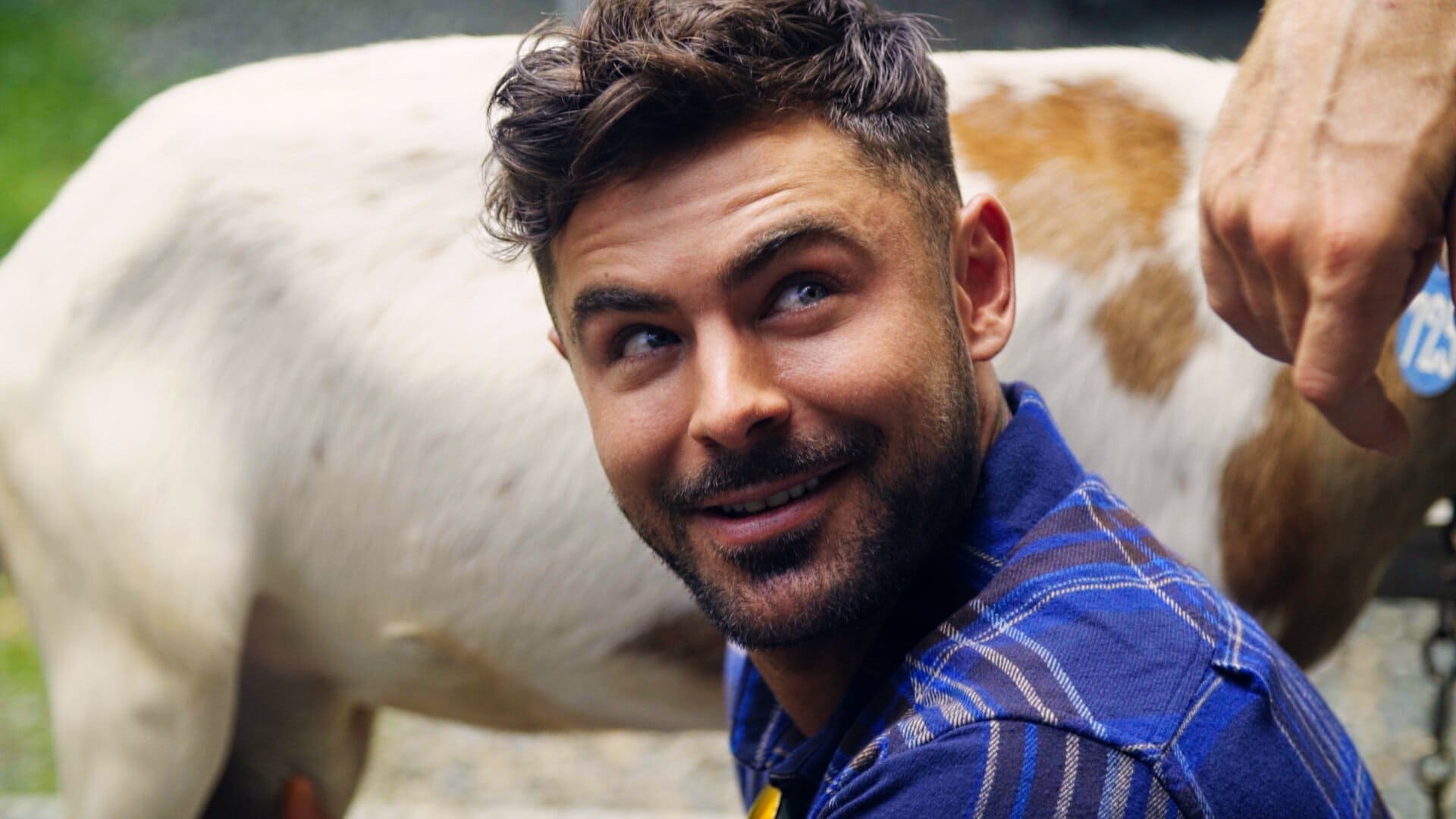
When the trailer first dropped for Zac Efron Down to Earth, most of us expected a standard Hollywood travelogue. You know the drill. A tanned celebrity walking through exotic markets, pretending to enjoy street food while a massive security detail hovers just off-camera. But what we actually got was a bit weirder, a lot more earnest, and surprisingly controversial.
It’s been a few years since that first season hit Netflix, and honestly, the conversation hasn't really died down. If anything, it’s shifted. People aren't just talking about Zac’s "dad bod" (which, let’s be real, was just a normal muscular guy who ate a carb once) or his rugged new look. They’re debating the actual science—or lack thereof—behind the show.
The Bromance and the "Superfood Hunter"
At the heart of the show isn't just Efron. It’s his co-host and executive producer, Darin Olien.
Darin is a "superfood hunter." That’s a real title he uses. He’s the guy who helped formulate Shakeology and wrote a book called SuperLife. In the series, he plays the role of the wise, slightly crunchy mentor to Efron’s wide-eyed student.
The dynamic is basically:
- Darin says something incredibly intense about "vibrational frequencies" or "cellular hydration."
- Zac says, "Wow," or "Dude, that’s crazy."
- They both jump into a freezing cold lake or eat a literal giant beetle.
It works because Zac is genuinely likable. You can tell he’s tired of the "High School Musical" ghost that follows him around. He wants to learn. He wants to save the planet. He’s just maybe not always talking to the most traditional scientists to figure out how to do it.
Why Everyone Is Still Talking About the Water Episode
If you’ve seen the show, you remember the France episode. This is where things got... complicated. Zac and Darin meet a "water sommelier" in Los Angeles named Martin Riese. He’s a guy who treats water like fine wine, and he sits them down with Anna Kendrick to taste different bottles.
He tells them that distilled water is basically "leaching" minerals from your body and that you need high TDS (Total Dissolved Solids) water for it to be "functional."
The Scientific Backlash
This is where the experts lost it. Jonathan Jarry from the McGill Office for Science and Society and various writers at VICE pointed out that a lot of this is, well, bunk.
Your body doesn't "leach" minerals because you drank a glass of purified water. You get most of your minerals from the food you eat, not the bottle you’re sipping from. The show’s suggestion that certain waters are basically "medication" is the kind of stuff that makes doctors' eyes twitch.
But here’s the thing: while the "water sommelier" stuff was a bit much, the second half of that episode was actually brilliant. They went to Paris and looked at the Eau de Paris system. Paris has one of the most advanced public water systems in the world, with over 1,000 fountains (some even dispense sparkling water) to discourage the use of single-use plastics.
That’s the core tension of Zac Efron Down to Earth. It’s half noble environmentalism and half "bro-science" wellness.
From Iceland to Australia: A Global Journey
The show covers a massive amount of ground. In Season 1, they hit Iceland, Costa Rica, Sardinia, Lima, Puerto Rico, London, and Iquitos.
- Iceland: They looked at 100% renewable energy. It was fascinating to see how they use geothermal and hydro power to literally bake bread in the ground.
- Sardinia: This was the "Blue Zone" episode. They met centenarians—people living past 100—and tried to figure out why. Spoiler: It’s mostly low-protein diets, lots of walking, and strong community ties. Not a magic pill.
- Puerto Rico: Filmed after Hurricane Maria. It was a heavy, necessary look at how islands can build sustainable food systems after a disaster. Meeting Chef José Andrés was a highlight here.
Then Season 2 happened. Because of the pandemic, they stayed entirely in Australia. This season felt a bit more grounded. They focused on regenerative agriculture, habitat conservation (helping koalas after the bushfires), and the Great Barrier Reef.
It felt like they listened to the critics a little bit. There was less "magic water" and more "how do we stop the soil from dying?"
The "Grounding" Controversy
One of the most viral moments from the series involved Darin telling Zac to walk barefoot on the grass to "reset his circadian rhythm" after a long flight. This is a practice called Earthing or Grounding.
Darin claims the earth has an electromagnetic charge that helps your body heal.
Does it? Honestly, the evidence is pretty thin. Most scientists will tell you that the reason you feel better walking barefoot in the grass isn't because of electrons flowing into your feet—it’s because you’re outside, off your phone, and taking a breath of fresh air.
Does it matter if the "why" is wrong if the "what" (going outside) is good for you? Maybe. But for a show that aims to educate, the distinction is important.
Is the Show Actually Sustainable?
Critics were quick to point out the irony. Here are two guys flying around the world on private-ish jets to tell us how to reduce our carbon footprint. It’s a classic "celebrity activist" trap.
To be fair, the show acknowledges this. Zac mentions he wants to "get out of Hollywood" because the lifestyle isn't sustainable for his mental health or the planet. And the production did make efforts to highlight local solutions rather than just American "fixes."
What We Can Actually Learn from Zac Efron Down to Earth
Forget the "functional water" for a second. If you strip away the questionable wellness advice, there are some really solid takeaways that actually make sense for a normal person's life.
- Stop buying bottled water. Just don't. The environmental cost of the plastic is insane. If you live somewhere with safe tap water, use a filter and a reusable bottle.
- Eat more fiber. One of Darin's few points that every doctor agrees on is that most of us are fiber-deficient. Eat the beans. Eat the vegetables. Your gut will thank you.
- Community is health. The Sardinia episode showed that being lonely is as bad for your health as smoking. The longest-living people in the world don't live in gyms; they live in tight-knit villages where they walk to see their friends every day.
- Support local food. Whether it's the "Potato Cryopreservation" in Peru or the communal gardens in Costa Rica, the message is clear: the closer your food is grown to your house, the better it is for everyone.
The "Efron Effect"
Despite the scientific hiccups, the show did something important. It brought environmentalism to a demographic that might not usually watch a dry, academic documentary.
Seeing Troy Bolton geek out over a geothermal power plant makes sustainability seem... cool? Kind of?
It’s easy to be cynical about celebrity documentaries. But if seeing Zac Efron milk a goat or look at a "living green wall" in London makes someone think twice about their plastic waste, that’s a win.
What’s Next for You?
If you want to live a bit more like the show—minus the private jets—here is how to actually start:
- Audit your plastic: Look at your bathroom and kitchen. How much of that could be replaced with refillable options?
- Find a Blue Zone habit: You don't have to move to Italy. Just try walking 15 minutes after dinner or joining a local club to boost your social connections.
- Question the "Superfoods": Next time someone tells you a "miracle berry" will cure everything, remember the Sardinia episode. The "secret" was just simple, whole foods and a lot of movement.
The reality is that Zac Efron Down to Earth isn't a textbook. It’s a conversation starter. Take the travel inspiration and the environmental passion, but maybe keep a grain of salt (or a high-TDS mineral) handy for the medical advice.



