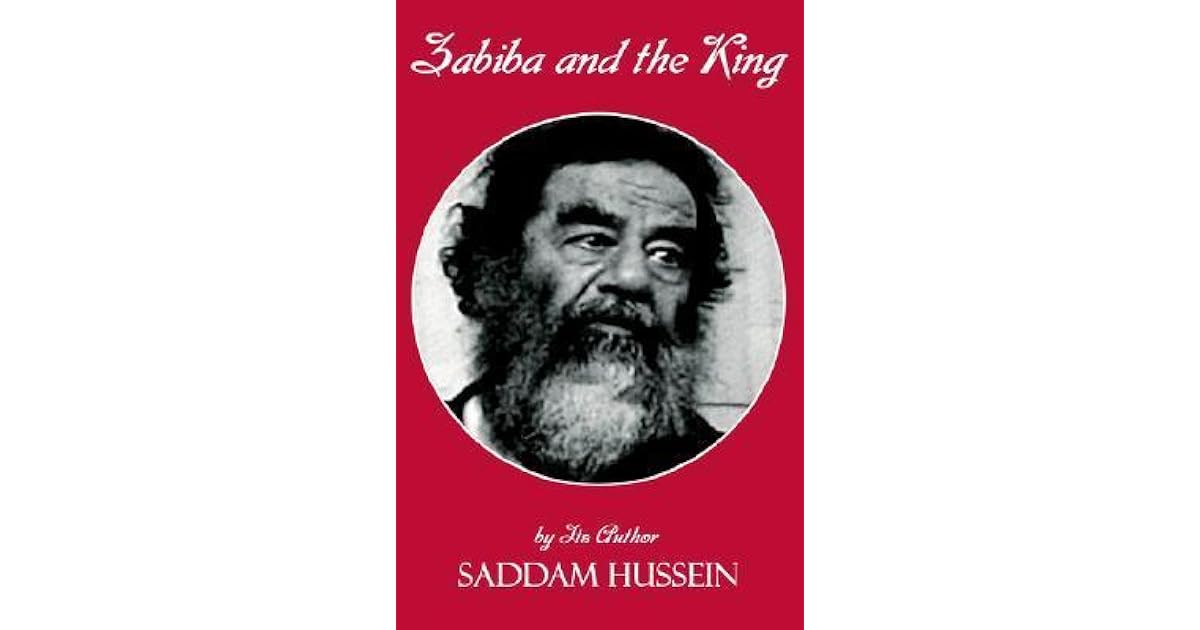
Believe it or not, Saddam Hussein wrote a romance novel. Honestly, it sounds like the setup to a weird joke. But in 2000, three years before the U.S. invasion of Iraq, a book titled Zabiba and the King (Zabibah wal-Malik) hit the shelves in Baghdad. It wasn't just a local curiosity. It became an absolute sensation. It was turned into a 20-part TV series and a massive spectacular musical.
People were obsessed.
The book was originally published anonymously. However, the CIA and Middle East experts quickly sniffed out the truth. The prose was clunky. It sounded exactly like the dictator's long-winded, rambling speeches. Every literary critic in Iraq called it a "masterpiece," mostly because the alternative was a one-way trip to a windowless basement.
The Weird Plot of Zabiba and the King Explained
The story is set in the 7th or 8th century around Tikrit, Saddam's actual hometown. Our hero is a powerful, lonely King who falls for a beautiful, virtuous peasant girl named Zabiba. They spend most of the book just... talking.
It’s not exactly 50 Shades of Grey.
Actually, it’s kinda the opposite. The King is obsessed with Zabiba’s mind. They sit in his palace and have these endless, soul-crushing dialogues about leadership, the "will of the people," and why the King is actually a great guy who is just misunderstood by his enemies.
It’s all a big metaphor
If you haven't guessed it yet, the King is Saddam. He’s portrayed as this noble, wise father figure. Zabiba represents the Iraqi people—pure, hardworking, and loyal to the crown.
Then things get dark.
Zabiba has a "brutish" and "cruel" husband who forces himself on her. This happens on January 17th. If that date rings a bell, it should. That’s the anniversary of the start of the 1991 Gulf War (Operation Desert Storm). The husband is a transparent stand-in for the United States. The "rape" of Zabiba is Hussein’s heavy-handed way of describing the U.S. intervention in Iraq.
Why the CIA Actually Read This Book
You’d think the CIA has better things to do than read bad romance novels. But they took Zabiba and the King very seriously. In 2001, the agency spent months dissecting the text. They weren't looking for literary merit; they were looking for a psychological profile.
They wanted to know what was going on in Saddam's head.
The book reveals a leader who felt isolated. He saw himself as a servant to a people who didn't always appreciate his "sacrifices." It also hinted at his obsession with his own legacy. By writing a novel, Saddam wasn't just being a "creative type." He was trying to cement his status as a "Renaissance Man"—a philosopher-king who could out-write the best authors in the Arab world.
The ghostwriter theory
Most experts, including Ofra Bengio who wrote extensively for the Middle East Quarterly, believe Saddam didn't write every single word. He likely dictated his rambling thoughts to a team of terrified ghostwriters. They had to weave his political rants into a story while making sure the "King" looked perfect.
The result? A book that The Guardian later called "boring and incoherent."
What Most People Get Wrong About the Ending
The ending is where it gets truly bizarre. Zabiba dies a martyr's death during a massive battle against the "infidels" and the treacherous husband. The King is also mortally wounded. But before he dies, the people—inspired by Zabiba—don't just pick a new king.
They form a council.
The book strangely advocates for a weird, quasi-democratic system where the "people" rule themselves, provided they follow the path the King laid out. It’s a total contradiction. How can an absolute dictator write a book about the beauty of the people's power?
Basically, it was a PR stunt. He wanted to look like the champion of the common man while maintaining total control.
Where Can You Find it Now?
You can actually buy this book today. After the fall of Baghdad in 2003, an American businessman named Robert Lawrence had it translated into English. He figured people would be curious about the "Dictator's Diary" vibes.
You can find copies on Amazon or at retailers like Walmart and Barnes & Noble. Usually, the cover features a very stressed-out, bearded Saddam from his capture days, which is hilarious because he was at the height of his power when he actually "wrote" it.
Quick Facts for the Curious
- Length: About 160-200 pages depending on the translation.
- Original Price: 1,500 dinars (less than $1 back in 2000).
- Sequels: He allegedly wrote three more: The Fortified Castle, Men and the City, and Begone, Demons.
- Sacha Baron Cohen Connection: The 2012 movie The Dictator was very loosely "inspired" by this book, though the movie is a comedy and the book is... well, it’s accidentally funny.
Actionable Insights for History Buffs
If you're planning on diving into this piece of "Dictator-lit," keep a few things in mind to get the most out of the experience:
- Read for Subtext, Not Plot: Don't expect a thrilling romance. Read it as a propaganda document. Every time the King talks about "protection," think about the Ba'ath party's grip on the country.
- Note the Dates: Look for references to January 17th or other historical milestones. Saddam was obsessed with numerology and historical parallels.
- Compare with his Speeches: If you look at transcripts of Saddam's public addresses from the late 90s, the sentence structure and vocabulary are identical to the King's dialogue in the book.
- Check the Translation: Ensure you are getting the Robert Lawrence version if you want a readable English text, as some bootleg versions are nearly impossible to follow.
This book isn't going to win any literary awards, but as a window into the ego of one of the 20th century's most notorious figures, it's a fascinating, albeit clunky, relic of history.



