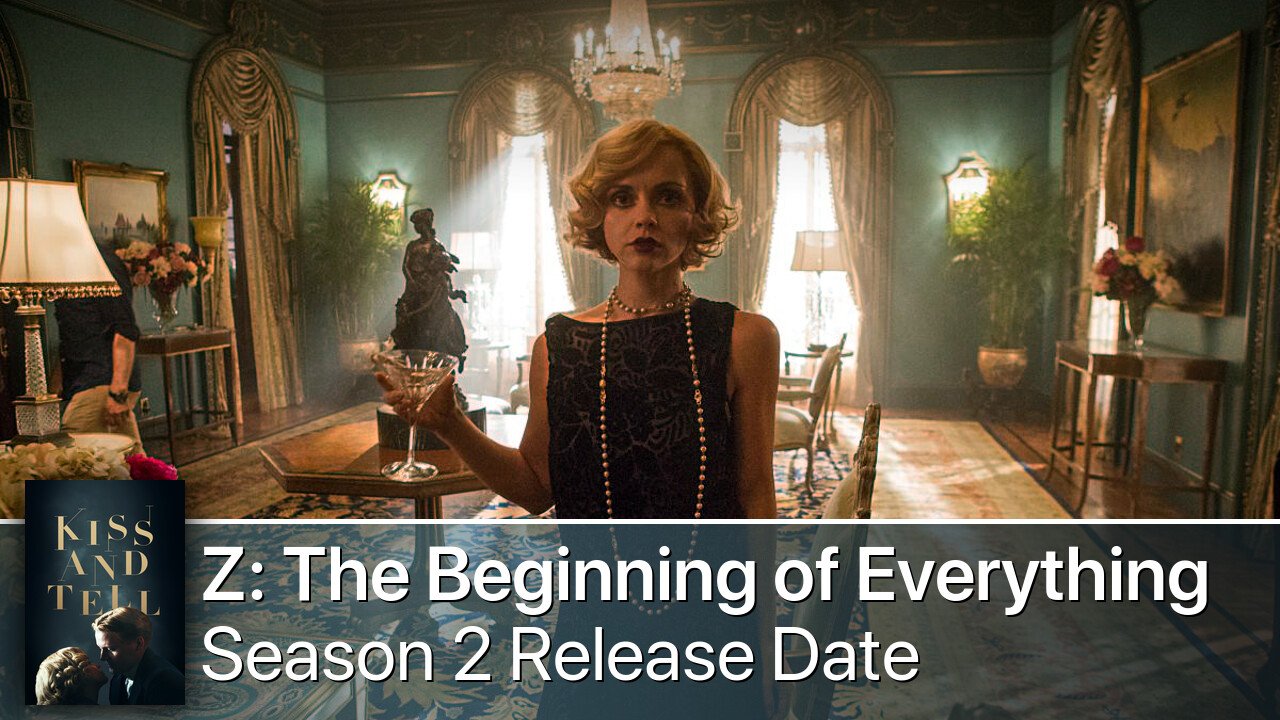
She wasn't just a flapper. Honestly, calling Zelda Fitzgerald a "flapper" is like calling a hurricane a "breeze." It’s technically true but misses the entire point of the destruction and beauty left in the wake. When people talk about Z The Beginning of Everything, they’re usually looking for the truth behind the Amazon Prime series starring Christina Ricci or the Therese Anne Fowler novel that inspired it. But the real story? It’s messier. It’s a tragedy of stolen intellectual property, mental health struggles, and a woman who was constantly told she was a muse when she actually wanted to be the creator.
Scott and Zelda. The golden couple of the Jazz Age. Everyone knows the myth. They danced in fountains, drank too much gin, and defined the 1920s. But look closer. Beneath the sequins, Zelda Sayre was a girl from Montgomery, Alabama, who was essentially hunted by a young soldier named F. Scott Fitzgerald. He didn't just love her. He was obsessed with her "coolness" and her wit. He needed it. He literally took her diary entries and pasted them into his novels. That’s the core of Z The Beginning of Everything—the realization that the "Great American Novelist" was often just a very good editor of his wife’s life.
The Montgomery Wildcat Meets the Princeton Boy
Zelda wasn't some wilting flower waiting to be saved. In Montgomery, she was a legend before she ever met Scott. She smoked in public, she swam in flesh-colored bathing suits that made people gasp, and she basically ran the social scene. When Scott showed up at a country club dance in 1918, he was just another lieutenant.
He fell hard. But Zelda was smart. She wouldn't marry him until he proved he could provide for her. She knew her value. It wasn't until This Side of Paradise became a hit that she finally said yes. And right there, at the very start, the dynamic was set: his success was built on her personality.
Did you know that after the book came out, Zelda wrote a review of it for the New York Tribune? She joked—but was she really joking?—that Mr. Fitzgerald seemed to believe that "plagiarism begins at home." She recognized her own words in his characters. This wasn't just a "behind every great man" situation; it was a "this man is using my soul as a rough draft" situation.
Why Z The Beginning of Everything Refuses to Fade
The fascination with Zelda persists because she represents the ultimate "what if." What if she had been born fifty years later? What if Scott hadn't been so threatened by her talent?
In the 1920s, the world was changing fast. Technology was booming. Radios were in homes. Cars were everywhere. Yet, for all that "modernity," a woman was still expected to be a decorative accessory. Zelda tried to break out. She didn't just want to be "Mrs. F. Scott Fitzgerald." She threw herself into ballet at an age when most dancers are retiring. She practiced until her feet bled, eight hours a day, trying to join the San Carlo Opera Ballet in Naples.
She was desperate for something of her own.
The Competition That Broke Them
Scott hated the ballet. He thought it was a joke. He called it "useless." But the real tension peaked when Zelda wrote her only finished novel, Save Me the Waltz.
She wrote it in six weeks while she was at Phipps Clinic, a psychiatric facility. She sent it to Scott’s publisher, Maxwell Perkins, before Scott even saw it. He was livid. Not because it was bad, but because she had used the same biographical material he was planning to use for Tender Is the Night. He called her a "third-rate writer" and forced her to excise large portions of her own life story so he could use them instead. Think about that for a second. Imagine being told you can't tell your own story because your husband has a prior claim on your experiences. It’s haunting.
Mental Health and the "Crazy Zelda" Myth
We have to talk about the "madness." Zelda was eventually diagnosed with schizophrenia, though modern historians and psychologists often debate this. Some suggest it was bipolar disorder; others argue she was simply a woman pushed to the brink by a toxic marriage and a lack of agency.
She spent the 1930s in and out of clinics. Highland Hospital in Asheville, North Carolina, became her final home.
The Fire at Highland Hospital
The ending of Zelda’s life is something out of a gothic horror movie. In 1948, a fire broke out at the hospital. Zelda was locked in a room on the top floor, awaiting insulin shock therapy. She couldn't get out. She died along with eight other women. It was a brutal, unfair end for a woman who had burned so brightly. Scott had died eight years earlier, believing he was a failure. They are buried together in Rockville, Maryland, under a headstone that quotes the final line of The Great Gatsby.
Seeing Through the Glossy TV Version
The show Z The Beginning of Everything did a decent job of showing the grit, but it still felt a bit "Hollywood." To really get Zelda, you have to read her letters. They are vibrant, strange, and full of weirdly beautiful metaphors.
She wasn't just a party girl. She was a painter. Her watercolors are haunting—distorted cityscapes and Alice in Wonderland scenes that show a mind that saw the world in high definition. She was also a mother to Scottie, their only daughter, though their parenting was, let’s be honest, pretty negligent. They were "party parents" who left their child with nannies while they roamed Europe.
Real Evidence of the Theft
If you ever get the chance, look at the archival comparisons between Zelda's journals and Scott’s manuscripts. Scholars like Matthew J. Bruccoli have documented the overlap. It’s not a conspiracy theory. It’s a fact. Scott literally cut and pasted.
- The "Beautiful Little Fool" quote: In The Great Gatsby, Daisy says she wants her daughter to be a "beautiful little fool." Zelda said that first, right after giving birth to Scottie, while she was still coming off the anesthesia.
- The Journals: Scott used Zelda's teenage diaries to capture the voice of Gloria Patch in The Beautiful and Damned.
- The Conflict: Their marriage was a constant battle over who "owned" their life together.
How to Explore the Real Zelda Today
If you’ve watched the series and want to go deeper, don't just stop at the fiction. The reality is more compelling.
Read "Save Me the Waltz" first. Ignore Scott’s criticisms. It’s a dense, lyrical, and sometimes difficult book, but it’s her voice. It’s her side of the marriage. It’s the "counter-novel" to Scott's Tender Is the Night. Reading them back-to-back is like watching a divorce happen in slow motion through two different lenses.
Check out the Nancy Milford biography. This is the gold standard. Published in 1970, it was the first book to really treat Zelda as an individual rather than just a footnote to Scott. It changed the way the world looked at her.
Visit Montgomery (if you're a nerd like me). The F. Scott and Zelda Fitzgerald Museum is located in the house they lived in for a short time in the early 30s. It’s the only museum in the world dedicated to them. You can see Zelda's paintings there, and they are way more telling than any biography.
Look at the paintings. Zelda's art is often overlooked. She painted flowers that look like they're screaming and New York streets that look like they're melting. It’s expressionism at its most raw. It proves she had a creative vision that didn't need Scott's prose to exist.
Ultimately, Z The Beginning of Everything is about the struggle for identity. It’s about how hard it is to be yourself when the person you love is trying to turn you into a character. Zelda wasn't a muse. Muses are passive. Zelda was a creator who got caught in the gears of a world that wasn't ready for her.
The next time you see a "flapper" costume or a "Gatsby" themed party, remember the woman who was actually there. She was more than just a dress and a bobbed haircut. She was a writer, a dancer, a painter, and a human being who was desperately trying to find the beginning of her own story.
To truly understand the legacy of this era, start by separating the myth from the woman. Stop looking at her as Scott’s wife and start looking at her as an artist who was denied her medium. That’s where the real story begins. If you want to dive into her world, skip the glossy adaptations for a moment and go straight to her letters. "Dear Scott, Dearest Scott..." those words contain the real heat of the Jazz Age, not the champagne bubbles. Look for the "Zelda Fitzgerald: The Collected Writings" edited by Matthew J. Bruccoli. It’s the closest you’ll ever get to hearing her speak without a filter. Also, pay attention to the dates—notice how her creativity spiked exactly when she was farthest away from Scott's influence. That’s no coincidence.



