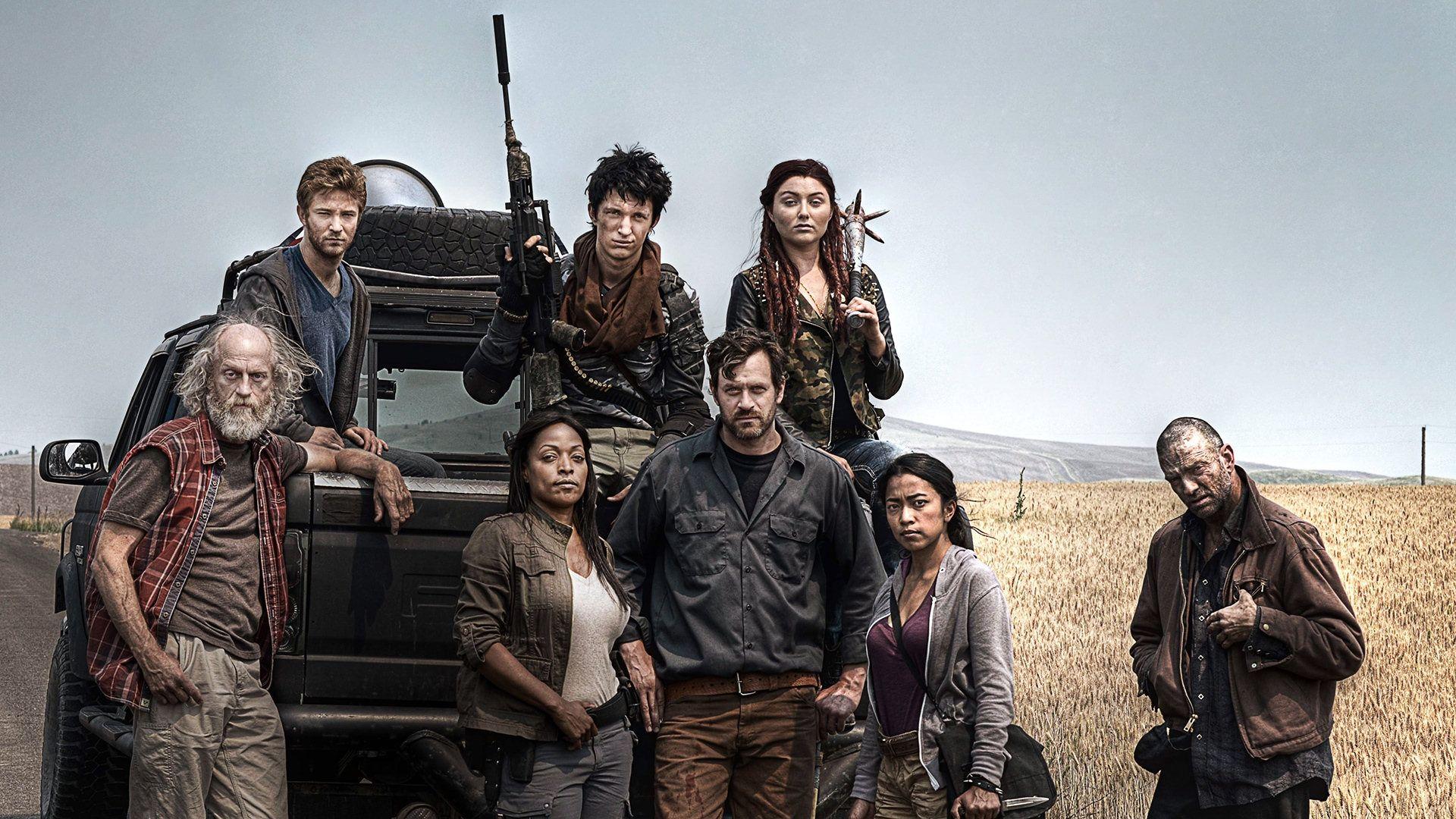
It still stings. Honestly, if you were there during the Syfy heyday when Z Nation the end of everything felt like a looming threat both on-screen and off, you know the vibe. Most zombie shows take themselves way too seriously. They’re all grit, grime, and long monologues about the "new world order." But then there was Z Nation. It was messy. It was weird. It was unapologetically low-budget but high-concept. When the news finally broke that Season 5 would be its last, fans weren't just losing a show; they were losing the only series that dared to give us a "Zombie George Washington" and a giant rolling cheese wheel of death in the same breath.
The cancellation wasn't exactly a shock to industry insiders, but for the "Z-Whackers" watching at home, the finale—aptly titled "The End of Everything"—carried a massive burden. It had to wrap up five years of road-tripping across a post-apocalyptic America while answering the one question that drove the entire plot: Can humanity actually be saved, or is the blend of human and zombie DNA the only way forward?
The Chaos of the Final Episode
"The End of Everything" didn't just wrap up the season; it acted as a frantic, blood-soaked love letter to the characters. We saw the culmination of the "Newmerica" arc. For those who need a refresher, the final season moved away from just running away from hordes. It got political. It got social. It introduced the "Talkers"—zombies who retained their consciousness as long as they ate "biscuits" (don't ask, it’s a long story involving Z-weed and brains).
Basically, the finale forced a confrontation between the living, the dead, and the "Talkers." At the center of it all was Murphy. Keith Allan’s portrayal of Alvin Murphy is arguably one of the most underrated performances in sci-fi history. He went from a coward who was forcibly experimented on to a blue-skinned messiah, and finally, to something resembling a hero. In the finale, Murphy has to make a choice. He eats a piece of Sun Mei’s brain—yes, literally—to gain her knowledge and the secret to the cure. It’s gross. It’s perfect. It’s exactly how Z Nation should have handled its climax.
Why the Ending Felt Like a Beginning
Syfy cancelled the show in December 2018. David Michael Latt, the co-founder of The Asylum, had to deliver the news via a video on Twitter. It sucked. But here’s the thing about Z Nation the end of everything: it didn't actually feel like a funeral.
The writers, perhaps sensing the axe was coming, wrote a finale that functioned as a "bridge." When Murphy tastes the brain and realizes he now possesses the formula for the cure, he doesn't just look at the camera and wink. He looks satisfied. He looks like a man who finally has the leverage he always wanted. The final shots showed our core group—Warren, Doc, 10K, and Murphy—still standing. In a genre where everyone usually dies in a tragic blaze of glory, Z Nation chose hope. Or at least, a very cynical, blue-tinted version of hope.
You have to remember that this show lived in the shadow of The Walking Dead. While AMC’s juggernaut was busy killing off fan favorites for shock value, Z Nation was busy building a family. By the time we reached the end, the plot about the cure almost mattered less than the fact that Doc was still cracking jokes.
The Sun Mei Factor
One of the biggest talking points in the finale was the fate of Sun Mei. She was the brilliant scientist who held the key to everything. Her death was tragic, but her legacy was the literal "brain food" Murphy consumed. This wasn't just a plot device. It was a symbolic passing of the torch. Throughout the series, the "experts" and the "authorities" failed. The CDC failed. The military failed. It was only when the "freaks"—the survivors who had been chewed up and spat out by the system—took control that a solution was found.
The Black Summer Connection
A lot of people forget that Black Summer exists in the same universe. It’s weird, right? Black Summer is intense, terrifying, and has zero humor. It’s the "Serious Prequel." When Z Nation ended, fans flocked to the Netflix spin-off hoping for cameos or nods to the original crew.
They didn't get them.
This created a bit of a rift in the fandom. Some loved the gritty realism of the early days of the "Zpocalypse," while others missed the campy fun of the main show. But if you look closely at the lore, the "End of Everything" in the main series actually gives the prequel more weight. We know that things eventually get "better"—or at least weirder. We know that the chaos of the early days eventually leads to a blue man leading a band of misfits toward a possible cure. It makes the struggle in Black Summer feel a little less nihilistic.
Doc: The Heart of the Apocalypse
We can’t talk about the end without talking about Doc. Russell Hodgkinson's character was the soul of the show. While everyone else was focused on the cure or the "Talkers," Doc was focused on keeping the group's spirits up. His survival to the very end was a deliberate choice. He represented the part of humanity that refuses to be hardened by trauma. In the final episodes, his interactions with 10K showed a mentorship that had fully evolved into a father-son bond. 10K finally getting his "10,000 kills" (or close enough) was a milestone, but seeing him find peace was the real ending.
The Production Reality
Let's get real for a second. The show was cheap to make. That’s why it lasted five seasons. The Asylum is known for "mockbusters," but Z Nation was their crown jewel. They knew how to stretch a dollar. They filmed in Spokane, Washington, using the local geography to stand in for everything from the Midwest to the deep south.
But by 2018, the numbers were dipping. Live viewership was down, which is the kiss of death for cable networks. Even though the streaming numbers on Netflix were solid, Syfy didn't own the streaming rights in a way that made it profitable for them to keep it going. It was a business decision, plain and simple. It wasn't about the quality of the story. It was about the spreadsheet.
What Most People Get Wrong About the Finale
There’s a common misconception that the show was "left on a cliffhanger." I disagree. While it left the door open for a Season 6, the character arcs were largely complete.
- Roberta Warren finally found her purpose beyond being a soldier.
- Murphy transitioned from a selfish survivor to a literal savior.
- 10K found a family and a reason to live that didn't involve a scope.
- Citizen Z found a life beyond the frozen North.
If the show had continued, it likely would have focused on the implementation of the cure and the fallout of the "Talker" revolution. But honestly? Leaving it there, with Murphy having that look in his eye, is a much more powerful "The End" than a neat and tidy resolution where everyone gets a suburban house and a white picket fence.
The Legacy of the Z-Whackers
Even years later, the show maintains a massive cult following. Why? Because it was inclusive before it was a corporate mandate. It had a diverse cast where race and gender were secondary to whether or not you could swing a spiked bat. It embraced the "weird." It wasn't afraid to fail.
When you look back at Z Nation the end of everything, you aren't just looking at the end of a TV show. You're looking at the end of an era of experimental, low-budget cable sci-fi that wasn't afraid to be stupidly fun.
How to Revisit the Z Nation Universe
If you're feeling the itch to return to the apocalypse, here’s how you should actually do it. Don't just rewatch the finale. That’s a mistake. You need the context of the journey to make the destination matter.
- Watch the "Day One" episodes of Black Summer first. It resets your expectations. It reminds you how terrifying the zombies (or "Zs") actually are. It makes the eventual levity of the main show feel like a hard-earned reward.
- Focus on the "Murphy Evolutions." Watch the pilot, then the Season 2 finale, then the Season 5 finale. The physical and psychological transformation of the character is the backbone of the entire series. It’s one of the best "unreliable narrator" arcs in modern TV.
- Check out the comic books. Yes, there are comics. Z Nation: Sea of Death fills in some of the gaps and expands the lore in ways the show's budget couldn't allow. It’s a great way to see what the world looked like beyond the Spokane-filmed locations.
- Engage with the cast on social media. To this day, Keith Allan and Russell Hodgkinson are incredibly gracious with fans. They know what the show meant to people. The "Z-Whackers" community is still active on Reddit and Facebook, and it's one of the least toxic fanbases in existence.
The show might be over, but the "End of Everything" was really just a transition. In the world of Z Nation, nothing ever stays dead for long. Whether it's through a spiritual successor or just the endless replayability of its 68 episodes, the series remains a testament to the idea that even when the world is ending, you can still find a reason to laugh—and a reason to keep walking.



