If you were watching SYFY back in late 2018, you probably remember the weird shift in energy when Z Nation season 5 finally hit the screen. It wasn't just the usual "Operation Bitemark" chaos. Something felt different. More political. A lot heavier. Honestly, after four years of Murphy's blue skin and the team trekking across a radioactive wasteland, the show decided to grow up in its final year, and it was a polarizing move for a lot of us.
The zombies weren't just brain-dead "puppies and kittens" anymore. They were "Talkers."
The Talker Pivot and Why It Actually Worked
Let’s be real for a second. By the time a zombie show hits its fifth year, the "don't get bitten" trope starts to feel pretty thin. You can only run from a slow-moving corpse so many times before the tension evaporates. Z Nation season 5 addressed this head-on by introducing a new evolutionary step. Talkers were zombies who retained their consciousness—as long as they had "Z-Biscuit" snacks to keep their brains from rotting.
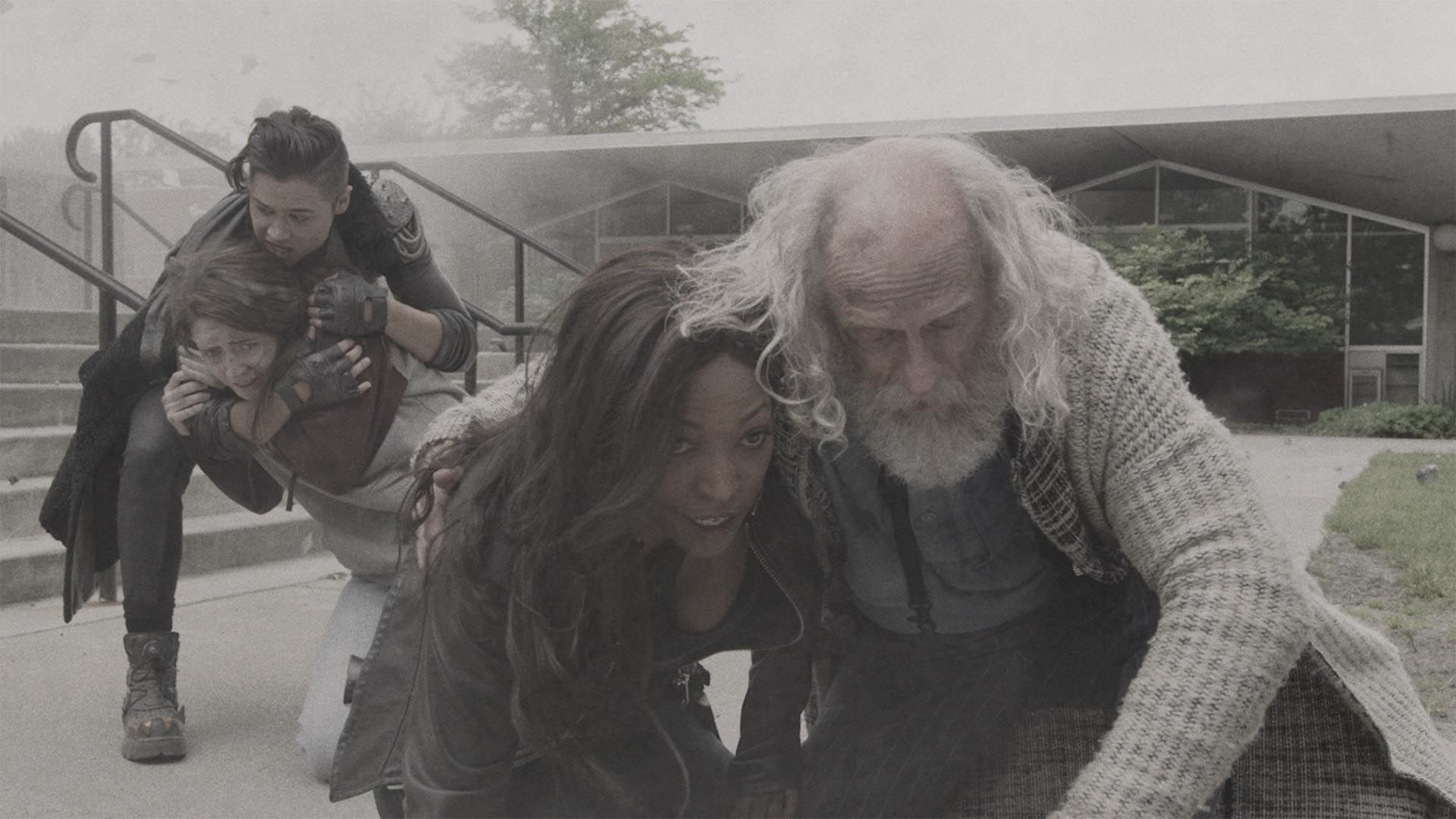
This changed the stakes entirely. Suddenly, George (played by Katy O'Brian) wasn't just fighting monsters; she was trying to build a democracy called Newmerica. It was a bold swing for a show that once featured a giant rolling wheel of cheese crushing zombies.
You had this fascinating dynamic where the living and the "partially dead" had to figure out how to share a country. It mirrored real-world anxieties in a way the show hadn't really tried before. Some fans hated it. They missed the pure, unadulterated camp. But if you look at the character growth for someone like Doc or 10K, this season gave them room to actually breathe. 10K, specifically, went through the ringer. Losing his hand wasn't just a physical blow; it was a total stripping away of his identity as the group's elite sniper.
Newmerica and the Ghost of Altruism
Newmerica wasn't just a plot point. It was the heart of the final thirteen episodes. We spent so much time watching Warren and the gang try to "save the world" in a big, abstract sense, but season 5 forced them to define what a saved world actually looks like.
Is it a world where everyone has a vote? Or just the ones with a heartbeat?
The introduction of Pandora and Estes provided the kind of human villainy that felt grounded. Sure, they weren't as flashy as some previous big bads, but their bureaucratic evil was chilling because it felt possible. They represented the segment of humanity that would rather rule a graveyard than share a garden.
Warren’s journey this season was also deeply strange. Coming off the "Black Rain" arc, she was essentially a hybrid herself. Her visions—those cryptic, fiery premonitions—drove the first half of the season. It was a bit of a slow burn, maybe too slow for some. Yet, seeing her grapple with the idea that she might be the hero or the harbinger of the end was peak Roberta Warren. Kellita Smith played that ambiguity with so much soul.
Why the Cancelation Still Stings
We have to talk about the elephant in the room. SYFY canceled the show right as season 5 was wrapping up. It’s a gut-punch.
When you rewatch the finale, "The End of Everything," you can tell the writers were trying to stick the landing while leaving the door ajar. Murphy eating the brain of the Sun Mei hybrid to gain the "cure" knowledge? Classic Murphy. Gross, morally gray, and strangely heroic. It was the perfect ending for a character who started the series as a cowardly convict and ended as the literal key to human (and Talker) evolution.
Most shows get "The Walking Dead" treatment where they just sort of linger until they're a shadow of themselves. Z Nation season 5 didn't do that. It went out while it was still trying new things. It was experimental. It was messy. It was loud.
The Technical Shift in Season 5
The production value actually took a noticeable step up here. While the budget was never "prestige TV" level—and that was part of the charm—the cinematography in the Newmerica sets had a grit that felt intentional.
- The Makeup: The "Talker" look was a subtle balance. They had to look dead enough to be scary but human enough for us to care when they were being persecuted.
- The Pacing: Unlike season 3, which felt like a massive road trip, season 5 was more localized. This allowed for better world-building at the expense of the "zombie of the week" format.
- The Tone: It leaned into the "Z-Com" (Zombie Comedy) roots less often, but when it did—like the "Alt-Life" tech stuff—it landed well.
Honestly, if you go back and watch the episode "Limbo," it's a masterclass in how this show could do bottle episodes. It was atmospheric, tense, and focused on the core cast's chemistry. That's what kept the show alive for 68 episodes. It wasn't the plot; it was the fact that we actually liked these people.
What You Should Do Now
If you've finished Z Nation season 5 and you're feeling that post-series void, there are a few specific things you can do to keep the vibe alive.
First, check out Black Summer on Netflix. It’s technically a prequel set in the same universe, though the tone is completely different. It’s hyper-realistic, stressful, and lacks the humor of the main show, but it expands the lore in ways that make the "Black Rain" mentioned in Z Nation feel more devastating.
Second, look into the Z Nation tie-in comics from Dynamite Entertainment. They fill in some of the gaps regarding the early days of the outbreak and the specific nature of the virus.
Lastly, pay attention to the careers of the cast. Katy O'Brian has since blown up in the MCU and Star Wars, and seeing her roots as George in season 5 gives you a great appreciation for her range.
The show is a relic of a specific time in cable TV when creators could just go absolutely wild with a concept. It wasn't perfect, but it was ours. The Talkers might have been a big change, but they gave the show a chance to say something real before the lights went out for good.
Next Steps for Fans:
- Watch Black Summer Season 1 and 2 to see the "pre-Z Nation" world.
- Follow the "Asylum" production house updates for any potential 10th-anniversary specials or rumors of a revival, though nothing is currently greenlit.
- Re-watch the pilot immediately after the season 5 finale to see just how far the characters traveled, both physically and emotionally.