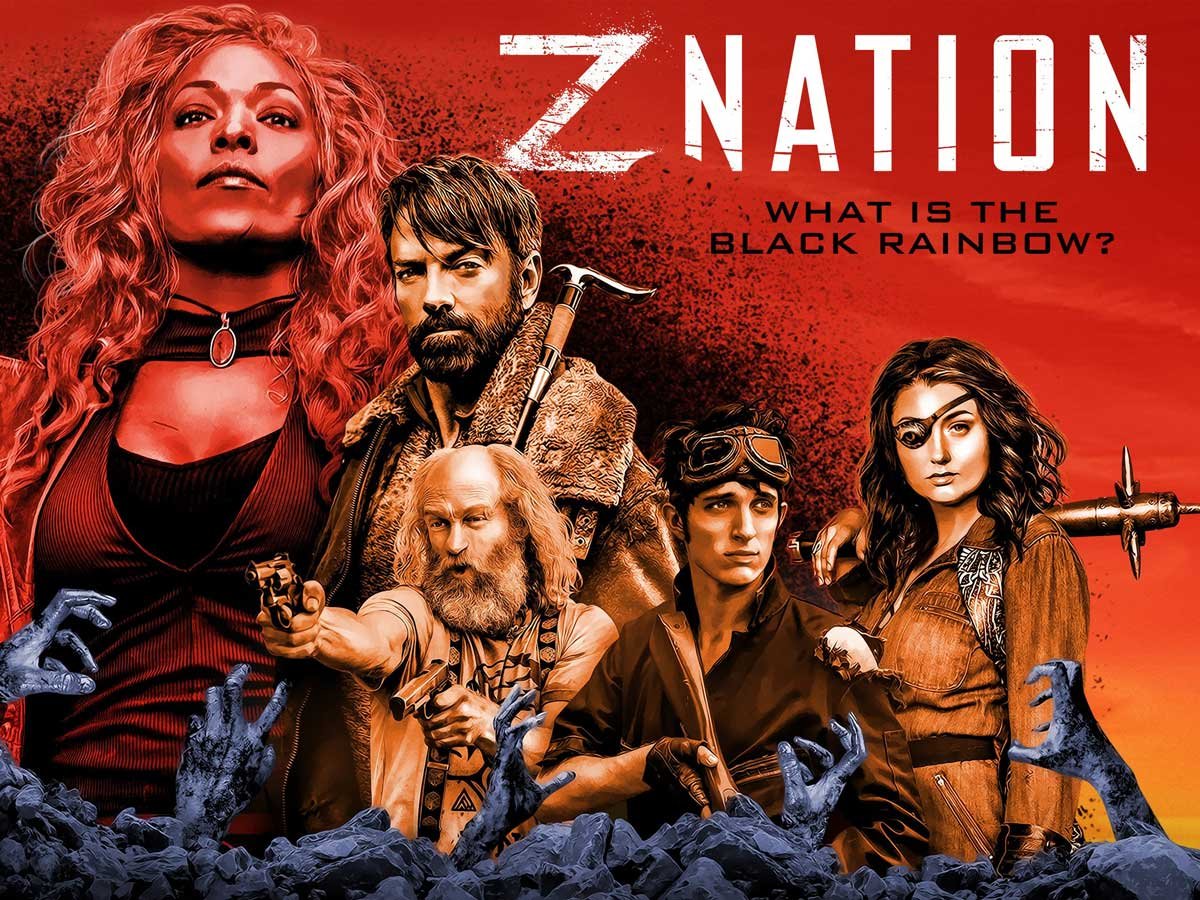
Z Nation was always the weird, scrappy younger sibling of The Walking Dead. While AMC’s juggernaut was busy being somber and depressing, Syfy’s cult hit was out here giving us zombie strippers, giant rolling cheese wheels of death, and a blue-skinned messiah. But then we hit Z Nation Season 4, and everything shifted. The show didn't just change locations; it changed its entire DNA. Honestly, it was a massive risk. Some people loved the new mystery, but a lot of us were just left scratching our heads wondering what happened to the show we knew.
The fourth season kicks off with a jarring leap. Two years have passed. That’s a long time in the apocalypse. When the premiere, "Warren's Dream," aired in September 2017, it felt like we’d walked into a different series altogether. We find Roberta Warren waking up from a coma in Zona—this supposed high-tech utopia for the ultra-rich. It’s all white walls, clean laundry, and creepy billionaires. It was a far cry from the dusty, grime-covered road trip vibe of the first three seasons. Murphy is there too, but he’s "cured," or at least looking a lot more human and a lot less like a blue raspberry popsicle. If you liked this piece, you should read: this related article.
The Reset That Changed Everything
Most shows use a time jump to skip over boring parts. Z Nation used it to reset the stakes. We find out that the mission to save humanity kind of... failed? Or at least, it stalled out. The gang is scattered. Doc and 10K are out in the woods dealing with a new, terrifying threat: Mad Zs. These aren't your grandpa’s slow-shuffling zombies. They’re fast, they’re twitchy, and they don't die with a simple brain shot. It was a smart move by the writers to keep the horror fresh, because after three years, standard zombies were basically just annoying flies to our battle-hardened survivors.
The whole season is anchored by Warren’s visions. She’s seeing a black rainbow and a burning world. Is it a psychic connection to the Reset? Is it just brain damage from the drone crash? Kellita Smith carries this season on her back with a performance that is way more stoic and haunted than before. You’ve got to admire how the show leaned into the "Newmerica" plotline, too. The idea of a safe haven in Canada became the new North Star, replacing the old goal of getting Murphy to a lab in California. It gave the characters a reason to keep walking, even when the world seemed utterly doomed. For another perspective on this story, refer to the latest coverage from Entertainment Weekly.
Why Zona Was the Ultimate Villain
Zona represents everything the show spent three years mocking. It’s the 1% literally living on an island while the rest of the world rots. But the brilliance of Z Nation Season 4 is showing that even the "perfect" society is decaying. The "Reset" wasn't just a plan to fix the world; it was a plan to kill everyone who wasn't invited to the party.
The social commentary wasn't subtle. Not at all.
When the residents of Zona start losing their minds and turning on each other, it’s a chaotic, bloody mess that feels earned. Watching Murphy navigate the politics of Zona while trying to keep his daughter Lucy safe added a layer of fatherly tension we hadn't seen much of. Lucy’s rapid aging was always a weird plot point—classic Z Nation weirdness—but in Season 4, it hit a boiling point. Seeing her grow from a child to a young woman in a matter of episodes was heartbreaking, especially given how her story ends this season.
Breaking Down the Mad Z Threat
If you’re a fan of the lore, the Mad Zs are the most significant addition to the bestiary. They are the result of the virus mutating, possibly due to the failed vaccines or environmental factors. They don't just eat; they scream and vibrate. They are genuinely unsettling.
- Speed: They move like the infected from 28 Days Later.
- Durability: Their brains are rotting in a way that makes "mercy" much harder to deliver.
- Unpredictability: You can’t kite them or lure them like the old "puppies and kittens."
The episode "The Unknowns" really showcased how the show could still do claustrophobic horror. The team gets trapped in a bunker with invisible (or at least very sneaky) threats. It reminded us that even though the show had gone "big picture" with the Zona conspiracy, it could still do the "monster of the week" stuff effectively.
The Problem With the Narrative Flow
Let’s be real for a second. Season 4 had pacing issues. By shifting away from the linear road trip, some episodes felt like they were spinning their wheels. The search for the "flinger" and the various canisters felt a bit like a fetch quest in a video game. I remember watching it live and feeling like we spent a lot of time in forests that all looked suspiciously like the outskirts of Spokane, Washington (where the show was filmed).
The absence of some characters was felt deeply. Addy and Sun Mei were largely sidelined for big chunks of the season. When you have a tight-knit ensemble like this, breaking them up is always a gamble. While it allowed Doc to have some great solo moments—and let's face it, more Doc is always a good thing—it changed the chemistry. The banter wasn't as snappy because everyone was so stressed out by the literal end of the world.
The Black Rainbow and the Finale
The finale, "The Black Rainbow," is a trip. It ties back to the Cold War, secret government satellites, and a biological weapon designed to "reset" the planet by killing everything with DNA. It’s peak sci-fi camp mixed with genuine stakes. Warren’s journey to the facility in D.C. felt like a descent into hell. The twist—that Warren was actually the one being used to trigger the Reset—was a gut punch.
It recontextualized her entire season of "heroic" visions. She wasn't the savior; she was the delivery system. That kind of subversion is why people still talk about this show years after it was canceled. It wasn't afraid to make its lead character the accidental villain.
How to Revisit the Season Today
If you’re planning a rewatch, or if you’re a newcomer jumping in, don't expect the slapstick humor of Season 2. Season 4 is the "dark" season. It’s moody. It’s atmospheric. It’s got a lot of neon and a lot of shadows.
To get the most out of it, pay attention to the background details in Zona. There’s a lot of environmental storytelling about how the rich were spending their final days. Also, keep an eye on 10K’s character arc. He goes from a kid who just wants to hit his kill count to someone grappling with the reality that the world might not be worth saving. It’s heavy stuff for a show that once had a zombie birth.
Next Steps for Z Nation Fans:
- Watch the "Black Rainbow" payoff: Go back and watch the Season 3 finale right before starting Season 4 to see how the drone crash actually transitions into the Zona arc; the visual shift is wild.
- Track the Lucy/Murphy dynamic: Focus on the "mercy" scenes in Season 4. They carry more weight once you realize the cost of the vaccine.
- Check out Black Summer: If the Mad Zs were your favorite part, watch the Netflix prequel series. It takes that "fast zombie" intensity and cranks it up to eleven, though it loses the campy humor of the main show.
- Analyze the color palette: Notice how the show uses "Zona White" vs. "Wasteland Brown" to signal the mental state of the characters.
Season 4 wasn't perfect, but it was ambitious. It tried to say something about class, environmental collapse, and the burden of leadership. It’s the bridge that took us to the final Newmerica arc in Season 5, and without it, the show wouldn't have had the same emotional resonance at the end.



