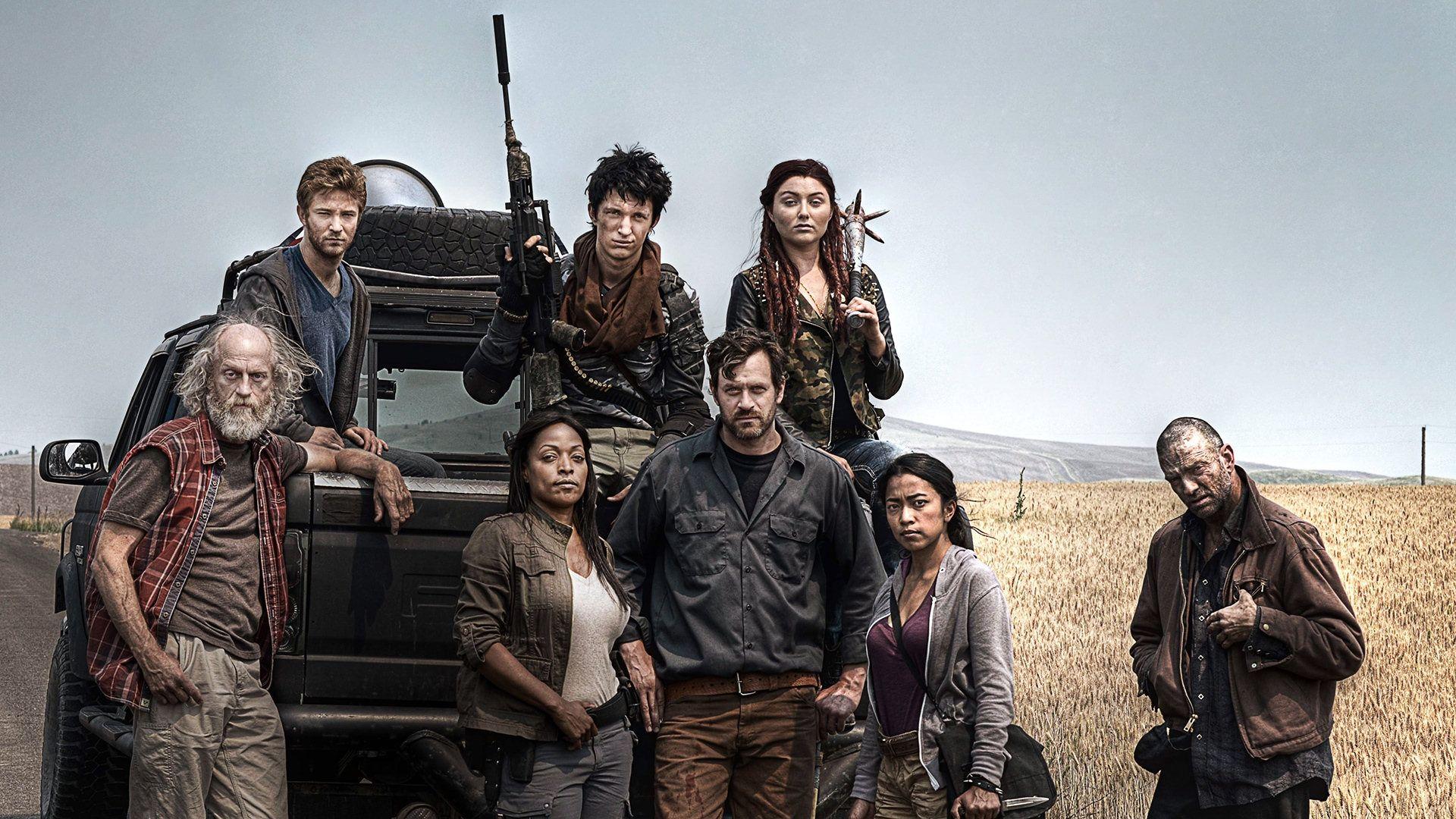
I’ll be honest with you. Most people who started watching Z Nation back in 2014 thought it was just another Syfy budget-slasher trying to ride the coattails of The Walking Dead. They were wrong. By the time Z Nation Season 2 rolled around, the show stopped trying to be a serious drama and leaned—hard—into the absolute chaos of the apocalypse. It became a weird, neon-soaked road trip that prioritized fun over misery.
It worked.
If the first season was about surviving the end of the world, the second season was about living in it. We aren't talking about farmhouses and long monologues here. We’re talking about zombie strippers, radioactive "blaster" zombies, and a baby that might actually be the antichrist. Or at least a very fast, very blue toddler.
The Murphy Evolution: From Cargo to Cult Leader
Everything in Z Nation Season 2 orbits around Alvin Murphy. Played with a sort of greasy, high-strung perfection by Keith Allan, Murphy is the only human to survive multiple zombie bites. But he isn't a hero. He’s a coward who happens to be the cure. In this season, we see his skin turn a sickly shade of blue. He starts to realize he can control the "Zs." It’s a massive shift in power dynamics.
The group—led by Roberta Warren—still treats him like a lab rat they need to deliver to California. But Murphy starts feeling a weird empathy for the undead. He calls them "his people." It’s uncomfortable. It’s funny. It makes you realize the show isn't just about killing zombies; it’s about what happens when the line between human and monster gets blurry.
Roberta Warren, played by Kellita Smith, is the absolute anchor here. Without her, the show would fly off the rails into pure slapstick. She keeps the stakes real. When they lose friends—and they lose a lot of them this season—you feel it because she feels it. She’s the one holding the compass while Murphy is trying to start a zombie cult in a strip club.
That Wild Quest for the Lab
The plot is basically a 3,000-mile sprint. The goal? Get Murphy to a lab in California to synthesize a vaccine. But season 2 throws everything at the wall. We get the introduction of the "Zeros," a powerful cartel that wants Murphy for their own reasons. This adds a layer of human threat that feels much more dangerous than the random marauders from season 1.
One of the most memorable stretches of episodes involves the "Blasters." These are zombies that were caught in a nuclear blast and mutated. They are fast. They are smart. They are terrifying. It was a bold move by the showrunners to introduce "super zombies," but it kept the horror elements fresh when the comedy started to take over.
The Bounty Hunter Problem
Because everyone knows Murphy is the cure, he has a massive bounty on his head. Enter Vasquez. He’s the mysterious lone-wolf type who joins the team, but you never quite know if he’s there to help or just wait for the right moment to cash in. The tension between him and the rest of the group provides a gritty counterbalance to the more absurd moments, like when the team encounters a literal "Zombie Grain Silo" or a weed-growing community using zombies as compost.
Honestly, the pacing of season 2 is relentless. It’s 15 episodes of pure movement.
Why Season 2 Ranks Better Than the Rest
Most fans agree that this specific run of episodes is the peak. Why? Because it found the "Z Nation" identity. It stopped apologizing for being a B-movie show and started celebrating it. You have Citizen Z (DJ Qualls) up in the North Pole, still acting as the world’s most lonely DJ/Hacker, providing the group with eye-in-the-sky intel. His subplot with the mysterious "survivor" at his base adds a layer of psychological thriller to the mix that you wouldn't expect.
- The Humor: It’s dark. Like, really dark.
- The Creativity: They invented a "Zombie Cheese Wheel." I’m not joking. A giant wheel of cheese rolling down a hill, crushing zombies.
- The Emotional Core: Despite the madness, the bond between 10K (the sharpshooter) and the rest of the group becomes the heart of the series. 10K’s goal is to kill 10,000 zombies. It sounds like a video game mechanic, but it's actually his way of coping with the trauma of killing his own father.
The Production Reality
Let’s talk shop. Z Nation was produced by The Asylum. Yes, the Sharknado people. But don't let that fool you. The makeup effects in season 2 took a massive leap forward. The "Phytombies" (plant-zombies) and the different regional Zs showed a level of practical effect creativity that rivaled much bigger budgets. They filmed mostly in Spokane, Washington, which doubled for everything from the Midwest to the California coast. It’s impressive how much they squeezed out of every dollar.
Critics at the time, like those at Variety or The A.V. Club, started to notice that the show was actually subverting the genre. It wasn't just a parody. It was a legitimate alternative for people who were tired of the "everyone is depressed and it's raining" vibe of other post-apocalyptic media.
Navigating the Lore of the Cure
The "Cure" in Z Nation Season 2 isn't a simple injection. It’s messy. Murphy’s blood is the key, but his blood is also changing him. By the time the season reaches its climax at the lab on the boat (the Hesperus), the mission has shifted. It’s no longer about saving humanity; it’s about figuring out what humanity is even going to look like.
The finale, "All Good Things Must Come to an End," is a masterclass in the "cliffhanger." It leaves the fate of almost every main character in the air. We see the introduction of the mysterious "Man" and the realization that the world might be being run by a shadow elite known as Zona. It expanded the world from a road trip to a global conspiracy.
Practical Steps for Watching or Rewatching
If you are planning to dive back into the chaos of the apocalypse, here is how to get the most out of the experience:
- Watch the "Webisodes": There are short tie-in clips that explain some of the side characters' backstories which aired during the original run.
- Track 10K's Count: If you’re a superfan, actually keep a tally of his kills throughout the season. The writers were surprisingly consistent with his numbers.
- Pay Attention to the Colors: The show uses specific color palettes for different "zones" of the country. It’s a subtle way they built the world on a budget.
- Look for the Easter Eggs: There are dozens of nods to classic horror movies like Dawn of the Dead and Night of the Living Dead hidden in the background of the set pieces.
The best way to experience this season is to stop comparing it to other zombie shows. It’s its own beast. It’s loud, it’s fast, and it’s surprisingly smart about how it handles the decay of society. Just grab some Twinkies (or whatever apocalypse snack you prefer) and enjoy the ride.



