Imagine being sixteen years old and realizing you might be the last person on Earth. Not because of a movie-set explosion, but because the silence is just too heavy. That’s the starting line for the Z for Zachariah novel. It’s a book that gets under your skin because it feels so possible. Honestly, when Robert C. O'Brien wrote this in the early 1970s, he wasn't just writing a "young adult" book; he was capturing the absolute dread of the nuclear age.
Ann Burden is alone. She’s living in a valley that somehow escaped the radiation that wiped out everything else. It’s her home, her garden, and her burden. For a year, she survives on her own. She’s got her dog, Faro, and a routine that keeps the madness at bay. But then, she sees smoke. Someone is coming. And that’s where the Z for Zachariah novel shifts from a survival story into something way more psychological and, frankly, terrifying.
What Most People Get Wrong About Ann and Loomis
Most readers go into this thinking it’s going to be a romance. Or at least a story of two people teaming up to restart humanity. "Adam and Eve at the end of the world," right? Wrong. That's the biggest misconception about the Z for Zachariah novel.
When John Loomis arrives in his radiation-proof "safe-suit," he isn't a hero. He’s a scientist. He’s sick. And he’s deeply, dangerously flawed. The tension doesn't come from external monsters; it comes from the power dynamic inside that valley. Ann wants a companion. Loomis wants control.
O'Brien does this incredible job of showing how quickly "civilized" behavior strips away when there’s no one left to watch. Loomis starts dictating how the farm should run. He starts claiming things. He starts claiming Ann. It’s a slow-burn horror that feels more real than any zombie apocalypse because it’s about human ego.
The Science and the "Safe Suit"
Is the science in the Z for Zachariah novel actually accurate? Sorta.
O'Brien (who was actually Robert Leslie Conly, a journalist for National Geographic) knew his stuff. The concept of a "temperature inversion" keeping the radiation out of the valley is a real meteorological phenomenon. It’s why some valleys get trapped in smog while the mountains stay clear. In the book, this "weather shield" is what keeps Ann alive.
Then there’s the suit. In the 1970s, the idea of a self-contained, radiation-proof suit was the peak of speculative tech. Loomis’s obsession with the suit—and Ann’s eventual realization that the suit is the only way to escape—is the ultimate irony. The thing that brought him to the valley is the only thing that can get her out of it.
Why the Ending Actually Matters
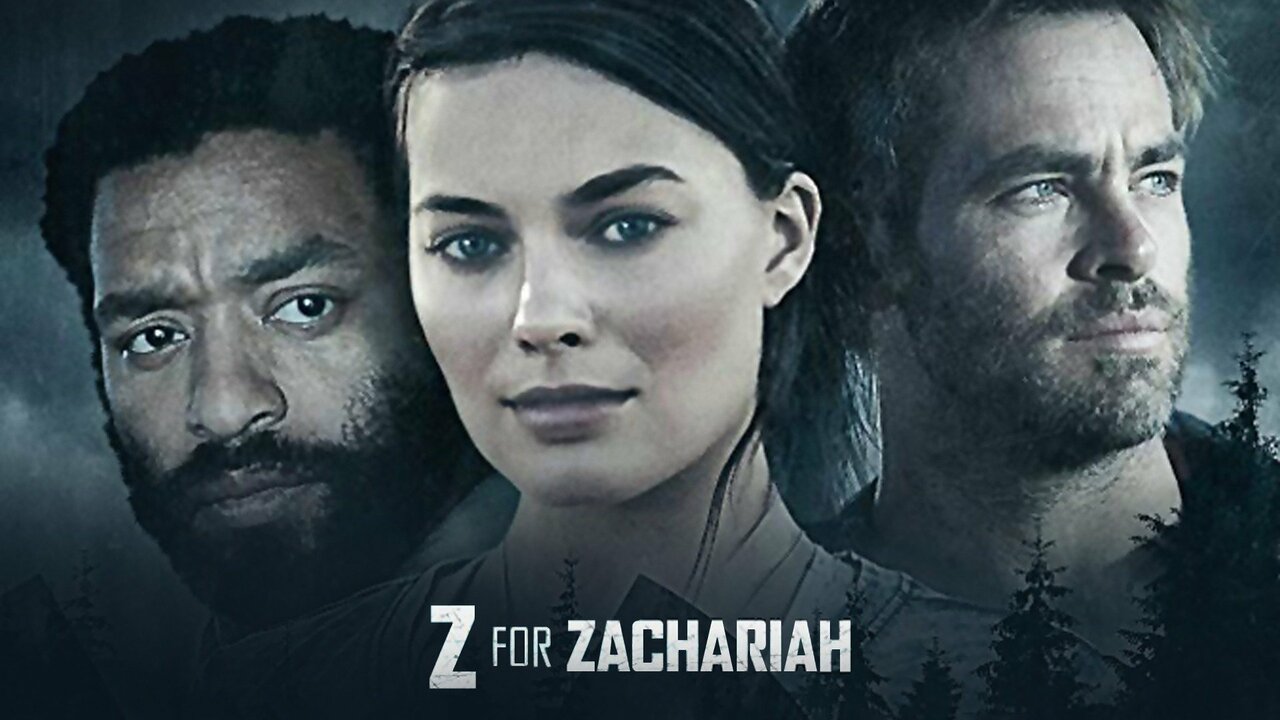
If you've seen the 2015 movie starring Margot Robbie, Chiwetel Ejiofor, and Chris Pine, you might be confused. The movie adds a third person, Caleb, to create a love triangle.
That basically misses the entire point of the book.
In the Z for Zachariah novel, there is no third person. It’s just Ann and Loomis. The ending of the book is much bleaker, but also much more empowering. Ann doesn't wait for a man to save her or fight over her. She realizes that being alone is better than being a prisoner.
She takes the suit. She leaves.
She walks out into the "dead" world, hoping to find others, but knowing she might just be walking into her own end. It’s a massive gamble. It’s the ultimate act of self-ownership.
Themes That Still Hit Hard Today
- Isolation: Not just physical, but the isolation of being the only one with a moral compass.
- Gender Dynamics: How quickly a man might try to "re-establish" old hierarchies when the law disappears.
- Nature's Resilience: The valley keeps growing, even if the people in it are destroying each other.
- The Title's Meaning: It comes from a Bible alphabet book Ann had as a kid. "A is for Adam, Z is for Zachariah." If Adam was the first man, Zachariah is the last.
Reading Z for Zachariah in 2026
You’d think a book written decades ago would feel dated. It doesn't.
With modern anxieties about climate change and global stability, the "lone survivor" trope is more popular than ever. But while most modern stories focus on "crafting" and "looting," the Z for Zachariah novel focuses on the psychological toll of silence.
It’s about the "smallness" of the end of the world. It’s not about cities burning; it’s about whether or not you can trust the person sitting across from you at the dinner table.
If you’re going to dive into this, don’t expect an action-packed thriller. Expect a diary. Expect to feel a little bit claustrophobic. Expect to wonder what you would do if you were the last "Z" in a world that forgot "A."
Actionable Steps for Readers and Students
If you're reading this for a class or just for fun, here's how to actually get the most out of it:
- Compare the Book to the Film: Watch the 2015 movie after reading. Note how the presence of a third character (Caleb) completely changes the "power struggle" theme into a "jealousy" theme. It’s a great study in how Hollywood often simplifies complex female leads.
- Look Up Temperature Inversions: Understand the "micro-climate" science. It makes the "safe valley" concept feel much less like magic and more like a terrifying stroke of luck.
- Track the Power Shift: On a piece of paper, jot down when Loomis moves from "patient" to "dictator." It happens in small increments—asking for the keys, then telling her where to plant, then moving his bed. It’s a masterclass in psychological manipulation.
- Check Out O’Brien’s Other Work: Surprisingly, the same guy wrote Mrs. Frisby and the Rats of NIMH. He had a thing for intelligent, capable protagonists facing overwhelming odds.
The Z for Zachariah novel remains a staple of dystopian literature because it doesn't need monsters. It just needs two people and a lack of trust. It’s a reminder that the world doesn't end with a bang or a whimper, but sometimes, just with a closed door and a stolen suit.
To truly understand the impact of the story, look for the 1975 edition which contains the original forward. It provides context on O'Brien's untimely death and how his wife and daughter finished the manuscript based on his notes, which adds a whole other layer of "legacy" to the book's themes.



