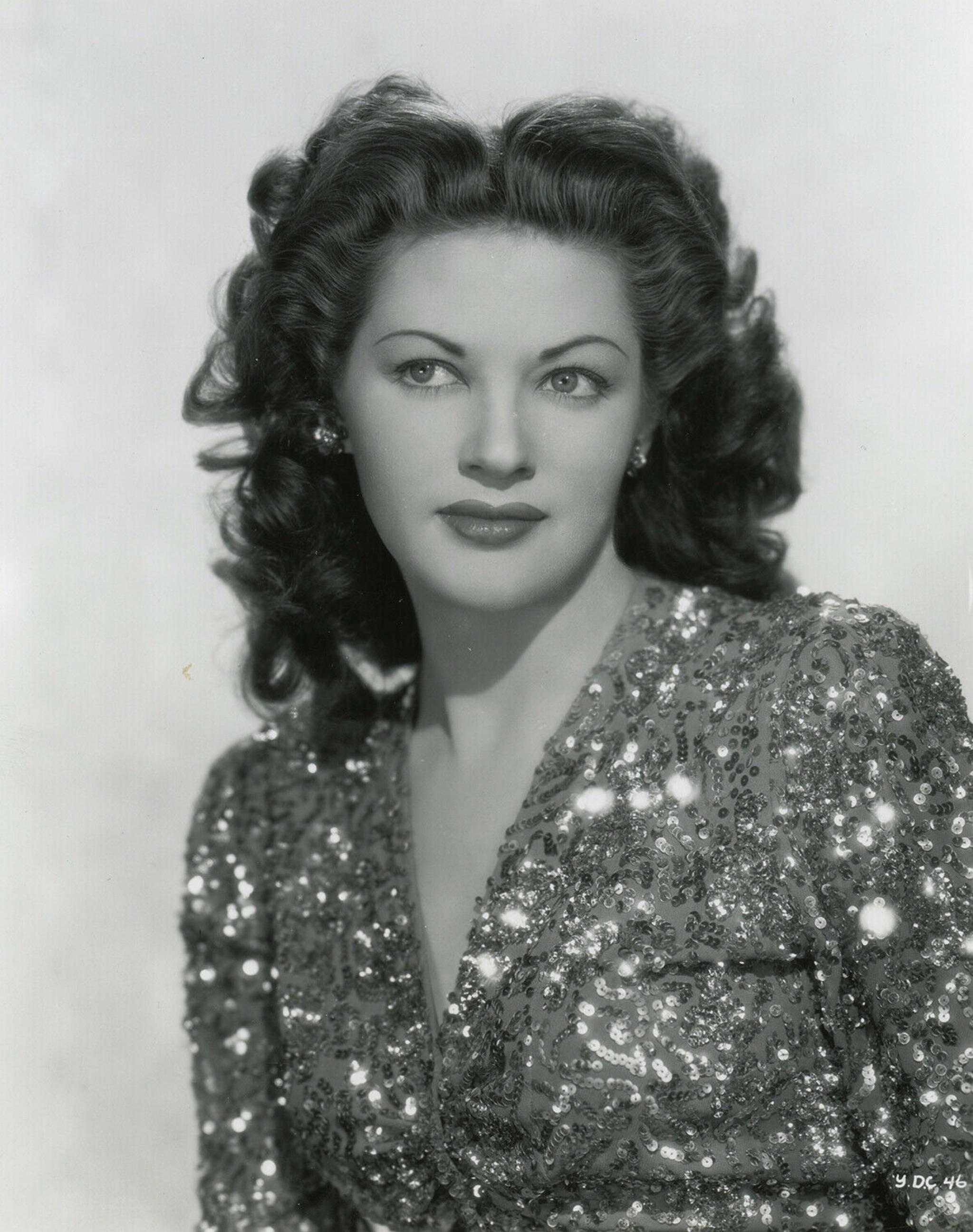
If you look at the most famous Yvonne De Carlo images, you probably see a woman with skin as white as a lily and hair as black as midnight. You see Lily Munster. It’s the role that made her a household name in the 1960s, a campy, goth-lite matriarch who managed to look glamorous while living in a dusty mansion with a Frankenstein-lookalike husband. But honestly, if you think Lily Munster is the beginning and end of her story, you’re missing the wildest parts of Hollywood history.
Yvonne wasn’t just a sitcom mom. She was a Technicolor queen, a femme fatale who stood toe-to-toe with Burt Lancaster, and a Biblical icon who played Moses’ wife in a Cecil B. DeMille epic. She was, quite literally, one of the most photographed women in the world during the 1940s and 50s.
The Face That Launched a Thousand Harem Dresses
Before she was wearing bat-wing sleeves on 1313 Mockingbird Lane, Yvonne was the "Queen of the Technicolor B-movies." Her big break didn't come from a quiet, dramatic role. It came from Salome, Where She Danced in 1945. Legend says she beat out 20,000 other girls for that part. Universal Studios didn't really know what to do with her, so they leaned into her "exotic" looks—despite her being a girl from Vancouver named Margaret Yvonne Middleton.
Basically, the studio saw her grey eyes and dark hair and thought, "Put her in a desert."
If you search for vintage Yvonne De Carlo images from this era, you’ll find a mountain of publicity shots where she's draped in silk, wearing heavy gold jewelry, and staring intensely at the camera. Films like Song of Scheherazade and Slave Girl cemented this image. She was the sultry "sex-and-sand" girl. It was a typecast, sure, but she leaned into it with a level of charisma that most stars would kill for today.
She once joked about her entrance in one of those films, describing how she came through beaded curtains wearing a Japanese kimono and a Japanese headpiece, only to perform a Siamese dance. None of it made sense, but it looked incredible on camera. That was the magic of the studio system.
From Harem Girl to Film Noir Icon
You've gotta look at her work in Criss Cross (1949) if you want to see the real depth she had. This wasn't a girl in a costume; this was a classic femme fatale. In the still images from that film, she’s standing next to Burt Lancaster, looking like a woman who could ruin your life with a single glance. She wasn't just "pretty." She had this womanly strength—a grit that director Cecil B. DeMille eventually noticed.
That’s how she ended up as Sephora in The Ten Commandments. It’s probably her most "respectable" role in the eyes of critics. DeMille specifically wanted her because he saw an emotional power in her that went beyond the pin-up posters. He even insisted on filming in color specifically so the audience could see her striking grey eyes.
Why She Actually Took the Lily Munster Role
A lot of people think The Munsters was a choice made out of a love for comedy. The truth is a lot heavier.
In 1955, Yvonne married a stuntman named Robert Morgan. While he was working on the set of How the West Was Won, he was involved in a horrific accident involving a moving train. He lost a leg and nearly lost his life. The medical bills were astronomical. Yvonne was suddenly the sole breadwinner for her husband and two sons, and the big movie roles were starting to dry up as she hit her 40s.
When the script for The Munsters came along in 1964, she was deep in debt. She was also suffering from depression. She didn't initially love the idea of being buried under green makeup every morning.
But she did it. She worked. She made Lily Munster iconic because she treated the role with the same professionalism she gave to The Ten Commandments. If you look at the Yvonne De Carlo images from the set of The Munsters, you see a woman who is completely "in it." She never played it like she was above the material. That’s why the show still works today.
The Broadway Turn Most People Forget
By the 1970s, the Hollywood machine had mostly moved on, but Yvonne hadn't. She went to Broadway.
She was part of the original cast of Stephen Sondheim’s Follies (1971). She played Carlotta Campion, a washed-up star, and she introduced the song "I'm Still Here." If you ever hear the lyrics—about surviving the highs and lows of show business—you realize it was practically her autobiography.
"I’ve run the gamut, A to Z... I'm still here."
There’s a specific power in the images of her from this period. She isn't the young "Salome" anymore, and she isn't "Lily." She’s a veteran. A survivor.
Finding Authentic Yvonne De Carlo Images Today
If you are a collector or just a fan of Old Hollywood, navigating the world of her photography can be a bit of a rabbit hole. Since she was a major star during the height of the studio system, there are thousands of shots out there, but they generally fall into three "buckets."
1. The Glamour Pin-Ups (1940s)
These are the most common. Think high-contrast black and white or vibrant Technicolor. You’ll see her in swimsuits on the beach or in elaborate "Eastern" costumes. Most of these were taken by studio photographers like Cornel Lucas. They are highly posed, perfectly lit, and designed to sell tickets.
2. The Epic Stills (1950s)
The photography from The Ten Commandments or Band of Angels (where she starred with Clark Gable) is different. It’s grander. You see her on massive sets in Egypt or in Civil War-era gowns. These images captured her at her peak as a leading lady.
3. The "Lily" Publicity Shots (1964-1966)
Most of these are owned by CBS or Universal. You have the classic cast photos with Fred Gwynne and Al Lewis, but the best ones are the "candid" shots of Yvonne in full makeup between takes. There’s something bizarrely charming about seeing Lily Munster drinking a coffee or reading a script on a folding chair.
What to Look for When Collecting
If you’re looking for high-quality versions of these photos:
- Check the Watermarks: Many images online are low-res and covered in watermarks from stock sites like Alamy or Getty. For high-quality, un-watermarked versions, look for licensed reprints or original silver gelatin prints on sites like eBay or specialized movie memorabilia stores.
- Original 8x10 Glossies: These were sent to newspapers and theaters back in the day. They usually have "press snipes" (typed descriptions) glued to the back. These are the gold standard for collectors.
- Colorized vs. Original: Be careful with "remastered" color photos. While they look sharp, they often lose the original lighting intent of the photographer. Original Technicolor stills have a specific, saturated look that modern AI colorization can't quite mimic.
Actionable Insights for Fans
If you want to truly appreciate the legacy of Yvonne De Carlo beyond just looking at a picture, there are a few things you should do:
- Watch 'Criss Cross' (1949): It is the single best example of her acting chops before she became a "character."
- Listen to the 'Follies' Original Cast Recording: Hearing her sing "I'm Still Here" will change the way you look at her photos. It adds a layer of human struggle to that perfect Hollywood face.
- Visit the Hollywood Walk of Fame: She has two stars—one for motion pictures at 6124 Hollywood Blvd and one for television at 6715 Hollywood Blvd.
Yvonne De Carlo died in 2007 at the age of 84. She lived a life that was, in many ways, more dramatic than the movies she starred in. From a teenager in Vancouver to the "most beautiful ghoul in the world," her images serve as a roadmap of what it meant to be a working actress in the 20th century. She wasn't just a face; she was a force.