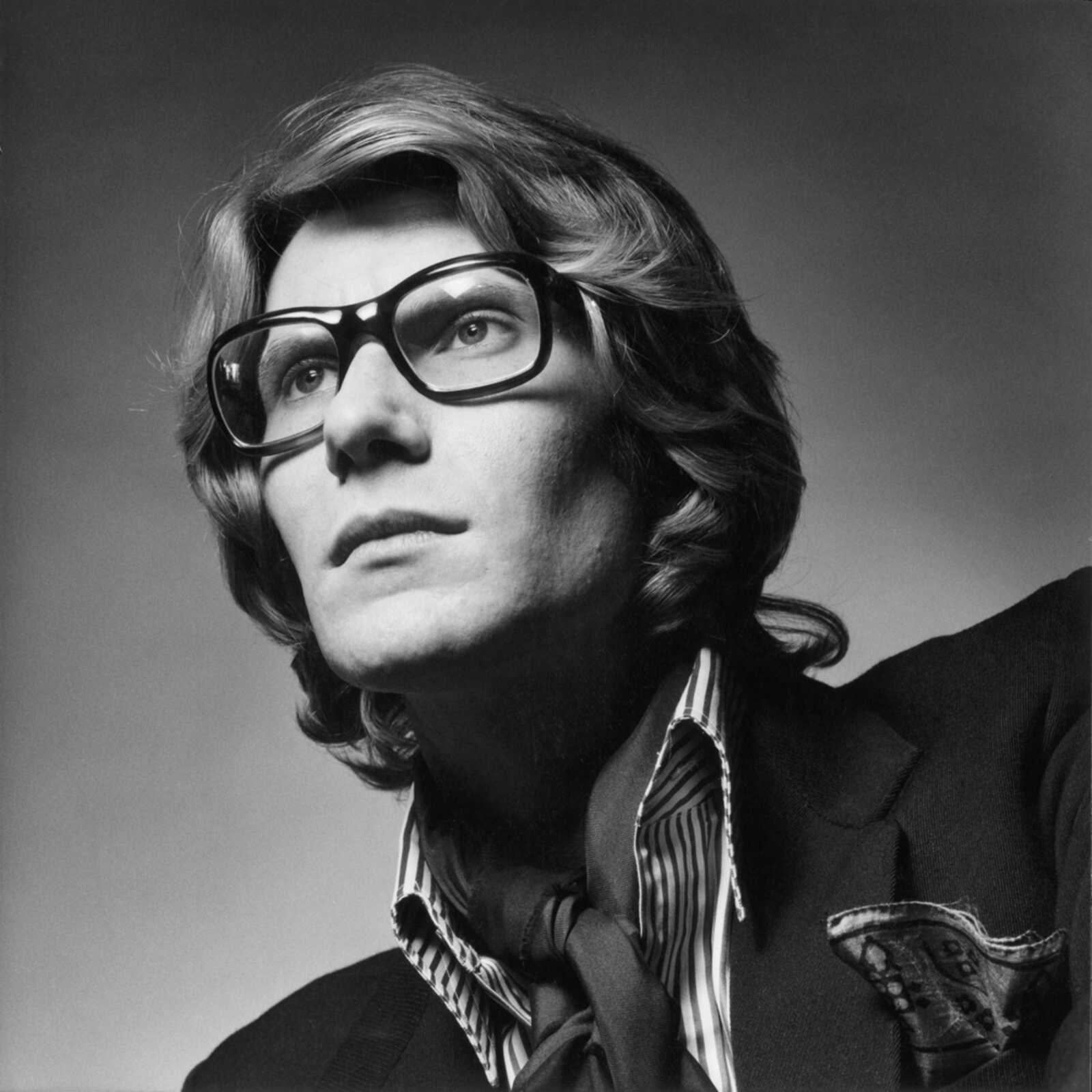
Fashion is usually about clothes. But with Yves Saint Laurent, it was always about power. Most people see the interlocking YSL logo on a luxury handbag and think of "prestige" or "wealth," yet the man behind the brand was a walking contradiction who basically reinvented how women move through the world. He was the "Pied Piper of fashion," leading a revolution that started with a nervous breakdown and ended with him becoming a national monument in France.
He didn't just design dresses. He designed a new kind of freedom.
If you look at the industry today, everyone is chasing "streetwear" or "gender-fluidity." Saint Laurent was doing that in 1966. He was the first to realize that the dusty, elitist world of haute couture was dying. He jumped ship to start Rive Gauche, his ready-to-wear line, which was a massive gamble at the time. People thought he was crazy for "democratizing" luxury. They were wrong. He was just ahead of the curve, as usual.
The Oran Roots and the Dior Explosion
Yves was born in Oran, Algeria. It wasn't the chic streets of Paris. It was Mediterranean sun and Mediterranean colors. By the time he was a teenager, he was already making paper dolls and dressing his sisters. You can see that early obsession in everything he did later—the way he played with silhouettes like they were paper cutouts.
At 17, he moved to Paris. He won a design contest (shared the podium with Karl Lagerfeld, funnily enough) and caught the eye of Christian Dior. Dior called him his "Right Hand." When Dior died suddenly in 1957, the world panicked. Who was going to save the biggest fashion house in the world?
A 21-year-old kid. That's who.
His first collection for Dior, the "Trapeze" line, was a sensation. It freed the waist. It let women breathe. But the French army didn't care about waistlines. They drafted him in 1960 during the Algerian War of Independence. It was a disaster. Yves lasted 20 days before having a mental collapse. He was treated with electroshock therapy and sedative drugs that, honestly, probably fueled the addictions he struggled with for the rest of his life. Dior fired him while he was in the hospital.
It was the best thing that ever happened to him.
Building the YSL Empire with Pierre Bergé
You can't talk about the founder of Yves Saint Laurent without talking about Pierre Bergé. They were a pair. Yves was the fragile, tortured genius; Pierre was the bulldog businessman who kept the lights on and the creditors away. They started the YSL fashion house in 1961 with money from an American businessman named J. Mack Robinson.
Without Bergé, Saint Laurent might have just been a footnote.
The early years were electric. In 1966, he introduced Le Smoking. It was a tuxedo for women. Today, that sounds like a Tuesday at the office, but in '66? It was scandalous. Women were actually turned away from restaurants for wearing it. Socialite Nan Kempner was famously told she couldn't enter a New York restaurant in her YSL tuxedo pants, so she just took the pants off and walked in wearing the jacket as a mini-dress. That's the kind of energy Saint Laurent inspired.
He understood that a woman in a man's suit wasn't trying to be a man. She was co-opting the symbols of male power to create her own.
The Art of the Scandal
Saint Laurent loved a good controversy. He was the first designer to use Black models on the runway in a significant way, long before "diversity" was a corporate buzzword. He saw Iman, Katoucha Niane, and Mounia as muses, not just clothes-hangers.
Then there was the 1971 "Libération" collection.
It was inspired by 1940s wartime fashion—shoulder pads, turbans, heavy makeup. The French press hated it. They accused him of glorifying the Nazi occupation era. They called it "hideous." But the kids? The young people loved it. It was the birth of "vintage" style. It proved that Saint Laurent didn't care about what the critics thought; he cared about what was happening on the streets of the Left Bank.
He even posed nude for his own perfume ad (Pour Homme) in 1971. He was the first designer to do that. It was a total power move. He became the face of his own brand, a precursor to the "celebrity designer" era we live in now with people like Virgil Abloh or Simon Porte Jacquemus.
The Dark Side of Genius
It wasn't all champagne and runway bows. Yves was a man of immense suffering. He lived between extreme highs and devastating lows. He famously said, "I have known all the terrors of the mind." He dealt with deep depression, alcoholism, and drug use.
There were times in the 70s and 80s when he was so out of it that he had to be physically supported by his models to take his final bow at the end of a show. It's a miracle the clothes remained as good as they did.
His house in Marrakech, the Jardin Majorelle, became his sanctuary. He bought it with Bergé to save it from development. If you go there today, you can see why the colors of his later collections—the electric blues, the vibrant oranges—came from. It was a place where he could escape the pressure of being "The Great Saint Laurent."
Why the Founder of Yves Saint Laurent Still Rules the Moodboard
If you're wondering why YSL still feels relevant while other heritage brands feel like museums, it's because his "vocabulary" is the foundation of the modern wardrobe.
- The Peacoat? Saint Laurent.
- The Safari Jacket? Saint Laurent.
- The Trench Coat as high fashion? Saint Laurent.
- The Jumpsuit? You guessed it.
He didn't just invent "looks." He invented a system of dressing. He took utilitarian garments—clothes meant for sailors, soldiers, or hunters—and gave them a sexual charge. He once said that "Chanel gave women freedom, but I gave them power." It's a bold claim, but he backed it up.
His retirement in 2002 was the end of an era. When he died in 2008, France practically stopped moving. He was the last of the "Grand Couturiers." He wasn't just a designer; he was a cultural shift.
What Modern Entrepreneurs Can Learn
The YSL story isn't just for fashion nerds. It's a masterclass in brand building.
- Trust your instincts over the "experts." When Saint Laurent left Dior, people thought he was finished. He proved that a personal vision is more valuable than a corporate title.
- Find your "Pierre Bergé." Every creative needs a protector. If you're the talent, find the person who can handle the contracts and the "No's."
- Provocation with purpose. He didn't just shock people for the sake of it. He shocked them to challenge outdated social norms about gender and race.
Practical Steps to Explore the YSL Legacy
To really get what the founder of Yves Saint Laurent was about, you shouldn't just look at a website. You need to see the work in context.
First, visit the Musée Yves Saint Laurent in Paris or Marrakech. The Paris museum is located in his former studio at 5 Avenue Marceau. You can see his desk, his sketches, and the actual environment where these icons were born. It's spooky how much energy is still in those rooms.
Second, watch the 2010 documentary L'Amour Fou. It’s a heartbreaking and beautiful look at the relationship between Yves and Pierre Bergé. It doesn't sugarcoat the addiction or the fights. It shows the reality of building a multi-billion dollar empire on the back of a fragile human psyche.
Third, look at the clothes through a technical lens. Notice the tailoring. Notice how a YSL jacket sits on the shoulders. It’s designed to give the wearer a "spine."
The brand is currently under the creative direction of Anthony Vaccarello, who has done a great job of keeping the "rock and roll" edge of the house alive. But the DNA—that mix of elegance and rebellion—was all Yves. He understood that fashion is a reflection of the times, and sometimes, you have to break the mirror to see what's really going on.
Start by researching the "Mondrian Dress" from 1965. It’s the perfect example of how he turned fine art into something wearable. It wasn't just a pattern; it was a shift in how we think about the body as a canvas. From there, the transition to the Safari look makes perfect sense. He was always moving, always changing, yet always stayed exactly who he was: a man who loved women enough to give them the armor they needed to conquer the world.