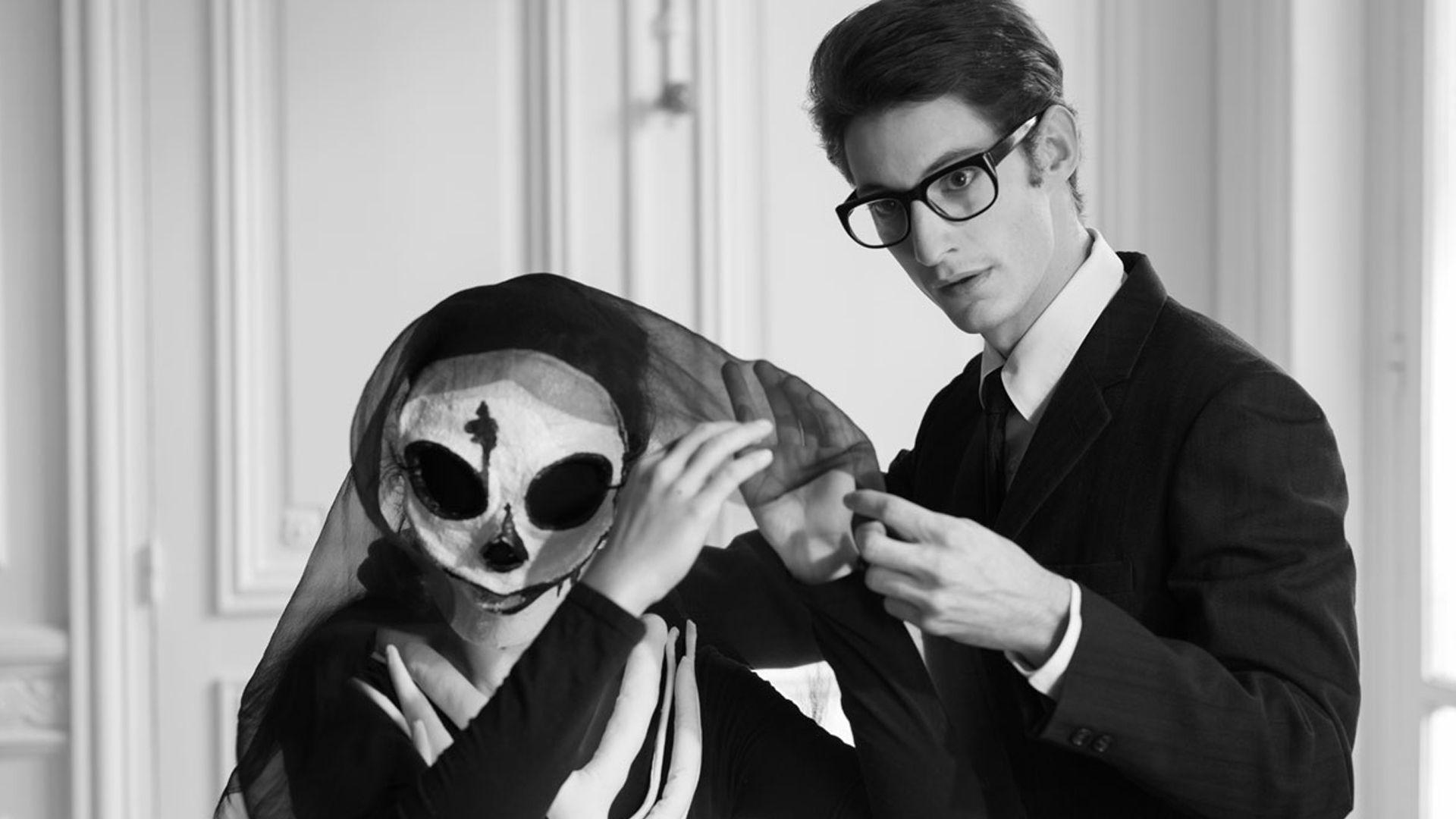
It was 2014, and France was essentially at war with itself—over a turtleneck. Well, not just a turtleneck, but the legacy of the man who practically invented the modern woman's wardrobe. If you search for Yves Saint Laurent the movie, you're going to hit a confusing wall of two different films released in the same year. One was "authorized." The other was the cinematic equivalent of a middle finger to the establishment.
Choosing which one to watch isn't just about picking a Netflix thumbnail; it’s about deciding whether you want the polished, "official" version of a legend or the messy, drug-fueled fever dream of the man behind the brand.
The Tale of Two Saint Laurents
Let's get the logistics out of the way first. You have Yves Saint Laurent (directed by Jalil Lespert) and Saint Laurent (directed by Bertrand Bonello).
The Lespert version—the one Pierre Bergé actually put his stamp of approval on—stars Pierre Niney. Honestly, Niney looks so much like Yves it’s almost creepy. Bergé, Yves' long-term partner and the ferocious guardian of his legacy, actually let the production use original garments from the archives. That means when you see those dresses on screen, they aren't recreations. They’re the real deal.
Then you have the Bonello film, starring the late Gaspard Ulliel. Bergé hated this project. He refused to lend a single thread. He even threatened legal action. Because of that, the film had to recreate every single piece of clothing from scratch. Strangely, many critics argue that this "unauthorized" version captures the soul of the 70s much better than the one with the real clothes.
Why the "Official" Movie Felt Safe
If you want a linear story, the 2014 Yves Saint Laurent the movie starring Pierre Niney is your best bet. It starts in Oran, Algeria. We see a young, painfully shy Yves taking over Dior at just 21 years old. It covers the breakdown, the conscription into the army, and the meeting with Pierre Bergé.
But here’s the thing: it feels a bit like a Wikipedia entry with a very high budget.
It’s beautiful, sure. The cinematography is crisp. But because Bergé was hovering over the production, the movie treats Yves with a certain level of reverence that can feel, well, a bit stiff. It’s the "Great Man" version of history. It tells you he was a genius, but it doesn't always show you the grit of why he was suffering, other than a general "he's a sensitive artist" vibe.
The Darker, Sexier Alternative
Now, if you want the version that dives into the "Le Smoking" era and the hedonism of the 1970s, you look for the Ulliel film. This isn't just a biopic; it’s a mood. It focuses heavily on the relationship with Jacques de Bascher—the dandy who also famously caught the eye of Karl Lagerfeld.
This version doesn't care about being a "cradle-to-grave" story. It wants to show you the sweat, the pills, the late-night clubs, and the absolute isolation of being a brand instead of a person. It’s much longer, way more "R-rated," and definitely more polarizing.
What Most People Miss About the Performances
Pierre Niney won a César Award (the French Oscar) for his portrayal. He mastered the voice. That high-pitched, hesitant, almost whispery tone that Yves had? Niney nailed it. He spent months learning how to draw and drape fabric so his hands wouldn't look like an actor pretending to be a designer. They looked like a creator's hands.
Gaspard Ulliel, on the other hand, brought a magnetic, almost predatory sensuality to the role. He didn't just play a designer; he played a rock star on the verge of a collapse.
- Pierre Niney (Authorized): Vulnerable, twitchy, meticulously accurate.
- Gaspard Ulliel (Unauthorized): Ethereal, decadent, focused on the "myth."
The Real-Life Drama Behind the Scenes
You can't talk about Yves Saint Laurent the movie without talking about Pierre Bergé. The man was a powerhouse. He was the business brain that allowed Yves to be the creative soul.
In the Lespert film, their relationship is the heart of the story. It’s depicted as a tempestuous but ultimately unbreakable bond. Guillaume Gallienne plays Bergé as a man who is both a protector and a bit of a warden.
The real-life drama? Bergé’s control over the "official" film meant that certain darker aspects of their life together were smoothed over. The unauthorized film, by contrast, was free to explore the "sexual espionage" and the deeper betrayals that Bergé probably didn't want the public to dwell on.
Accuracy vs. Artistry
Which one is "truer"? It depends on what truth you're looking for.
If you want to see the 1976 Russian Ballet collection in all its glory with the actual fabrics Yves touched, the authorized Yves Saint Laurent the movie is a historical document.
If you want to understand the psychological weight of being the most famous man in fashion during a decade of total excess, the Bonello film is the better piece of cinema.
Basically, the first one is a tribute. The second one is an autopsy.
How to Watch Them Today
Luckily, you don't have to choose. Both films are widely available on streaming platforms like MUBI, Amazon Prime, or Apple TV depending on your region.
- Watch the Lespert/Niney version first. It gives you the foundation. It explains who the muses were—Loulou de la Falaise and Betty Catroux—and establishes the timeline of the house.
- Watch the Bonello/Ulliel version second. It fills in the gaps of the 1970s and provides a more hallucinogenic look at the peak of his fame.
- Check out the documentary "L'Amour Fou." If you want the actual facts without the actor portrayals, this documentary (also supported by Bergé) is the final piece of the puzzle.
Actionable Next Steps
To truly appreciate the legacy shown in these films, start by looking at the 1966 Le Smoking jacket online. It was a scandal at the time—a woman in a tuxedo? Unheard of. Then, watch the "Russian Collection" finale in the Pierre Niney film. It’s widely considered the most beautiful sequence in either movie.
If you’re a fashion student or just a history buff, pay attention to the tailoring. The authorized film is a masterclass in seeing how a garment is built from a sketch to a runway piece. The unauthorized film is a masterclass in seeing how a man is destroyed by his own creation.
Don't just watch for the clothes. Watch for the way these two films disagree with each other. That’s where the real Saint Laurent lives—somewhere in the middle of the polish and the pain.



