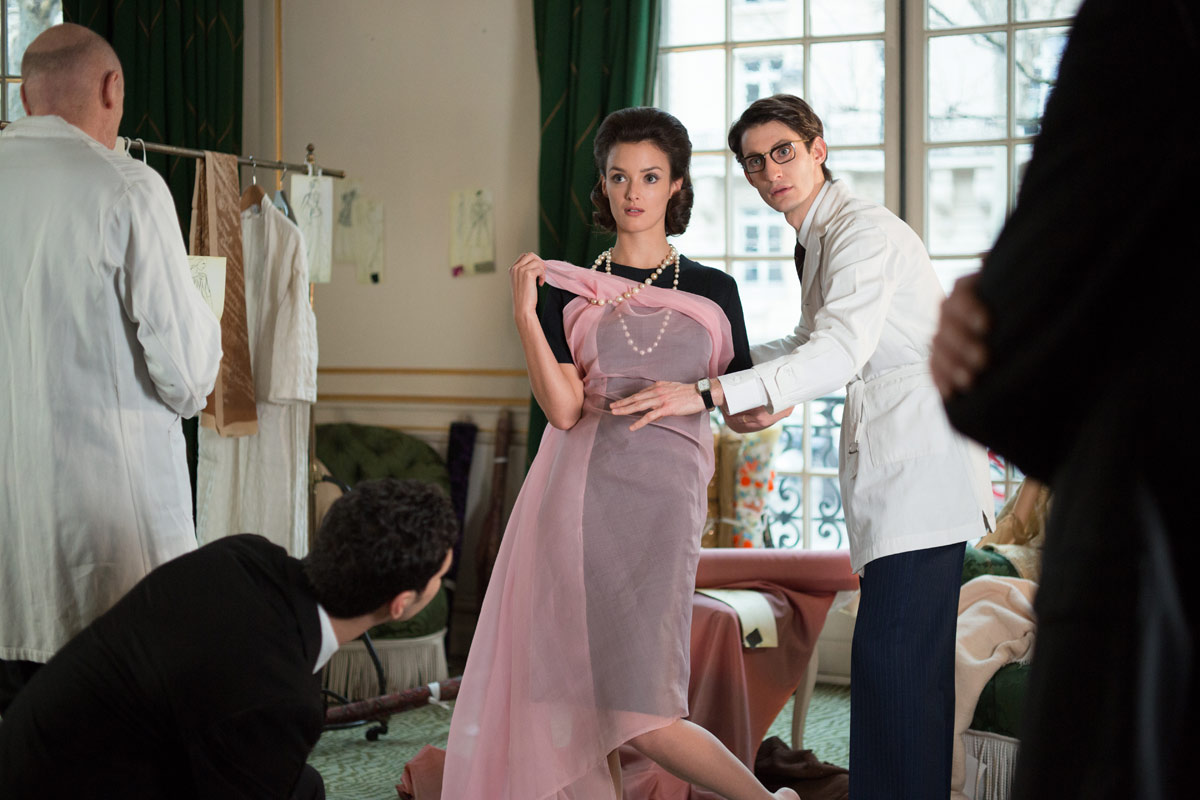
You’ve seen the posters. The horn-rimmed glasses. That specific, fragile slouch that Pierre Niney mastered so well it practically won him the César on the spot. But when people talk about Yves Saint Laurent le film, they usually miss the weirdest part of its history. It wasn’t just a movie; it was a war.
In 2014, France didn’t just get one Saint Laurent biopic. It got two. And they didn't exactly get along.
The version directed by Jalil Lespert—the one we’re talking about here—had the ultimate "golden ticket." It was fully authorized by Pierre Bergé. If you know anything about the YSL empire, you know Bergé was the gatekeeper. He was the business brains, the long-time partner, and the man who didn't let anything happen without his stamp of approval. Because he backed this specific production, the crew got access to the holy grail: the actual YSL archives.
Imagine being an actor and putting on the real Mondrian dress. Not a replica. The actual silk that walked the runway in 1965.
Why the "Official" Label Changed Everything
Honestly, having the "official" blessing is a double-edged sword. On one hand, the film looks staggering. It’s lush. You’re seeing original sketches and real couture pieces that are usually locked away in climate-controlled vaults at 5 avenue Marceau. It feels authentic because, physically, it is.
But there’s a catch.
Because Bergé was so involved, some critics felt the movie played it a bit safe. It’s a bit of a "hagiography"—a fancy word for a biography that treats its subject like a saint. While it doesn't shy away from Yves’s depression, his time in the military hospital, or his substance abuse, it always frames it through the lens of his relationship with Bergé. It’s a love story disguised as a fashion flick.
The "other" movie, simply titled Saint Laurent and directed by Bertrand Bonello, didn't have the archives. They had to recreate every single dress from scratch. Bergé famously hated that version. He even threatened legal action. But because Bonello's film was "unauthorized," it felt a bit wilder, darker, and more experimental.
Pierre Niney vs. The Ghost of Yves
Let’s talk about the performance. Pierre Niney was 24 when he took this on. He spent five months training with three different coaches. One for drawing, one for fashion history, and one to nail that very specific, whispery voice.
He didn't just play Yves; he sort of became him.
The movie kicks off in 1957. Yves is a "pied-noir" from Algeria, suddenly thrust into the spotlight as the head of Dior at age 21. It’s a lot. The film tracks that meteoric rise, the crushing weight of the draft during the Algerian War, and the eventual founding of his own house.
Key Moments You Might Have Missed:
- The Dior Exit: The movie shows how his firing from Dior was actually a blessing in disguise, though it felt like the end of the world at the time.
- The Victoire Factor: Charlotte Le Bon plays Victoire Doutreleau, his first muse. The chemistry there is vital because it shows Yves before the fame became a cage.
- The 1976 "Ballet Russes" Collection: This is the emotional climax. It’s often cited as his most beautiful work, and the film treats the runway show like a religious experience.
The Reality of the "Fashion Film"
Is it 100% accurate? Kinda.
Biopics always smudge the timeline for drama. For instance, the film moves through the 60s and 70s like a fever dream. You see Loulou de la Falaise and Betty Catroux—the "muses"—appearing as symbols of his descent into the Paris party scene. It captures the vibe of the era perfectly, even if every single conversation didn't happen exactly as scripted.
The real heart of Yves Saint Laurent le film is the power dynamic. It shows a man who could dress the world but couldn't get dressed without help. Bergé is portrayed by Guillaume Gallienne, and their back-and-forth is the best part of the movie. It’s a study in how genius is often managed by someone much more grounded—and much more tired.
How to Watch It Today
If you’re looking to dive into the world of YSL, don't just watch this as a history lesson. Watch it as a production design Masterclass.
Most people watch it on streaming platforms like Netflix or MUBI, depending on where you are in the world. But if you really want the full experience, you should look for the behind-the-scenes footage of the costume fittings. Seeing Niney handle the original garments with white gloves tells you everything you need to know about the reverence the filmmakers had for the source material.
What to Do Next
If this film piqued your interest in the "tortured genius" trope of French fashion, you shouldn't stop at the credits.
- Compare the Pair: Watch Bertrand Bonello's Saint Laurent (the 2014 "unauthorized" one starring Gaspard Ulliel) immediately after. The contrast in how they handle his drug use and his relationship with Jacques de Bascher is fascinating.
- Visit the Virtual Archive: The Musée Yves Saint Laurent Paris has an incredible online collection. You can see the actual collection boards and sketches featured in the film.
- Read the Source: The film is loosely based on the biography by Laurence Benaïm. If you want the gritty details the movie skipped to keep the "official" status, the book is where they live.
The fashion industry is notoriously protective of its legends. This film is the version of the legend that the family wanted us to see. It’s beautiful, it’s heartbreaking, and it’s arguably the most stylish thing you'll watch this year.



