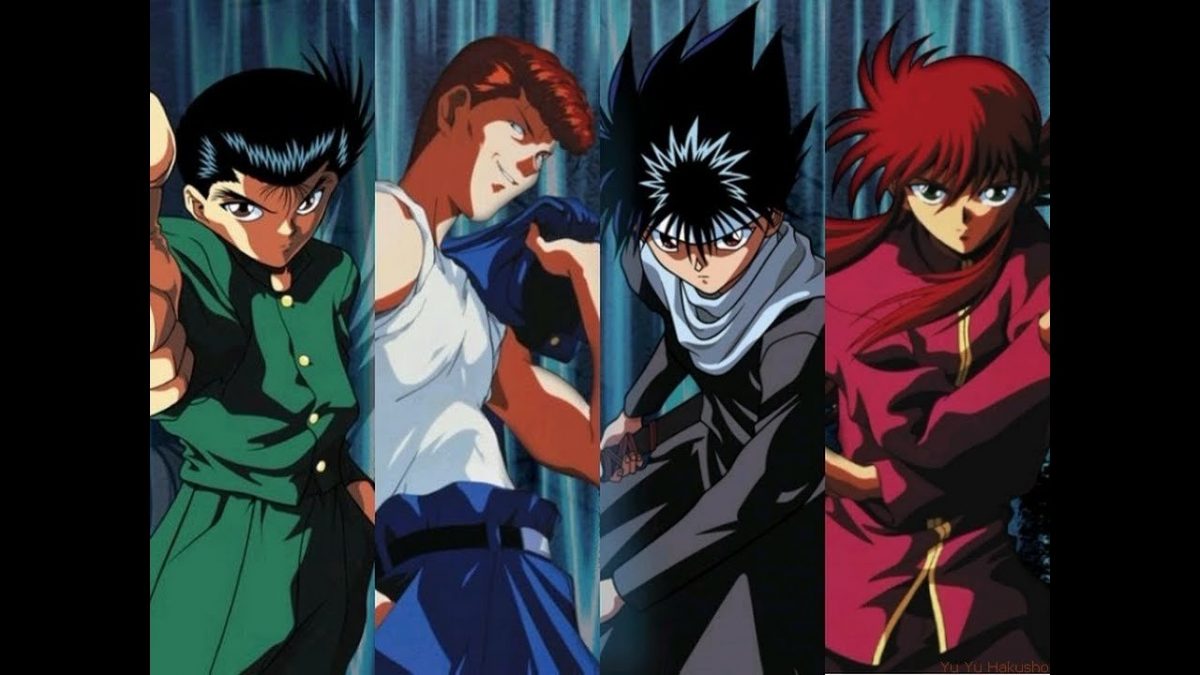
If you grew up in the 90s, specifically in the Philippines or watching North American late-night anime blocks, you know the vibe. A green school uniform. A slicked-back pompadour. A finger pointed like a gun. YuYu Hakusho Ghost Fighter isn't just another old-school shonen; it’s a cultural touchstone that somehow feels more grounded than the power-crept series we see today. Honestly, it’s a miracle it worked. Yoshihiro Togashi—the mad genius who later gave us Hunter x Hunter—started this as a slapstick comedy about a dead delinquent. Then, things got weird. And dark.
Most people remember the "Spirit Gun," but the actual legacy of the series is much more complicated than just energy blasts. It’s about a kid who literally had to die to find a reason to live. That’s heavy for a show aimed at teenagers.
The Identity Crisis: YuYu Hakusho or Ghost Fighter?
Depending on where you lived, the name varied. In the West, we stuck with the Japanese title, YuYu Hakusho (Poltergeist Report). In the Philippines, it became Ghost Fighter, and Yusuke Urameshi was renamed Eugene. This wasn't just a simple translation; it was a localized phenomenon.
It’s weird how a few name changes—Vincent for Hiei, Dennis for Kurama, Alfred for Kuwabara—didn't ruin the soul of the show. The core remained. You still had this quintessential 90s aesthetic: the gritty urban streets, the VHS-style grain, and a soundtrack that slapped harder than it had any right to. Unlike Dragon Ball Z, which was often about world-ending threats from space, this felt local. It felt like the spirits were hiding in the alleyway behind your house.
Why the Dark Tournament Still Holds the Crown
Ask any anime veteran about the best tournament arc in history. Nine times out of ten, they’ll say the Dark Tournament.
Why? Because it wasn't just about who could punch the hardest. It was psychological warfare.
Take Toguro. He’s arguably one of the most misunderstood villains in the medium. He isn't a demon because he’s inherently evil; he’s a demon because he couldn't handle his own humanity and the trauma of losing his students. His obsession with strength was a mask for a deep-seated desire to be punished. When he finally reaches 100% power, it’s terrifying, but his eventual walk into the harshest level of Hell is what actually sticks with you. He chose it. That kind of character writing is rare.
The stakes felt real. People actually died. The fights weren't just "power up and win." They were puzzles. Kurama using the Rose Whip or transforming into Yoko Kurama showed us that intelligence and ruthlessness were just as important as raw Spirit Force.
Togashi’s Subversion of the Shonen Hero
Yusuke Urameshi is a jerk. At least, that's how he starts.
He’s a 14-year-old smoker, a fighter, and a truant. He’s the guy teachers give up on. By making a "bad kid" the hero, Togashi tapped into something visceral. Yusuke doesn't want to save the world because he’s a saint. He does it because he’s good at fighting and he actually cares about his mom and Keiko, even if he’s too stubborn to say it.
The Contrast of the Core Four
- Yusuke: The raw, unfiltered street fighter. His growth from a deadbeat to a man willing to sacrifice his humanity is the spine of the show.
- Kuwabara: The heart. Everyone makes fun of him, but Kazuma Kuwabara is the only one who fights for a code of honor. He’s a "regular" human hanging out with monsters, yet he never backs down. That’s true bravery.
- Kurama: The cold strategist. He brought a level of sophistication to the group. His dual nature as a human boy and an ancient fox demon created a constant tension.
- Hiei: The quintessential anti-hero. Before Sasuke Uchiha existed, there was Hiei. Short, fast, and cynical. His "Dragon of the Darkness Flame" is still one of the coolest-looking attacks ever animated.
The Chapter Black Twist You Probably Forgot
While the Dark Tournament gets the glory, the Chapter Black saga is where the show got "meta." It introduced Shinobu Sensui, a former Spirit Detective who went insane after seeing the depths of human cruelty.
This arc asked the uncomfortable question: Are the humans even worth saving?
It shifted the genre from action-adventure to a psychological thriller. Suddenly, the demons weren't the only monsters. Humans were torturing demons for fun. This moral ambiguity is what separates YuYu Hakusho Ghost Fighter from its contemporaries. It didn't provide easy answers. It just showed you the rot and asked you to deal with it.
The Live-Action Adaptation and the Modern Revival
We have to talk about the Netflix live-action version. Usually, these are disasters. (Looking at you, Death Note.) But the YuYu Hakusho adaptation actually did some things right. It condensed the Spirit Detective saga and the early Toguro encounters into a high-budget spectacle.
It wasn't perfect. Cutting the Genkai tournament felt like a missed opportunity for character development. However, seeing the Spirit Gun rendered with modern VFX was a trip. It introduced a whole new generation to Eugene—err, Yusuke.
But even with fancy CGI, the original 1992 anime by Studio Pierrot still holds up. There is a specific "weight" to the hand-drawn cells. When Yusuke punches someone, you feel the impact in a way that clean, digital animation sometimes loses.
Technical Nuance: The Power System
Unlike some shows where power levels are just "over 9000," Togashi used Spirit Class (E to S). But even an S-class demon could be outmaneuvered.
The introduction of "Territories" in the later arcs predated JoJo’s Bizarre Adventure style Stand battles or Jujutsu Kaisen’s Domain Expansions. It changed the rules. If you entered a territory where you couldn't say the word "hot," it didn't matter how much Spirit Force you had—if you said the word, your soul was gone. That shift from brawn to brain is Togashi's signature move.
Why It Still Matters in 2026
The themes of identity, the fear of the future, and the search for a place to belong are timeless. Yusuke’s struggle with his ancestral demon blood is basically a metaphor for inherited trauma.
We see bits of YuYu Hakusho in every modern hit. Bleach owes its entire "Substitute Shinigami" premise to it. Jujutsu Kaisen leans heavily into the dark, urban supernatural vibe that Togashi pioneered.
How to Revisit the Series Properly
If you're looking to dive back into YuYu Hakusho Ghost Fighter, don't just skim the highlights.
- Watch the English Dub: This is one of the rare cases where the dub is arguably better than the sub. Justin Cook’s performance as Yusuke captures the "punk with a heart of gold" perfectly. The script is punchy, sarcastic, and full of personality.
- Read the Manga for the Ending: The anime’s ending is fine, but the manga goes a bit deeper into the aftermath of the Three Kings Saga. Togashi was struggling with health issues at the time, which led to a somewhat rushed conclusion, but the philosophical dialogue in the final chapters is top-tier.
- Check out the OVAs: Specifically Two Shots, which details how Hiei and Kurama first met. It fills in gaps that the main series only hinted at.
- Focus on the Poltergeist Report Movie: If you want a standalone adventure that captures the "Spirit Detective" procedural feel, this is it. It’s got that classic 90s movie budget and some of the most fluid animation in the franchise.
The series remains a masterclass in pacing. It doesn't overstay its welcome. It gives you 112 episodes of pure, unadulterated character growth and then leaves you wanting more. That’s the mark of a classic. Whether you call him Yusuke or Eugene, the kid in the green jacket changed the game forever.



