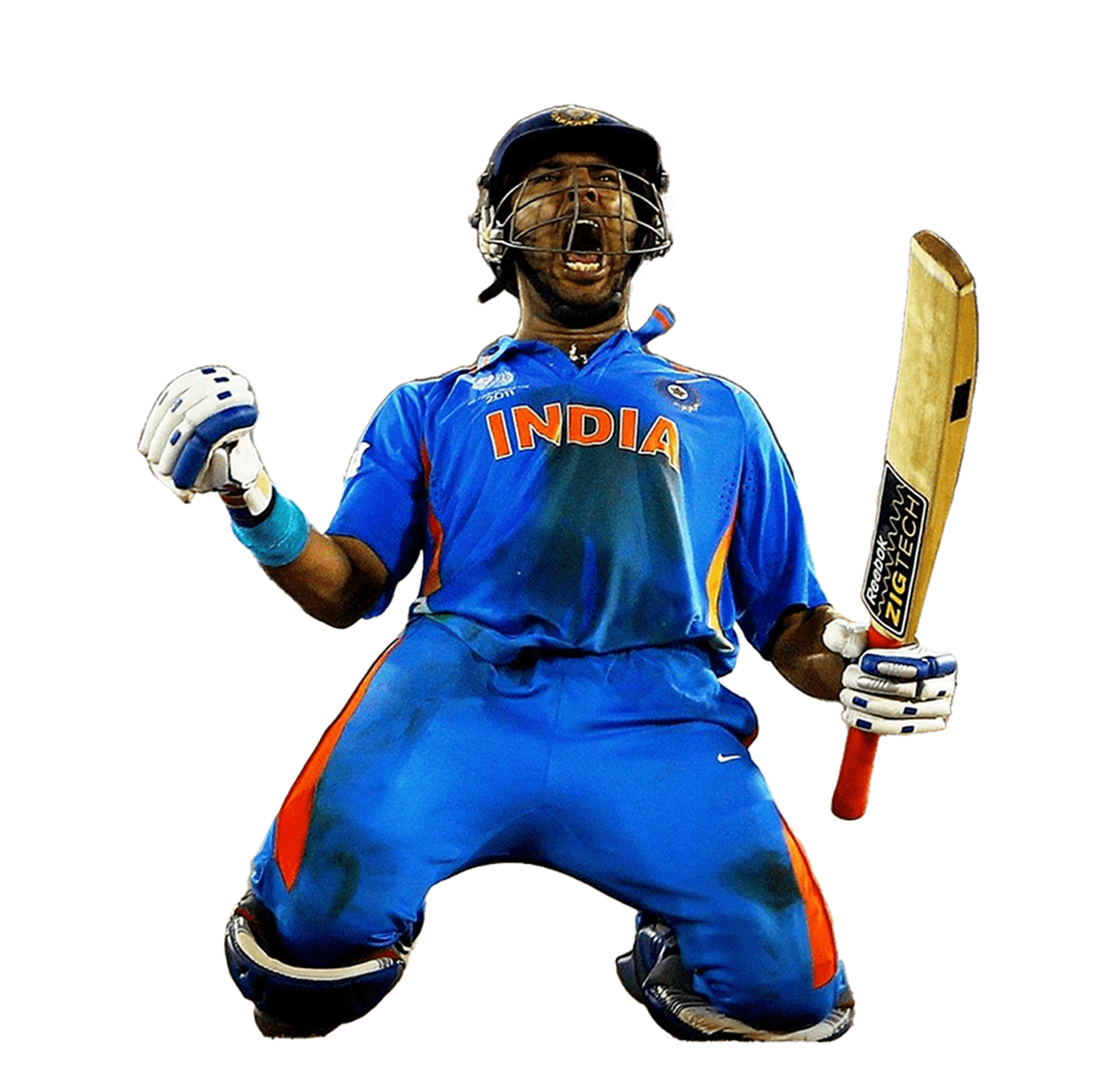
He was coughing up blood. Honestly, think about that for a second. While an entire nation was screaming his name during the 2011 World Cup, Yuvraj Singh was literally fighting for air. We saw the fist pumps and the iconic roar after the win against Australia in Ahmedabad, but we didn't see him vomiting in the dressing room.
That’s the thing about Yuvi. Most people remember the swagger and the flourishing high backlift. But the real story? It’s much grittier than a highlight reel.
The Yuvraj Singh Legacy: More Than Just Six Sixes
If you ask a casual fan about him, they’ll immediately mention Stuart Broad. September 19, 2007. Durban.
Six balls. Six hits into the night sky.
It was pure, unadulterated carnage. But people forget the context. He didn't just wake up and decide to ruin a young bowler's career. It started with Andrew Flintoff saying something he shouldn't have. Basically, Flintoff poked the bear. Yuvraj turned around and channeled that rage into the fastest fifty in T20 history—12 balls. That record stood for nearly two decades.
But Yuvraj Singh isn't just a "one-over wonder." He was the oxygen of the Indian middle order for years.
Why 2011 was his masterpiece
Most cricketers dream of one "perfect" tournament. Yuvi had his in 2011.
- 362 runs - 15 wickets - 4 Man of the Match awards
He was the Player of the Tournament because he did everything. He was the fifth bowler Dhoni needed and the finisher the top order relied on. And he did it all while a germ-cell tumor—a rare mediastinal seminoma—was growing in his chest. He wasn't just playing against Sri Lanka or Pakistan; he was playing against a body that was failing him.
The Comeback That Nobody Expected
Cancer isn't a "setback." It's a reset. When Yuvraj went to Boston for chemotherapy in 2012, most experts thought his career was done. You don't just come back from lung-area tumors and hit 90mph fastballs.
Except he did.
His return to the Indian team in late 2012 was emotional, sure. But it was also hard. Honestly, he wasn't the same player initially. He struggled in the 2014 T20 World Cup final—a night that still haunts many fans. He was slow. He couldn't find the gap. The same fans who worshipped him in 2011 were suddenly calling for his retirement.
Cricket is brutal like that.
But then came 2017. Against England in Cuttack, he smashed 150. His highest ODI score ever. At 35 years old. That innings was a massive "I’m still here" to every critic who said he was finished.
What Really Happened After Retirement?
Since hanging up the boots in 2019, Yuvraj Singh hasn't just sat on a beach. He’s become a bit of a kingmaker in Indian cricket. If you look at the current crop of "fearless" Indian batters—guys like Shubman Gill and Abhishek Sharma—they all have the Yuvi DNA.
He’s been mentoring them privately.
It’s not just about technique. He teaches them how to handle the pressure of 1.4 billion people expecting a century every time you walk out. Recently, in early 2026, clips went viral of him working with Sanju Samson and Priyansh Arya. He’s basically building a factory of match-winners who aren't afraid to lose their wicket.
The Business Side of Yuvi
He's also moved into the premium lifestyle space. His brand FINO (Failure Is Not An Option) recently launched a high-end tequila, which sounds like a pivot, but it fits his "sipping experience" philosophy. He’s also heavily into philanthropy through YouWeCan, helping thousands of cancer patients get early screenings.
What Most People Get Wrong About Him
There’s this myth that Yuvraj was a "natural" who didn't work hard.
Wrong.
His father, Yograj Singh, was a legendary taskmaster. We’re talking about a kid who was forced to give up roller skating (he won a gold medal in it!) because his dad wanted a cricketer. Yuvi was forged in a very intense, sometimes difficult environment. That "cool" exterior? It was a mask for one of the most disciplined work ethics in the game.
He also wasn't "just a white-ball specialist." While his Test career didn't reach the heights of his ODI stats (he played 40 Tests), he still scored three centuries against a peak Pakistan side. He just happened to play in an era where India’s middle order was occupied by Tendulkar, Dravid, Ganguly, and Laxman. Good luck breaking into that.
Actionable Insights: Lessons from the Yuvi Playbook
You don't have to be a cricketer to learn from Yuvraj Singh. His life is basically a blueprint for resilience.
- Own Your Outliers: Yuvraj knew he wasn't a "textbook" player like Dravid. He leaned into his power. Figure out what you’re freakishly good at and double down on it.
- Contextualize Failure: 2014 was a disaster for him. He accepted it, went back to domestic cricket, and earned a recall three years later. If you fail, don't just "move on"—rebuild.
- Health is Non-Negotiable: He ignored his symptoms in 2011 because of the "mission." It almost cost him his life. If something feels off, get checked. Early detection is why he's here today.
- Mentorship Matters: He’s staying relevant in 2026 not by playing, but by teaching. Pass your knowledge down to the next generation; it's the only way to stay immortal in your industry.
Yuvraj Singh didn't just play cricket; he survived it. Whether it was the 150mph bouncers or the stage-one cancer, he just kept swinging.
Next Steps for You: Check out the YouWeCan foundation website to see how early cancer screening programs are being implemented in rural India. If you’re a coach or leader, study his mentorship style—specifically how he works with Shubman Gill—to understand how to build confidence in young talent.