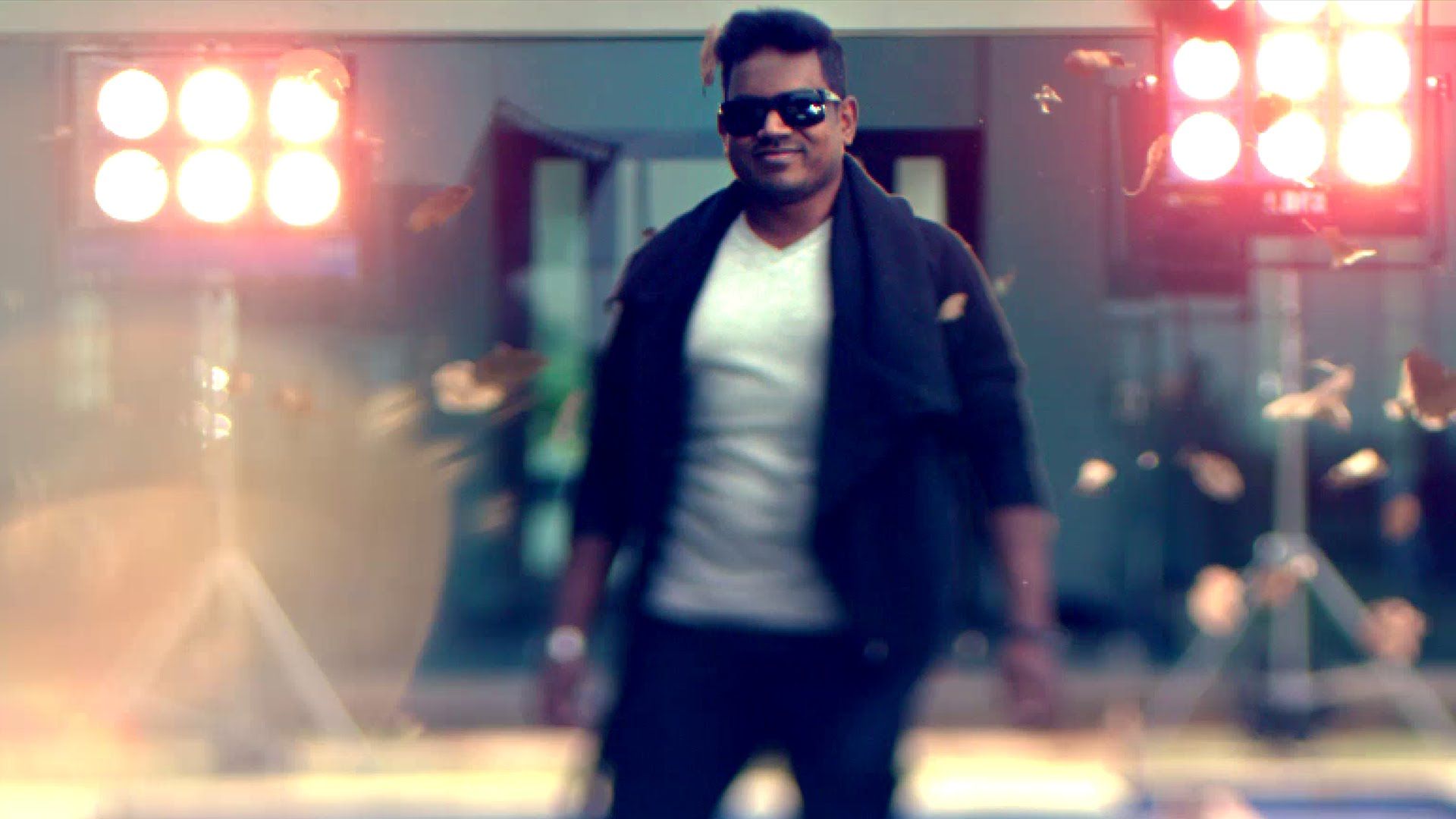
Music directors come and go. Honestly, most of them have a shelf life of maybe five years before the "sound" gets stale and the audience moves on to the next big thing. But then there’s Yuvan Shankar Raja. He didn’t just survive the transition from tape recorders to Spotify; he practically defined the vibe of an entire generation of Tamil cinema fans. People call him the "Youth Icon" for a reason. It isn't just about catchy hooks or loud beats. It’s a specific kind of melancholy, a certain "Yuvan-ism" that makes a 20-year-old song feel like it was recorded yesterday.
If you grew up in the 2000s, Yuvan wasn't just background noise. He was the soundtrack to your first crush, your first breakup, and every late-night bike ride in between. He’s the guy who brought Hip-Hop and R&B into the mainstream Kollywood space when everyone else was still sticking to traditional orchestral arrangements or heavy folk beats. It’s wild to think he started at 16 with Aravindhan. He was a kid. A kid carrying the massive weight of being Ilaiyaraaja’s son, which, let’s be real, is a terrifying shadow to live in. In other updates, take a look at: Eurovision is Not a Song Contest and the Boycott Narrative is a Gift to the Brand.
The Evolution of the Yuvan Sound
Most people think Yuvan’s success was a fluke because of his lineage. That’s just wrong. Early on, he struggled. Big time. Aravindhan didn't exactly set the world on fire. It took movies like Thulluvadho Ilamai and 7G Rainbow Colony to prove he had a pulse on what young people actually wanted to hear. He took the "Remix" culture and made it sophisticated.
The "U1" sound is characterized by a few specific things: heavy basslines, haunting synth pads, and a very deliberate use of silence. Take the 7G Rainbow Colony soundtrack. "Kan Pesum Varthaigal" isn't just a song; it’s an atmosphere. He uses strings to build tension and then drops the beat in a way that feels incredibly modern even decades later. He’s never been afraid to sound "lo-fi" before lo-fi was even a YouTube genre. The Hollywood Reporter has provided coverage on this fascinating topic in great detail.
You see his real genius in how he handles the "Theme Music." Before Yuvan, themes were often just orchestral versions of the main song. He changed the game with Billa. That theme song is legendary. It’s sleek, it’s dangerous, and it redefined what an "Intro" for a superstar should sound like. He did the same for Ajith in Mankatha. That whistle theme? It’s basically a cultural reset.
Why We Are All Addicted to the "U1 Drug"
Fans often use the term "U1 Drug." It sounds dramatic, but it fits. There is a specific dopamine hit you get from a Yuvan melody. He has this weird ability to make sadness sound beautiful. Look at Pudhupettai. The song "Variya" is chaotic, dark, and visceral. It shouldn't work as "popular music," yet it’s a cult classic. Selvaraghavan and Yuvan are a duo that pushed the boundaries of what commercial cinema music could be. They went into places that were uncomfortable and gritty.
The vocal choices are another thing. Yuvan isn't a "perfect" singer in the classical sense. His voice is nasal, sometimes a bit thin. But when he sings a song like "Pogadhey" from Deepavali, the emotion is raw. It feels human. He doesn't polish out the imperfections, and that’s why people connect with it. It feels like a friend singing to you, not a polished AI-generated vocal track.
Breaking the Template
He hates the template. While other composers might stick to a "Intro-Chorus-Verse-Chorus" structure, Yuvan often wanders. He’ll introduce a new instrument halfway through a track that never appears again. He’ll change the tempo entirely. He brought the "Broken Beat" style to Tamil film music long before it was trendy. Think about the song "En Kadhal Solla" from Paiyaa. It has this driving, upbeat energy but the lyrics and the synth-work underneath are deeply nostalgic. It’s that contrast that makes his music stay in your head.
- The Lo-fi Aesthetic: Long before 24/7 lo-fi hip hop streams, Yuvan was using muted beats and atmospheric noise.
- The Bass Influence: He treats the bass guitar and synth bass as lead instruments, not just rhythm.
- Electronic Roots: He was the first to truly integrate trance and house elements into rural Tamil scripts, creating a "Global-Local" fusion.
The Selvaraghavan and Ameer Collaborations
If you want to understand the depth of his work, you have to look at his collaborations with directors like Ameer and Selvaraghavan. Raam is a masterpiece of atmospheric scoring. The way he used the flute in that film to represent the protagonist's mental state was brilliant. It wasn't just background music; it was a character.
Then there’s Paruthiveeran. People expected a typical folk album. Instead, they got "Ariyadha Vayasu." It’s a haunting, acoustic-driven track that captures the tragedy of the film perfectly. Yuvan doesn't just "compose" for a movie; he lives in the world the director creates. He knows when to be loud and when to let the scene breathe.
The Mid-Career Shift and the Return of the King
There was a period in the mid-2010s where people thought Yuvan was losing his touch. The competition was stiff. New composers were coming in with tech-heavy sounds. But he pivoted. He started focusing more on independent music and his label, U1 Records. He also started embracing his spiritual side, which interestingly enough, added a new layer of soul to his compositions.
Then came Maanaadu. The "Meherezylaa" track and the background score for that time-loop thriller proved he was still the boss. He managed to blend traditional sounds with a futuristic, repetitive structure that mirrored the movie's plot. It was a technical marvel. He didn't try to sound like the new kids; he just sounded like a more evolved version of himself.
Technical Nuance: The "Yuvanized" Strings
One thing experts always point out about Yuvan is his string arrangements. Influenced by his father, Ilaiyaraaja, but filtered through a Western classical sensibility, his strings are never just "pads." They move. They have counter-melodies. If you isolate the violin sections in Sarvam or Neethaane En Ponvasantham, you’ll find complex harmonies that most pop composers would never bother with.
He also pioneered the use of the "Vocoder" in Tamil music. He’s obsessed with the way technology can warp the human voice to express different emotions. It’s not about hiding a bad singer; it’s about using the voice as a synthesizer.
Actionable Insights for the Aspiring Listener
If you’re new to Yuvan or just a casual fan wanting to go deeper, don’t just stick to the hits. You have to listen to his "Flops." Often, Yuvan saves his most experimental and daring work for movies that didn't do well at the box office.
- Listen to the B-Sides: Tracks like "Sudum Nilavu" from Thambi or the entire album of Arinthum Ariyamalum show his range beyond just the mega-hits.
- Focus on the BGM: Watch his films with a good pair of headphones. Notice how he uses silence. In Mankatha, the silence is as important as the heavy metal riffs.
- Explore the Early 2000s: If you want to understand the shift in Tamil music, listen to Nanda and Mounam Pesiyadhe back-to-back. You’ll hear the transition from traditional melody to the "U1" urban sound.
- Watch the Live Performances: Yuvan’s live shows are where he lets loose. He often rearranges his old hits into high-energy EDM tracks, showing his versatility as a producer, not just a composer.
Yuvan Shankar Raja isn't just a musician; he’s a mood. He represents a specific era of emotional honesty in Tamil cinema music. Whether it’s the angst of a teenager or the swagger of a gangster, he has a sound for it. As he continues to evolve, his influence on the current crop of music directors—from Anirudh to Santhosh Narayanan—remains undeniable. He broke the door down so they could walk through it.
To truly appreciate his work, look for the subtle layers. The weird synth pop in the background, the sudden drop in volume, or the way a melody takes an unexpected turn. That’s where the real magic happens.
If you want to keep up with his latest projects, following his U1 Records label is the best way to see how he is mentoring new talent while still pushing his own creative boundaries. The "Drug" isn't going anywhere; it’s just getting more refined.



