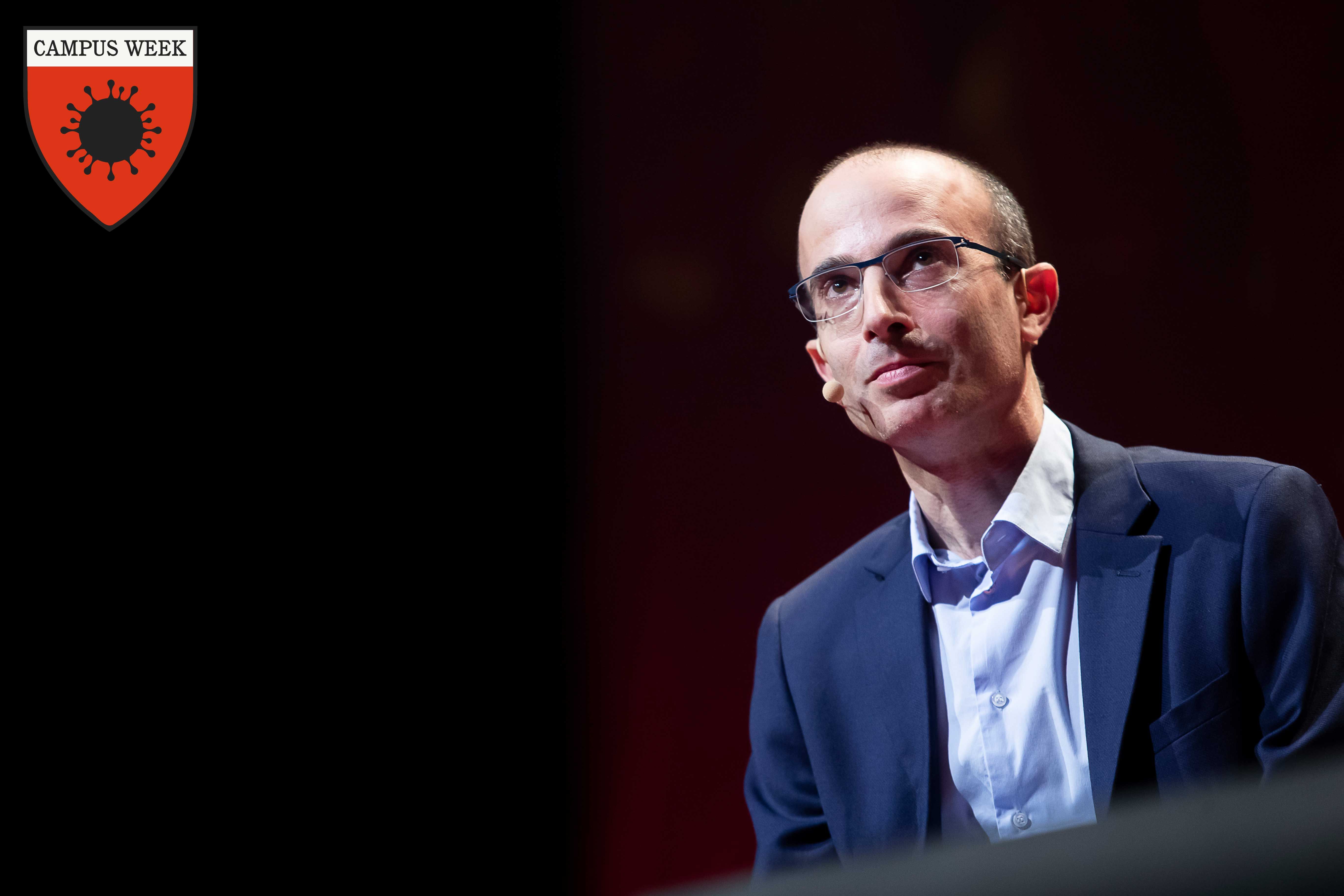
You’ve probably seen Yuval Noah Harari on a stage somewhere, usually talking about robots taking our jobs or how humans are just "hackable animals." But lately, the Sapiens author hasn't been looking at the distant future. He’s been looking at his own backyard. For an Israeli intellectual who spent years warning us about AI, the brutal reality of the Yuval Noah Harari Palestine discourse has become his most urgent—and controversial—focus.
Honestly, Harari is in a weird spot. To some on the global left, he’s not critical enough of Israel’s military actions. To many in Israel, he’s practically a traitor for blaming Prime Minister Benjamin Netanyahu for the security failures of October 7. He’s trying to walk a tightrope that might not even exist anymore.
The "Spiritual Catastrophe" Warning
In late 2025, Harari dropped a bit of a bombshell during a conversation on the Unholy podcast. He didn't just talk about borders or politics; he talked about the "soul" of Judaism. He warned that if Israel continues down a path of "Jewish supremacy" and military dominance without a political solution for Palestinians, it could lead to a "spiritual catastrophe."
Think about that for a second. A guy who usually thinks in centuries is saying the next few years could undo 2,000 years of Jewish culture.
He’s terrified that the current trajectory—which he fears could lead to the ethnic cleansing of Gaza and the West Bank—will redefine what it means to be Jewish. Instead of a culture built on debate and ethics, he sees a future rooted in "the worship of power and violence." It’s dark stuff. He compared this moment to the fall of the Second Temple in 70 CE. That is about as dramatic as a historian can get.
Why He Blames Netanyahu
Harari doesn't hold back on his own government. He’s been a fixture at the massive protests in Tel Aviv, arguing that Netanyahu spent years "systematically destroying the institutions of Israeli democracy."
According to Harari, the October 7 disaster wasn't just a fluke. It was the result of a government that was too busy fighting its own judiciary to notice the "shofar" (the warning horn) blowing on the border. He calls Netanyahu’s coalition a mix of "messianic zealots and shameless opportunists."
- The "Deep State" Trap: Harari argues that the government ignored warnings from the IDF and intelligence agencies because they viewed the experts as "deep state" enemies.
- The Saudi Deal: He believes Hamas attacked specifically to kill a peace deal with Saudi Arabia that might have actually helped Palestinians.
- Dividing the Nation: By pitting Israelis against each other for years, Harari says Netanyahu eroded the state's power from the inside out.
The "Both Sides" Nuance That Makes Everyone Mad
If you’re looking for a simple "one side is 100% right" take, Harari is going to disappoint you. He’s been very vocal about how people can be "victims and perpetrators at the same time."
He famously called out parts of the "global left" for what he termed "extreme moral insensitivity" after the Hamas attacks. He was shocked that students at places like Harvard could hold Israel "entirely responsible" while Hamas was still holding hostages. To him, that’s just lazy thinking.
But then he turns around and tells Israelis that "the idea that Israel should just destroy Gaza is unacceptable." He’s basically telling both sides that their "moral certainty" is a fantasy.
The Generosity Argument
In a 2024 op-ed for the Financial Times, he argued that only "generosity" can end the cycle. Not exactly a word you hear often in Middle Eastern geopolitics.
He thinks Palestinians need to give Israel legitimacy—accepting that Israel is never, ever going away. In return, he argues Israel must give Palestinians a dignified future and a state of their own. It sounds simple on paper, but in the current climate, it’s like asking two people in a burning house to share a glass of water.
What Most People Get Wrong About His Stance
A lot of people think Harari is just a "liberal Zionist" who wants to go back to the way things were before 2023. That’s not quite it.
He’s actually argued that the "old Zionism" of survival might be dead, replaced by an "expansionist Zionism" that doesn't care about moral justification anymore. He sees a fracture within his own country that might be irreparable. He’s not just worried about the war; he’s worried about the "hypermilitaristic mindset" that he sees taking over the Israeli opposition too.
How to Navigate the Harari Perspective
If you're trying to make sense of the Yuval Noah Harari Palestine situation, here are the real-world takeaways from his recent writings and talks:
- Demand Complexity: Reject the "oppressor vs. oppressed" binary. Harari insists that you can (and must) oppose the occupation while also unequivocally condemning Hamas's atrocities.
- Watch the Institutions: Harari’s biggest lesson is that when a country’s internal democracy weakens, its external security follows. This applies to more than just Israel.
- The Role of Outsiders: Since both Israelis and Palestinians are currently "blinded by pain," Harari believes the international community's job isn't to pick a team like it's a football match. It's to "hold the space for peace" until both sides are ready to talk again.
- Look for "Generosity": In any peace proposal, look for whether it offers the other side a way to "save face" and live with dignity. If it’s just about crushing the enemy, Harari says it’s just a "forever war" in disguise.
Start by looking at the specific proposals Harari supports, such as the demilitarization of Gaza in exchange for a clear path to Palestinian statehood and regional integration. You can follow his ongoing commentary through his social impact company, Sapienship, or his long-form essays in the Financial Times and The Guardian.