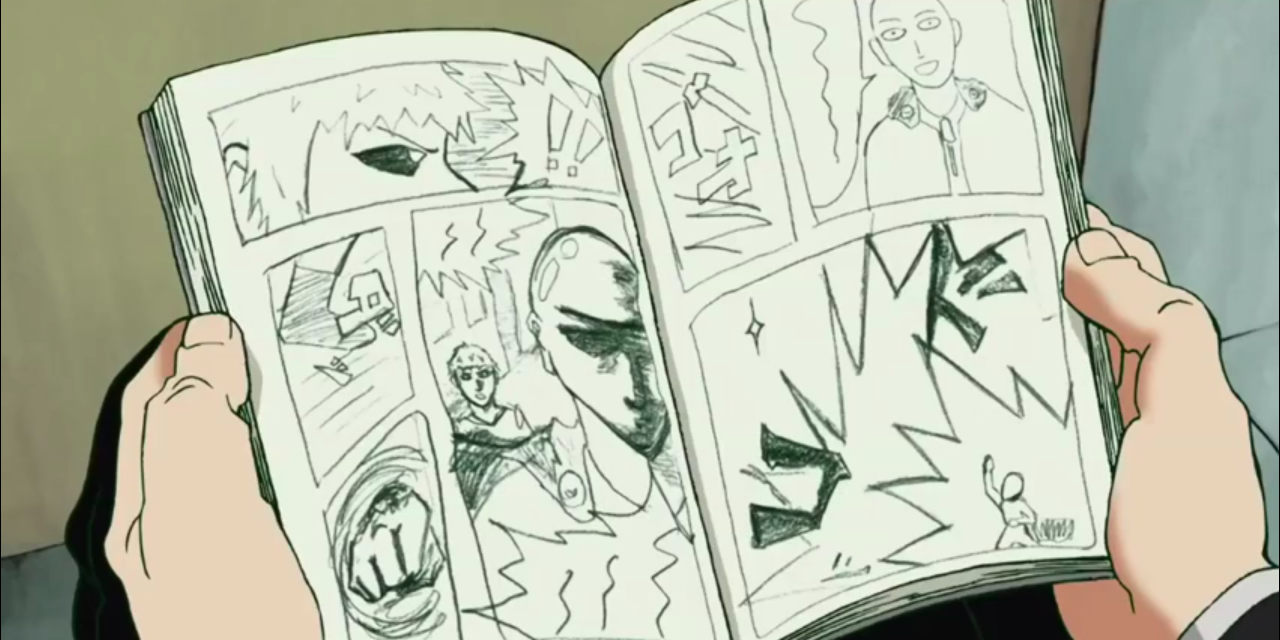
Most people think of One Punch Man and immediately picture Saitama’s blank, egg-shaped face. It’s iconic. But the guy behind the pen, the actual One Punch Man artist Yusuke Murata, is doing things with a drawing tablet that shouldn't even be legal. We aren't just talking about "good" manga art here. We’re talking about a level of technical mastery that makes other professional illustrators want to put their pens down and go find a new hobby.
Honestly, it’s kind of a weird situation. You’ve got this webcomic creator named ONE who wrote the original story with art that—to be polite—looks like it was drawn during a bumpy bus ride. Then Murata comes along. He sees this crude hobbyist comic and decides he has to draw it. He didn't just polish it. He turned it into a masterclass in kinetic energy and anatomy.
Murata isn't just an illustrator. He’s a freak of nature.
The Murata Method: How the One Punch Man Artist Reinvents Action
If you’ve ever flipped through the physical volumes of the manga, you’ve felt it. The sense of movement is staggering. Murata uses a technique where he draws sequential panels that almost function like keyframes in an animation. Sometimes, he’ll spend dozens of pages on a single sequence—like Saitama’s spar with Genos or the massive redraws of the Monster Association arc—just to ensure the "camera" angle feels cinematic.
He’s obsessed.
There’s a legendary story among fans about how he handled a specific chapter. He felt the flow wasn't right, so he went back and redrew dozens of finished pages. Most artists are fighting to hit a weekly deadline just to stay afloat. Murata? He’s over here competing with himself, constantly raising the bar for what a page of manga can actually communicate to the human eye.
Is It Digital or Traditional?
Both. Sorta. Murata started out as a traditional powerhouse. If you look back at his work on Eyeshield 21—a high-stakes American football manga—you can see the seeds of his current style. The sweat, the dirt, the explosive lunges. It’s all there. Nowadays, he’s heavily integrated digital tools, which allows him to pull off those insane "gif-like" sequences where you can scroll through a digital chapter and see the characters actually moving.
He uses a Cintiq, but his fundamental understanding of perspective comes from years of grinding with ink and G-pens. You can't fake that. You can’t just hit a "make it look cool" button in Photoshop.
Why the One Punch Man Artist Matters More Than You Think
In the manga industry, there’s a huge gap between "great story" and "great art." Usually, you get one or the other. With One Punch Man, the synergy is bizarre. ONE provides the subversive, hilarious, and surprisingly deep script. Murata provides the visual weight. Without Murata’s hyper-detailed rendering, the joke of Saitama being "just a guy" wouldn't land as hard.
The contrast is the point.
Imagine a beautifully rendered, terrifying cosmic horror like God or Garou. They look like they belong in a museum. Then, in the middle of all that cross-hatching and perfect anatomy, you have Saitama. He’s still drawn with those simple, loopy lines. That visual gag only works because the One Punch Man artist makes everything else look so real it hurts.
The Overworking Myth vs. Reality
People worry about him. They see the level of detail—the rubble, the individual sparks of electricity, the reflections in metal—and they assume he never sleeps. While it’s true that manga artists have brutal schedules, Murata is surprisingly transparent on Twitter (or X, if we’re being technical). He streams his drawing sessions. You can actually sit there and watch him work for hours.
It’s hypnotic.
You see him build a city street from nothing. He doesn't use many shortcuts. He’s a craftsman. He’s also mentored others and shared his process, which is rare for someone at his level of fame. He isn't gatekeeping his secrets; he’s just moving so fast nobody can keep up.
The Redraw Controversy: Perfectionism at Scale
Let’s talk about the elephant in the room. If you follow the series online, you know the "redraws" are a meme at this point. Murata will finish a chapter, it gets published, and then a month later, he says, "Wait, I have a better idea."
He’ll literally change the plot.
- He’s changed how certain fights end.
- He’s added entire characters into scenes that were already "done."
- He’s tweaked the power levels of monsters to make the scaling more consistent.
Some fans find it frustrating. They just want the story to move forward. But if you look at it from a legacy perspective, Murata is treating the tankobon (the collected volumes) as the definitive version. The online releases are just a draft. It’s a level of dedication to the craft that you rarely see in a commercial medium. He’s not just filling pages; he’s building a world that has to be perfect.
Beyond Saitama: What Else Has He Done?
Yusuke Murata isn't a one-trick pony. Before he became the One Punch Man artist, he was the artist for Eyeshield 21. If you haven't read it, you should. Even if you hate sports. The way he draws "speed" in that manga set the foundation for how he draws Saitama’s "serious series" moves later on.
He’s also done a ton of work for Marvel and Capcom. He’s drawn covers for Spider-Man and The Avengers. His Western influence is obvious—he loves dynamic, muscular figures and high-contrast lighting. He’s basically the bridge between Japanese manga sensibility and American comic book action.
He even started his own animation studio, Village Studio. He’s trying to bridge the gap between static panels and full-blown anime. The guy is restless. He’s clearly bored with just being "the best" at one thing.
The Anatomy of a Panel
When you look at a Murata panel, your eye knows exactly where to go. That’s not an accident. He uses "leading lines" better than almost anyone in the business.
- A punch starts in the bottom left.
- The impact debris creates a diagonal line toward the top right.
- The victim's body follows that arc.
- Your eye naturally lands on the reaction shot in the next panel.
It’s seamless. You don't "read" his action scenes as much as you "experience" them. It’s visual storytelling in its purest form.
How to Study Murata’s Style Without Losing Your Mind
If you’re an aspiring artist, looking at Murata’s work can be depressing. It’s too good. But there are lessons to be learned if you look closely.
First, study his use of line weight. He uses thick, bold lines for objects close to the viewer and razor-thin lines for distant landscapes. This creates immediate depth. Second, look at his textures. He doesn't just draw "a rock." He draws the cracks, the shadows inside the cracks, and the dust settling on the edges.
He’s also a master of "white space." Even in his most cluttered scenes, there’s always a point of rest for the eyes. That’s the secret sauce.
Actionable Insights for Fans and Creators
If you want to truly appreciate what the One Punch Man artist is doing, stop reading the chapters on your phone. Get the physical books. The double-page spreads are meant to be seen in print. The scale is lost on a small screen.
For artists: don't try to copy his detail. Copy his energy. Murata captures the moment before and the moment after an action better than anyone. He understands physics—or at least, he understands how to fake physics so well that your brain believes it.
- Watch his livestreams. Seeing his hand movements helps demystify the "magic."
- Compare the webcomic to the manga. It’s the best way to see how an artist interprets a writer's vision.
- Pay attention to the backgrounds. Murata’s assistants are incredible, but he directs the perspective of every single street lamp and skyscraper.
The reality is that we’re living through a golden age of manga art, and Yusuke Murata is the one leading the charge. He’s taken a gag character and given him the most epic, visually stunning world imaginable. Whether he's redrawing a chapter for the third time or sketching a 50-page fight scene, he’s proving that manga can be more than just "comics." It can be high art.
To get the most out of Murata's work, start by tracking the evolution of the Monster Association arc. Look at the original digital release versus the final volume release. You'll see exactly where his perfectionism kicks in—often changing the choreography of a fight to better reflect a character's growth or the sheer scale of their power. It’s a rare look into the mind of a creator who refuses to settle for "good enough." This is why he remains the gold standard for action manga today.
---



