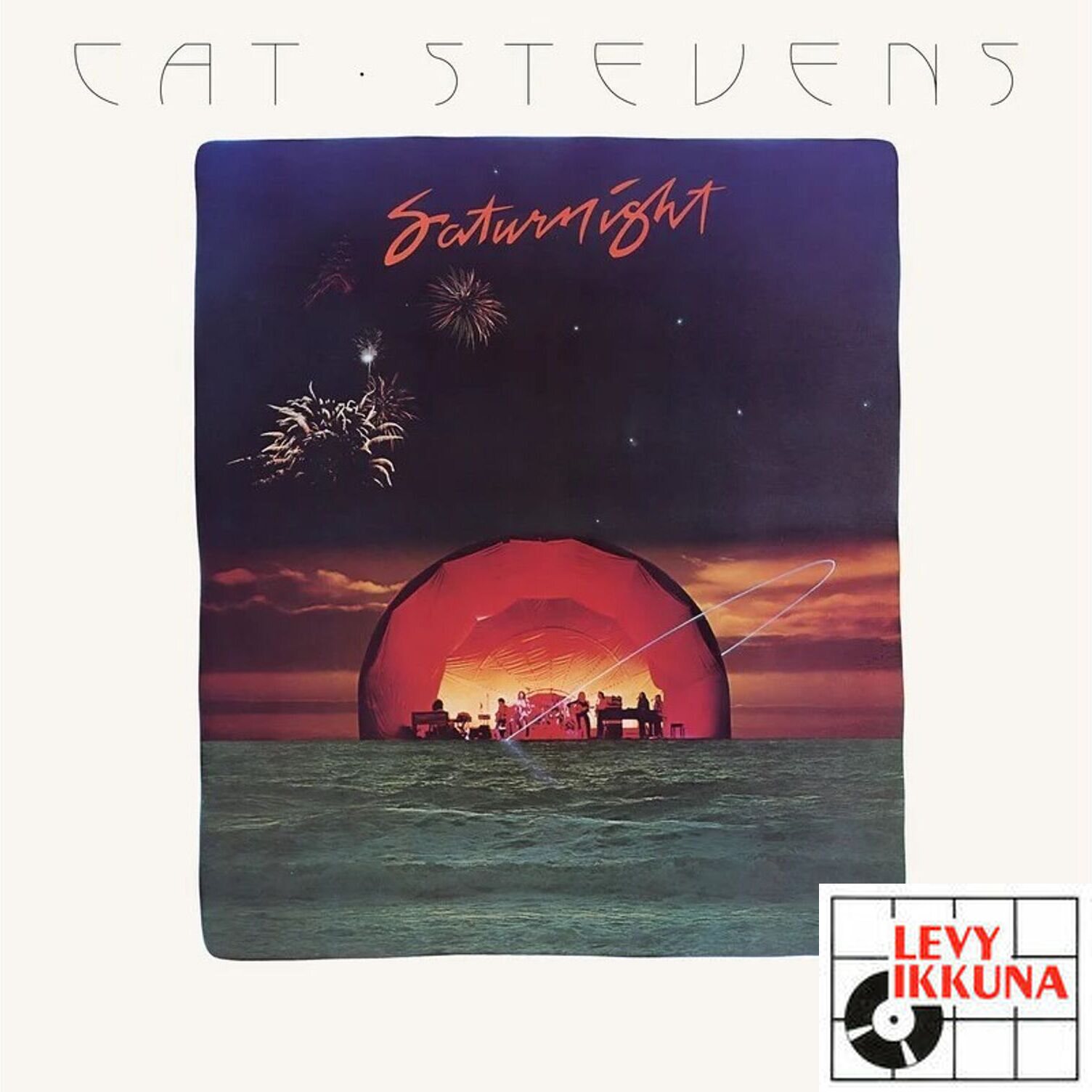
He was the quintessential 1970s folk icon. Lean, bearded, with eyes that looked like they had seen too much for a twenty-something. If you were alive then, or even if you just have a decent record collection now, you know the voice. It's that warm, slightly gravelly tone in "Father and Son" or the upbeat but spiritually anxious rhythm of "Peace Train." Then, suddenly, he was gone. Or that's the narrative, anyway. Most people think Yusuf Islam, formerly known as Cat Stevens, just vanished into a cloud of incense and controversy in 1977.
The truth is way more interesting than the "rock star finds God" trope. It wasn't just a whim. It wasn't a breakdown. It was a slow-motion pivot that took years and was sparked by a literal brush with death in the Pacific Ocean.
The Malibu Near-Death Experience
In 1975, Steven Georgiou (his birth name) was at the top of the world. He was wealthy, famous, and miserable. While swimming off the coast of Malibu, he got caught in a powerful current. He couldn't get back to shore. He was exhausted. He basically realized he was going to drown. In that moment, he didn't call out to a specific deity he'd studied; he just shouted, "Oh God! If you save me, I will work for you."
A wave came. It pushed him back toward the shore. He survived.
Most people tell this story as if he walked out of the water, bought a Quran, and changed his name the next day. Honestly, it didn't happen like that. It took another year or so. His brother, David, bought him a copy of the Quran after a trip to Jerusalem, thinking Steven might find it interesting. Steven—the man we knew as Cat Stevens—read it and felt like he’d finally found a manual for the questions he’d been asking since his 1968 bout with tuberculosis. That earlier illness had already shifted him from a "Matthew and Son" pop star into the introspective folk artist of Tea for the Tillerman.
Why the Music Actually Stopped
When he officially became Yusuf Islam in 1977, the music industry didn't just lose a hitmaker; it lost its mind. People couldn't wrap their heads around why someone would walk away from millions of dollars. He auctioned off his guitars for charity. He left the spotlight.
There's a massive misconception that Islam forbids music entirely and that’s why he quit. That’s a simplified version of a very complex theological debate. At the time, Yusuf felt his old life and his new spiritual path were like oil and water. He felt the vanity of the music business—the ego, the "look at me" nature of the stage—was toxic to his soul. He didn't think he could be both Yusuf and Cat. So, he chose Yusuf.
For nearly two decades, he stayed away. He focused on education. He founded the Islamia Primary School in North London. He became a father. He did the "normal" stuff that the rock-and-roll lifestyle usually destroys.
The 1989 Controversy and the Power of Bad Press
You can’t talk about Yusuf Islam without talking about the Salmon Rushdie affair. This is where the "peaceful folk singer" image took a massive hit in the Western media. In 1989, during a talk at Kingston University, he was asked about the fatwa against Rushdie. His response was interpreted as supporting the death penalty for blasphemy.
It was a PR disaster. He later clarified that he was merely stating what the legalistic tradition of the faith said, not personally calling for a hit on a writer. But the nuance was lost. The "Peace Train" had derailed. He was banned from entering the United States for a period in the early 2000s because his name appeared on a "no-fly" list, an incident he later called "utterly ridiculous." He eventually sued and won libel cases against newspapers that claimed he supported terrorism.
The Return of the Guitar
Something changed in the mid-90s. His son brought a guitar back into the house. Yusuf realized that the instrument wasn't the enemy—the intent was. He slowly started recording again, first with percussion-only tracks like The Life of the Last Prophet, and eventually, he picked up the acoustic guitar again for An Other Cup in 2006.
It was like a ghost coming back to life. Seeing Yusuf Islam perform "Wild World" on a late-night talk show felt surreal to fans who had mourned his career for thirty years. He sounded the same. He looked older, wiser, and significantly more at peace.
He didn't come back as "Cat Stevens" immediately, though. He went by "Yusuf." Later, he compromised with "Yusuf / Cat Stevens." It was a way of acknowledging that the kid from London who wrote "Moonshadow" was still part of the man standing on stage in a suit.
How he bridges the gap today:
- He uses his platform for Small Kindness, his global charity.
- He re-recorded Tea for the Tillerman (dubbed T4TT2) to see how the songs felt through the lens of a 70-year-old.
- He speaks openly about the "middle path" in religion, moving away from the more rigid interpretations he held in the early 80s.
The Complexity of His Legacy
Is he a folk singer? A religious leader? A philanthropist? He’s all of it. To many in the Muslim world, he’s a hero who used his fame to build schools and provide relief in war zones. To many in the West, he’s a symbol of the 70s who took a very strange, very long detour.
The fascinating thing is how his old songs have aged. "Peace Train" feels more relevant in a hyper-polarized world than it did in 1971. "Father and Son" still breaks people's hearts because the generational gap is a universal constant. Yusuf realized that these songs weren't "idolatry"—they were stories about the human condition.
Actionable Insights for Fans and Listeners
If you're looking to dive back into the world of Yusuf Islam, don't just stick to the 1970s Greatest Hits. You'll miss the evolution.
- Listen to 'King of a Land': His 2023 album is arguably his best work since the 70s. It’s vibrant, lush, and shows a man who has finally integrated his two identities.
- Compare the 'Tillerman' Versions: Play the 1970 version of "Father and Son" followed by the 2020 re-recording. In the new version, he duets with his younger self. It’s a haunting, beautiful look at time and ego.
- Read his actual words on the '89 controversy: Instead of relying on headlines, look at his 400-page autobiography Why I Still Carry a Guitar. It provides the context of a man who was thrust into a political firestorm he wasn't prepared for.
- Explore the 'Small Kindness' projects: See the actual impact of his 40 years of absence from the charts. It puts the "he gave it all up" narrative into a much clearer perspective.
The story of Yusuf Islam isn't one of a man who lost himself. It's about a man who was brave enough to stop being what everyone else wanted him to be, just so he could find out who he actually was. Whether you agree with his faith or not, that kind of integrity is rare in the entertainment business. He didn't just sing about a peace train; he actually got on it, even when the ticket cost him his entire career.



