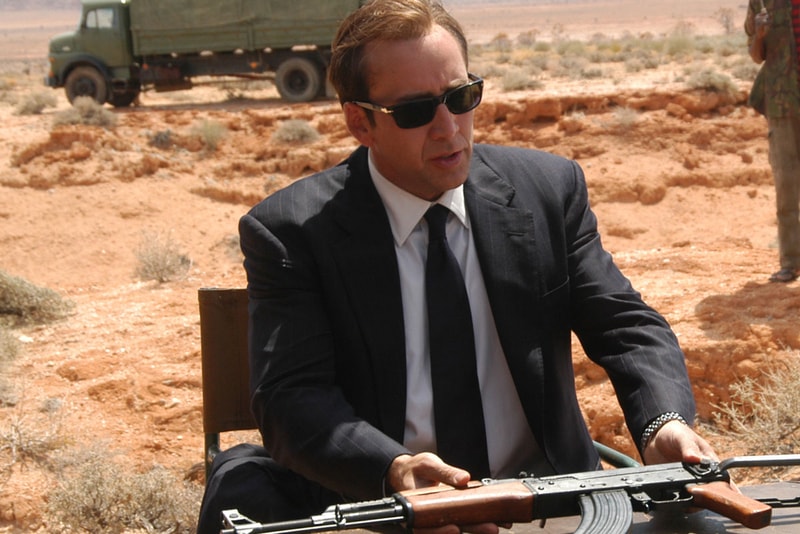
You’ve seen the movie. Nicolas Cage, looking surprisingly grounded for once, stands in front of a mountain of shell casings. He’s Yuri Orlov, the man who provides the world with its most efficient tools of destruction. But here’s the thing: while the character on screen is a Hollywood invention, the shadow he casts is entirely real.
Honestly, the real story is much weirder than the film.
Most people think Yuri Orlov is just a fictional proxy for one guy. That’s not quite right. While the primary inspiration was the notorious Viktor Bout, the character is actually a composite of about five different international arms dealers who treated the collapse of the Soviet Union like a clearance sale at a department store.
What Most People Get Wrong About the Real Yuri Orlov
The film Lord of War paints Yuri as a Ukrainian-American kid from Brighton Beach who hustles his way into the big leagues. It’s a great narrative. But the real "Merchant of Death," Viktor Bout, didn't start in a restaurant in New York.
Bout was a Soviet military translator with a gift for languages—he reportedly speaks six—and he was stationed in Mozambique and Angola long before he ever sold a gun. When the USSR imploded in 1991, he didn't just find a niche. He found an entire abandoned air force.
Imagine rows of Antonov and Ilyushin cargo planes sitting on runways from Moscow to Kiev. Nobody had money for fuel. Nobody was getting paid. Bout basically walked in, grabbed the keys, and started a freight business.
It wasn't just about guns
Here is a detail that usually gets left out of the Hollywood version. Bout’s fleet, operated under various front companies like Air Cess, didn't just move AK-47s. He moved everything. We're talking frozen chickens, gladiolas, and even UN peacekeepers.
He was essentially the FedEx of conflict zones. If you needed ten tons of cargo delivered to a dirt strip in the middle of a civil war, Bout was the only guy who would pick up the phone. This "legitimate" side of the business provided the perfect cover for the millions of rounds of ammunition tucked away in the back of the planes.
The 2026 Reality: Life Imitates Art (Again)
You might think this is all 90s nostalgia. It isn't.
After serving roughly ten years of a 25-year sentence in U.S. federal prison, Viktor Bout was released in a high-profile prisoner exchange for WNBA star Brittney Griner in December 2022. It was a trade that felt like a deleted scene from the movie.
What’s he doing now?
Well, as of late 2024 and heading into 2026, reports have surfaced that Bout is back in the game. According to investigative reports from The Wall Street Journal, he was recently spotted in Moscow brokering a $10 million deal for small arms with Houthi militants from Yemen. Specifically, he’s allegedly facilitating the sale of AK-74s—an upgraded version of the classic Kalashnikov.
The Kremlin calls these reports "fake news," but the pattern is identical to the Yuri Orlov playbook:
- Use a high-level political connection for protection.
- Focus on "non-state actors" who are overlooked by traditional diplomacy.
- Sell the most reliable, low-maintenance hardware available.
Why the AK-47 is Still the Star of the Show
In the movie, Yuri Orlov gives a famous monologue about the Avtomat Kalashnikova model of 1947, better known as the AK-47. He calls it the "world's most popular assault rifle."
He wasn't exaggerating.
There are an estimated 100 million Kalashnikov-pattern rifles in circulation today. It doesn't break. It doesn't jam. You can bury it in the sand for a year, dig it up, and it will still fire. For an arms dealer like the real-life inspirations for Orlov, this was the ultimate product. It required no "after-sales service."
In places like Liberia and Sierra Leone during the late 90s, these guns changed the entire landscape of warfare. Warlords like Charles Taylor (who inspired the character Andre Baptiste in the film) didn't need trained soldiers. They just needed children who could pull a trigger. It’s a grim reality that the movie captures with a cynical, almost detached tone that actually mirrors how these dealers viewed their "commodities."
The Complexity of the Trade
We like to think of these guys as pure villains. It makes for a better story. But the nuance—the part that makes Yuri Orlov such a compelling character—is that the governments chasing them often used them.
During the early stages of the wars in Iraq and Afghanistan, the U.S. military and its contractors reportedly used Bout’s planes to move supplies. Why? Because his pilots were the only ones crazy enough to fly into active combat zones without insurance.
It’s the ultimate hypocrisy. One department of the government puts you on a "Most Wanted" list, while another department cuts you a check to deliver bottled water to a forward operating base.
The Fall and the "Sting"
The way the real story ended (at least the first time) was through a massive DEA sting operation in Thailand in 2008. Agents posed as representatives for the FARC, a Colombian rebel group.
They didn't catch him for selling guns to Africa. They caught him because he agreed to sell surface-to-air missiles with the specific understanding that they would be used to shoot down American helicopters. That was the legal "gotcha" that allowed for his extradition and conviction.
Actionable Insights: Understanding the Shadow Market
If you're interested in the world of international relations or the "grey market" economy, there are a few things you should keep an eye on to see how the Orlov legacy is evolving in 2026.
1. Watch the "Grain" Shipments Modern arms trafficking rarely looks like a crate labeled "Guns." Today, it’s often disguised as humanitarian aid or agricultural exports. Recent reports suggest that weapons going into Yemen were hidden among shipments of grain.
2. Follow the Aircraft Registrations One of the real tricks Bout used—and Yuri Orlov mimics in the film—is "re-flagging" planes. A plane can be registered in Liberia one day, the Central African Republic the next, and Swaziland the day after. This makes it almost impossible for international regulators to track the tail numbers. If you see a sudden surge in small cargo airlines in unstable regions, there's usually a reason.
3. The Digital Shift While Orlov dealt in physical cash and "blood diamonds," the 2026 arms dealer is likely using decentralized finance (DeFi) and crypto to move funds. It’s the same business model, just a different ledger.
The story of the arms dealer isn't a closed chapter of history. As long as there is a surplus of Soviet-era hardware and a conflict somewhere on the map, there will always be a Yuri Orlov ready to fill the gap.
To stay informed on how these networks operate today, you should track the annual reports from the Small Arms Survey or the UN Office on Drugs and Crime (UNODC). They provide the hard data that proves the Lord of War isn't just a movie—it’s a business plan that’s still being executed every single day.



