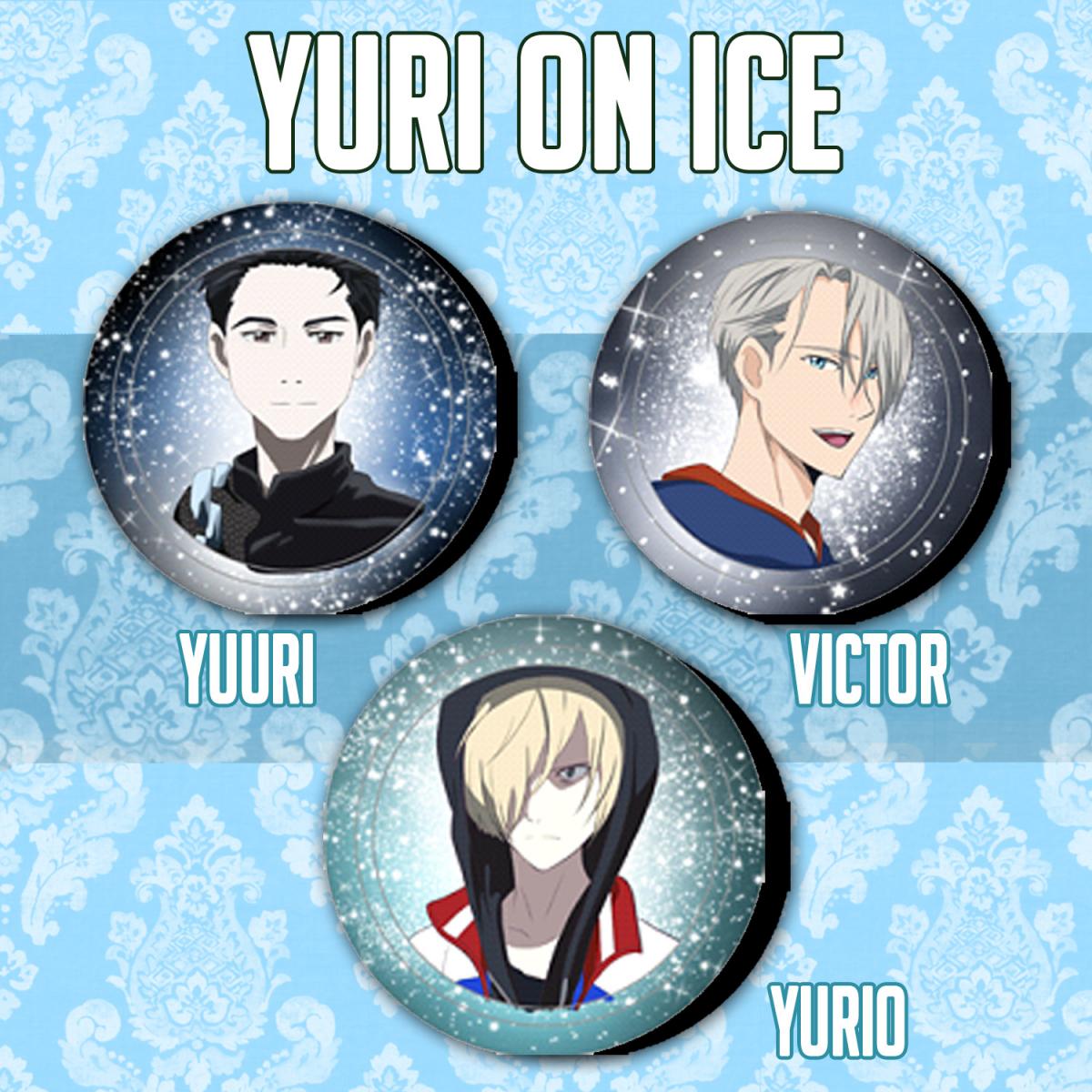
When people first talk about Yuri on Ice Yurio, they usually start with the yelling. The "Russian Punk." The kid who kicked a bathroom stall door in Sochi just to tell a crying grown man to quit. It’s an iconic, if slightly aggressive, introduction. But if you’ve actually sat through the 12 episodes of the 2016 MAPPA hit, you know there is a lot more under that leopard-print hoodie than just teenage angst.
Yuri Plisetsky is 15 years old. In the brutal world of elite figure skating, that’s a ticking clock. He is a prodigy, sure, but he’s a prodigy standing on the edge of a growth spurt that could ruin his center of gravity forever. That’s why he’s so angry. He isn’t just some bratty rival; he’s a kid trying to win everything before his own body betrays him.
The Yuri on Ice Yurio Paradox: From Punk to Fairy
It’s hilarious how the world sees him. To the press and the fans in the show, he is the "Russian Fairy." He’s petite, he has that long, flowing blonde hair, and his movements on the ice are, frankly, ethereal. Then he opens his mouth and starts swearing.
The duality is what makes him work. Most sports anime give you a rival who is either a stoic genius or a total jerk. Yurio is both and neither. He’s a grandson who loves his Nikolai-prepared pirozhki (the ones with the pork cutlet bowl filling are a top-tier gesture of friendship, by the way). He’s a cat lover who will spend his last ruble on a tiger-print shirt. Basically, he’s a very relatable, very intense theater kid with blades on his feet.
The Motivation Behind the Anger
Why does he care so much that Victor Nikiforov left Russia? Because Victor promised him something. To a 15-year-old, a promise from an idol is everything. When Victor ditched their agreement to coach Yuri Katsuki in Japan, it wasn’t just a professional setback for Yurio. It was a personal snub.
Honestly, the "Onsen on Ice" face-off is one of the best moments for his character. He’s forced to perform "Agape"—unconditional love—while his Japanese rival gets "Eros." It’s a total mismatch on paper. Yurio doesn’t do "soft." But watching him dig deep and find that connection to his grandfather through his skating? That’s where the character shifts from a caricature to a real person.
The Technical Genius of Yuri Plisetsky
Let’s talk stats for a second. We’re in 2026, and people still argue about the scoring in the Grand Prix Final. In the show’s finale, Yuri on Ice Yurio wins the gold medal. He beats Yuri Katsuki by a razor-thin margin of 0.12 points.
How? Consistency and difficulty. While Katsuki is the king of "step sequences" and emotional storytelling, Yurio is a technical monster. He’s landing quads with his arms above his head (the Tano position) which adds a massive Grade of Execution (GOE) boost.
His short program, set to "In Regards to Love: Agape," actually breaks Victor’s world record in the series. Think about that. A 15-year-old debutante outshined the Living Legend. It’s not just plot armor; it’s a reflection of how the real-life skating world works. Look at real skaters like Yulia Lipnitskaya, whom creator Mitsurō Kubo has confirmed was a primary inspiration for Yurio’s design and "powerhouse" status. The youth have the flexibility and the rotation speed that older skaters just can't keep up with.
The Lilia Baranovskaya Factor
He didn't get there alone. Bringing in Lilia, the former prima ballerina, was the smartest thing Yakov ever did. She forced him to trade his "punk" attitude for "grace." That training montage of him doing ballet until he literally couldn't stand? That's the reality of the sport. It’s not all sparkly costumes and cool music. It’s grueling, repetitive, and often painful. Yurio’s willingness to suffer for the art of it is why he’s a champion.
Growing Up is the Real Enemy
There’s a scene where Yurio looks in the mirror and worries about his height. It’s subtle, but it’s there. In figure skating, a few inches of height or a few pounds of muscle can completely change how a quad Salchow feels.
He’s terrified of becoming "irrelevant." He sees Victor, who is 27 and struggling to find "life and love," and he sees Yuri Katsuki, who is 23 and already being told he’s too old. To Yurio, every second he isn’t winning is a second wasted.
Friendship with Otabek Altin
If you want to see the "real" Yurio, look at his friendship with Otabek. No rivalry, no screaming—just two kids who understand the weight of their country’s expectations. Otabek calling him a "soldier" is probably the highest compliment he ever received. It acknowledged his toughness without making it about his "fairy-like" looks. It’s the one relationship where he doesn’t have to perform. He can just be a kid who likes motorcycles and loud music.
What People Still Get Wrong
A lot of casual fans think Yurio hates Yuri Katsuki. Honestly? I don't think he does. He’s obsessed with him, sure, but it’s a respect-based obsession. He gave Katsuki his grandfather's pirozhki for his birthday. In the world of Yurio, that's basically a blood oath of friendship.
He yells at Katsuki to "never retire" because if Katsuki leaves, the competition gets boring. He needs someone to chase, and he needs someone to push him. The "Russian Punk" needs a "Japanese Piggy" to keep the fire lit.
Essential Takeaways for Fans of the Russian Fairy
If you're looking to understand the depth of Yuri on Ice Yurio, keep these points in mind. They help separate the meme from the masterpiece of character writing:
- The Age Gap: His urgency comes from the "shelf life" of a male skater. He is peak-performance right now, and he knows it won't last.
- The Agape vs. Eros Contrast: His win wasn't about being "better" at love than Katsuki; it was about technical precision and finding a specific, familial love that grounded his skating.
- The Real-World Inspo: Researching Yulia Lipnitskaya's 2014 Olympic performance gives you a huge insight into Yurio’s "lightning in a bottle" energy.
- The Dub vs. Sub: If you've only watched one, try the other. Micah Solusod (English) and Kōki Uchiyama (Japanese) bring totally different, yet equally valid, layers of "bratty but vulnerable" to the role.
Your Next Steps to Dive Deeper
Stop scrolling through TikTok edits and actually look at the choreography. Go back and watch the "Welcome to the Madness" OVA. It’s a complete shift in his style—more rock, more edge, more "punk." It shows where he’s going next.
Also, if you want to understand the technical side he’s so good at, look up "quadruple Salchow" transitions on YouTube. Seeing how real athletes struggle with the moves Yurio does effortlessly makes his 0.12-point victory feel a lot more earned. Pay attention to his hands during the spins. Lilia’s influence is there in every finger extension. That’s the real Yuri Plisetsky: a kid who worked his soul raw to turn his anger into something beautiful.



