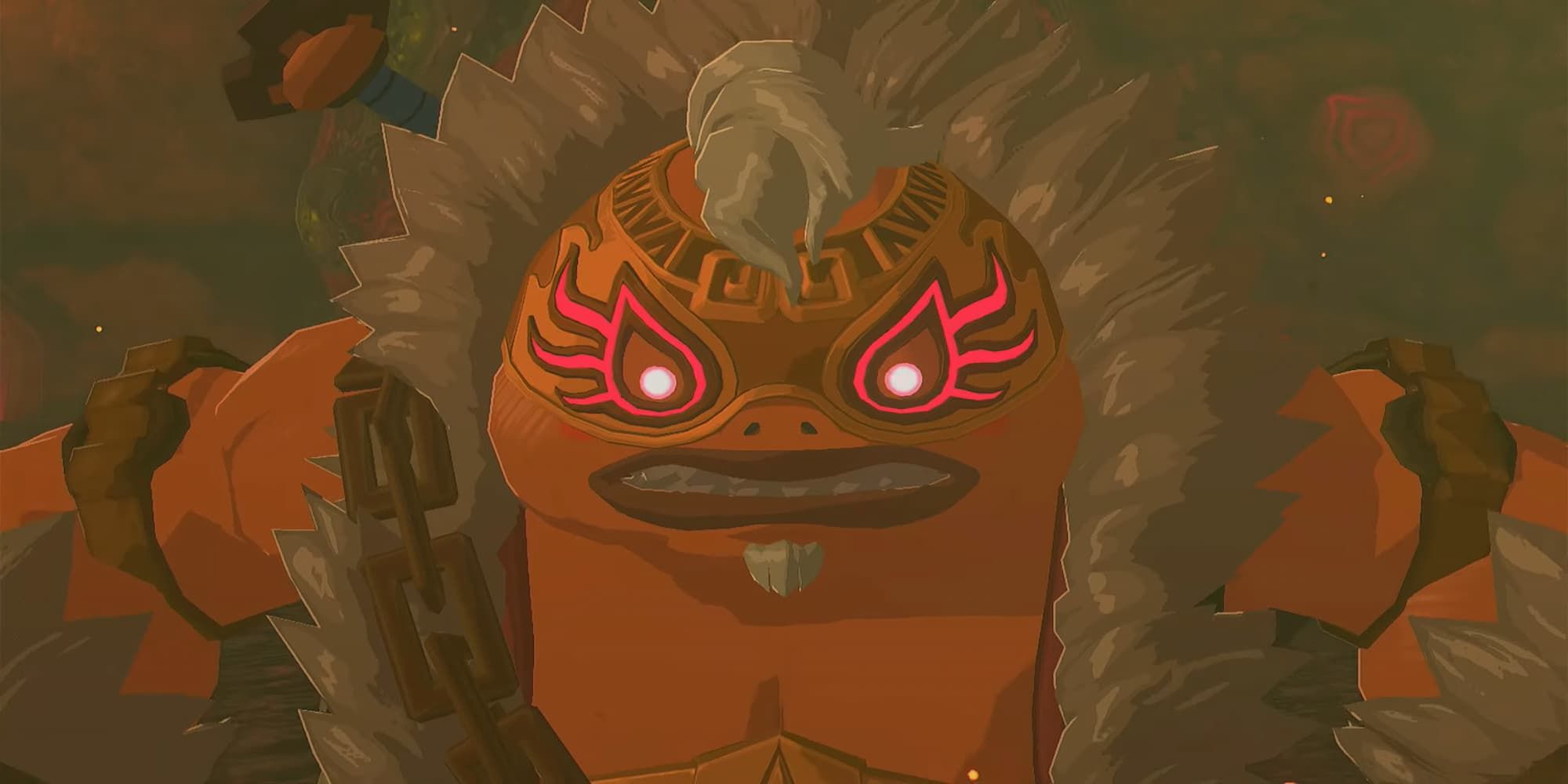
Yunobo is kind of a lot to handle. If you've spent any time in the Eldin region of Hyrule across Breath of the Wild or Tears of the Kingdom, you know exactly what I mean. He’s loud. He’s frequently anxious. In the most recent game, he literally tries to scam you while wearing a luchador mask and dealing "Marbled Rock Roast" like some kind of volcanic kingpin.
But here is the thing: Yunobo of Goron City is actually the most developed character in the modern Zelda era, even if his voice acting makes some players reach for the mute button.
He isn't just a gimmick. He represents a massive shift in how Nintendo treats the Goron race. Usually, Gorons are just "big strong rock guys." They eat rocks, they roll, they’re tough. Yunobo? He’s the first one we’ve seen who is deeply, visibly afraid of his own shadow—at least at first.
The Problem with Being Daruk’s Grandson
Imagine having a legendary warrior as a grandfather. Now imagine that grandfather was a Champion who piloted a giant mechanical lizard and died protecting the realm. That is the shadow Yunobo lives in. When we first meet him in Breath of the Wild, he’s trapped in a cave. Classic.
He has Daruk’s Protection—that glowing red shield—but he uses it to hide. It’s defensive, literally and metaphorically. Most players found his escort mission up Death Mountain to be a total chore. Avoiding Sentinels while Yunobo whistles and panics is stressful. But looking back, that stress was the point. You aren't playing with a hero yet. You’re playing with a kid who inherited a power he didn't ask for and doesn't know how to use.
Nintendo writers took a risk here. They made a main character "annoying" on purpose to facilitate a growth arc that spans two massive games.
That Weird Villain Phase in Tears of the Kingdom
Fast forward to Tears of the Kingdom. Everything changed.
If you haven't played the Fire Temple questline yet, the shift is jarring. Yunobo isn't the stuttering kid anymore. He’s the president of YunoboCo. He wears a suit. Well, a Goron version of a suit, which is mostly just a scarf and some fancy belt work. He’s got "tough guy" energy that feels incredibly fake because, honestly, it is.
He gets brainwashed. The "Masked Beast" persona is a direct result of Zelda (or the phantom version of her) giving him a mask that suppresses his personality. Seeing Yunobo of Goron City as an antagonist—even briefly—was a brilliant move. It forced the player to stop seeing him as a burden and start seeing him as a powerhouse. When he charges at you, you realize, Oh, this guy is actually dangerous.
Once you break the mask, the "real" Yunobo returns, but he’s different. He’s a hybrid of his old timid self and this new corporate leader. He’s found a middle ground. He’s a CEO who actually cares about his people, even if he did accidentally get them all addicted to rock drugs for a minute there.
Why the "YunoboCo" Arc Matters
It’s easy to meme on the "Marbled Rock Roast" plotline. It’s essentially a PG-rated allegory for a community being devastated by an addictive substance. Seeing the older Gorons lethargic and glazed-over while Yunobo—the youth leader—is manipulated into providing the supply is surprisingly dark for a Zelda game.
It grounds Goron City in a way we haven't seen before. Usually, their problems are "the volcano is too hot" or "a monster is in our cave." This was a social problem. It gave Yunobo a level of guilt and responsibility that Daruk never had to deal with. Daruk was a soldier; Yunobo is a statesman.
Mechanics: The Power of the Charge
Let's talk gameplay. In Tears of the Kingdom, Yunobo’s sage ability is polarizing.
Some people hate how he sits on the front of your vehicles and throws off the weight distribution. If you’ve ever built a finely-tuned hoverbike only to have Yunobo’s ghost weigh down the nose, you’ve probably cursed his name.
However, from a combat and exploration perspective? He’s a Swiss Army knife.
- He breaks ore deposits without wasting weapon durability.
- He sets grass on fire for instant updrafts.
- He’s a projectile that doesn't cost arrows.
- He can blast through those annoying red and blue rocks in caves.
He is the "utility" sage. While Riju is great for big AOE bursts and Tulin is the king of traversal, Yunobo is the one who saves you from the menu-scrolling nightmare of fusing bombs to arrows every five seconds.
The Evolution of the Goron Aesthetic
Nintendo’s design team, led by Satoru Takizawa, did something subtle with Yunobo’s physical growth. In the first game, his rounded features and wide eyes screamed "vulnerable." In the sequel, his silhouette is bulkier. He sports the top-knot. He looks more like a traditional Goron hero, but he kept the goggles.
Those goggles are a link to his past. They represent the "scared kid" who needed protection, now worn by the man who provides it. It’s a great bit of visual storytelling that doesn't need a single line of dialogue to explain.
What Most People Get Wrong About His Voice
The English dub of Yunobo gets a lot of flak. People call it whiny.
If you switch the audio to Japanese, the performance by Nobuyuki Hiyama (who, fun fact, was the voice of Adult Link in Ocarina of Time) is much more "shonen protagonist." The English version emphasizes his insecurity. The Japanese version emphasizes his effort. Both are valid, but they change how you perceive the character.
If you find him grating, try viewing his dialogue as someone who is constantly overcompensating for a massive inferiority complex. It makes him much more sympathetic. He isn't trying to be annoying; he’s trying to be loud enough to convince himself he’s brave.
Real-World Takeaway: Leadership Through Vulnerability
What can we actually learn from a giant rock man who rolls into things?
Yunobo’s arc is about the transition from "inheritor" to "leader." He started by leaning on Daruk’s legacy. He ended by building his own company and literally clearing the smoke from his city. He’s a reminder that you don't have to be fearless to be effective.
Actually, being afraid and doing the thing anyway is the definition of courage. That’s the "Triforce of Courage" spirit, and Yunobo has more of it than almost anyone else in the cast, besides Link himself.
Actionable Tips for Mastering Yunobo in Your Playthrough
If you’re currently working through the Eldin region or just finished the Fire Temple, here is how to actually make the most of your big goron buddy without losing your mind:
- Disable him in flight: If you are using a delicate flying machine, go into the "Special Items" menu and dismiss Yunobo’s avatar. His weight is calculated in the physics engine, and he will make your plane veer to the left.
- The "Poor Man’s Bomb": Stop using bomb flowers to clear caves. If you line up Yunobo correctly, he can clear a path through cracked rocks faster than any explosive, and his cooldown is remarkably short.
- Vertical Fire: If you need an emergency escape, aim Yunobo at a patch of dry grass. The resulting fire creates a thermal. Jump and paraglide immediately for an instant height boost.
- Combat Stun: Use his charge to knock back high-tier enemies like Moblins. It gives you a three-second window to switch to a high-damage weapon or reposition yourself.
- Weapon Conservation: Never use a hammer or a claymore on a rare ore deposit again. Let Yunobo do the heavy lifting so you can save your pristine Royal Guard gear for the actual bosses.
Yunobo is the heart of Goron City. He’s messy, he’s loud, and he’s a bit of a dork, but Hyrule would be a lot darker (and more full of Marbled Rock Roast) without him. Stop comparing him to Daruk and start appreciating him for the awkward, evolving leader he is.