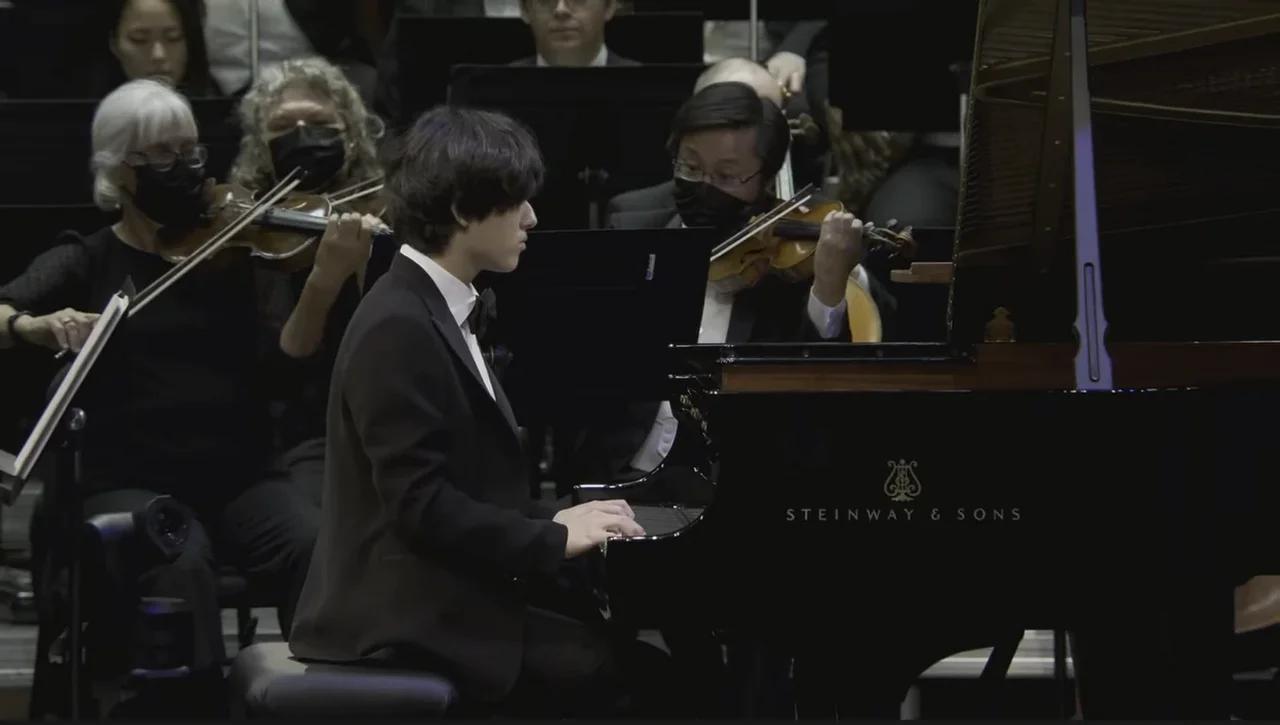
It was past midnight in Texas. June 17, 2022. While most of the world slept, an 18-year-old kid from South Korea sat down at a Steinway in Bass Performance Hall and basically rewrote the rules of what a piano concerto is supposed to feel like.
He didn't just play the notes. He kind of possessed them.
When we talk about Yunchan Lim Rach 3, we aren't just talking about a technical feat. We're talking about a cultural shift. If you haven't seen the video, you’re missing out on the most-watched version of Rachmaninoff’s Piano Concerto No. 3 in D Minor in the history of the internet. It’s sitting at over 17 million views on YouTube right now. That is an absurd number for a 42-minute piece of classical music. People don't just watch it once. They obsess over it.
The Night Everything Changed in Fort Worth
Winning the Gold Medal at the Van Cliburn International Piano Competition is a big deal, sure. But winning it the way Yunchan did? That’s rare.
Usually, these competitions are a bit stiff. Everyone is terrified of hitting a wrong note. But Lim walked out there with Marin Alsop and the Fort Worth Symphony Orchestra and played like he was at the end of the world.
The "Rach 3" is famous for being a monster. It’s nicknamed the "Mount Everest" of piano concertos. It has more notes per second than almost anything else in the standard repertoire. But honestly, the speed wasn't the point. It was the way he moved from a whisper to a roar without ever losing that bell-like clarity.
What the Jurors Saw
Anne-Marie McDermott, one of the jurors, said they all knew something was happening about halfway through the first movement. They were joking behind the scenes that he had a "turbo button."
- The Cadenza: He chose the "ossia" cadenza—the heavier, more difficult version. Most people struggle to keep it from sounding like a mess of noise. Yunchan made it sound like a dark, rolling thunderstorm.
- The Connection: You can see it in the video. He isn't looking at the keys half the time. He’s looking at the orchestra. He’s looking at Marin Alsop.
- The Emotional Toll: By the end, Alsop was literally wiping away tears. She’s one of the most seasoned conductors on the planet, and she was visibly shaken.
Why the Decca Recording Matters Now
For a long time, we only had the YouTube rip. It was okay, but the sound was a bit thin. In May 2025, Decca Classics finally released the official live recording from that night.
They cleaned up the audio. They balanced the strings. Now, when you listen to the second movement—the Intermezzo—you can hear the way he pulls the sound out of the piano. It doesn't sound like hammers hitting strings; it sounds like a human voice.
Some critics, like Ralph Moore, have pointed out that the recording isn't "perfect." Live performances never are. There are tiny moments where the ensemble isn't 100% aligned, or the piano is a bit too loud in the mix. But who cares? That’s the point. It’s alive. It’s 18-year-old energy mixed with what Alsop called an "old soul."
What Most People Get Wrong About Yunchan Lim Rach 3
There’s this idea that he’s just a "fast" pianist. People see the fingers moving and think it’s just gymnastics.
That’s a mistake.
If you listen to his practice habits, it’s actually kind of terrifying. During the Cliburn, he was practicing 12 to 14 hours a day. He’d stay up until the early morning eating English muffins and obsessing over tiny phrases in Mozart. He once told a host that "Mozart is the most difficult."
He isn't trying to be a virtuoso. He’s trying to be a poet.
The Rach 3 is often played with a lot of "banging." It’s a loud piece. But Yunchan uses less pedal than most. He wants you to hear every single semi-quaver. It’s translucent. Sorta like looking through clear water at a rocky bottom—you see the structure, not just the surface.
The Cultural Impact: More Than Just Music
Since that night, Yunchan Lim has become a full-blown celebrity. It’s weird to see security guards at the lip of a stage for a piano recital, but that’s what happened when he played with the Baltimore Symphony. Fans bring him gifts. They wait in line for hours.
He’s 21 now. He’s studying at the New England Conservatory in Boston with Minsoo Sohn. He’s making debuts with the New York Philharmonic and the Boston Symphony. But for most of us, that 2022 performance remains the touchstone.
It changed the way young pianists approach competitions. It proved that you can take risks and still win. You don't have to play it "safe" to get the Gold Medal. You just have to be undeniable.
How to Listen Like an Expert
If you’re going to dive back into the Yunchan Lim Rach 3 recording, keep an ear out for these specific things:
- The Opening: It’s a simple Russian Orthodox chant-like theme. Notice how quiet he starts. Most people try to make it "important" right away. He lets it grow.
- The Finale’s Coda: The last few minutes are a "death-defying high-wire act." It’s fast. It’s aggressive. But notice the diminuendo right before the final rush. It’s a moment of total darkness before the light.
- The Interaction: Watch his eyes. He treats the woodwinds like chamber music partners, not just background noise.
Actionable Insights for Classical Fans
If this performance moved you, don't stop there. The world of Yunchan Lim is expanding fast.
- Check the Decca Release: The 2025 album includes the remastered audio. It’s available on vinyl and CD, and it’s a massive upgrade from the YouTube compression.
- Follow the Evolution: Compare his 2022 Cliburn performance with his recent recordings of the Chopin Études. You can hear him becoming even more refined, less "competition-focused," and more introspective.
- Look for the "Liszt" Connection: Lim has mentioned he listened to Rachmaninoff’s own recordings 3,000 times, but he also draws heavily from Vladimir Horowitz. Watch a video of Horowitz playing the Rach 3 and then watch Yunchan. You’ll see the lineage.
Yunchan Lim didn't just win a competition. He reminded everyone why we still listen to these old, difficult pieces of music. He took a concerto written in 1909 and made it feel like it was written yesterday afternoon.
To really appreciate the depth of his technique, try listening to his recording of the Liszt Transcendental Études from the same competition; it provides the context for the "turbo button" power he displayed in the Rachmaninoff finale.



