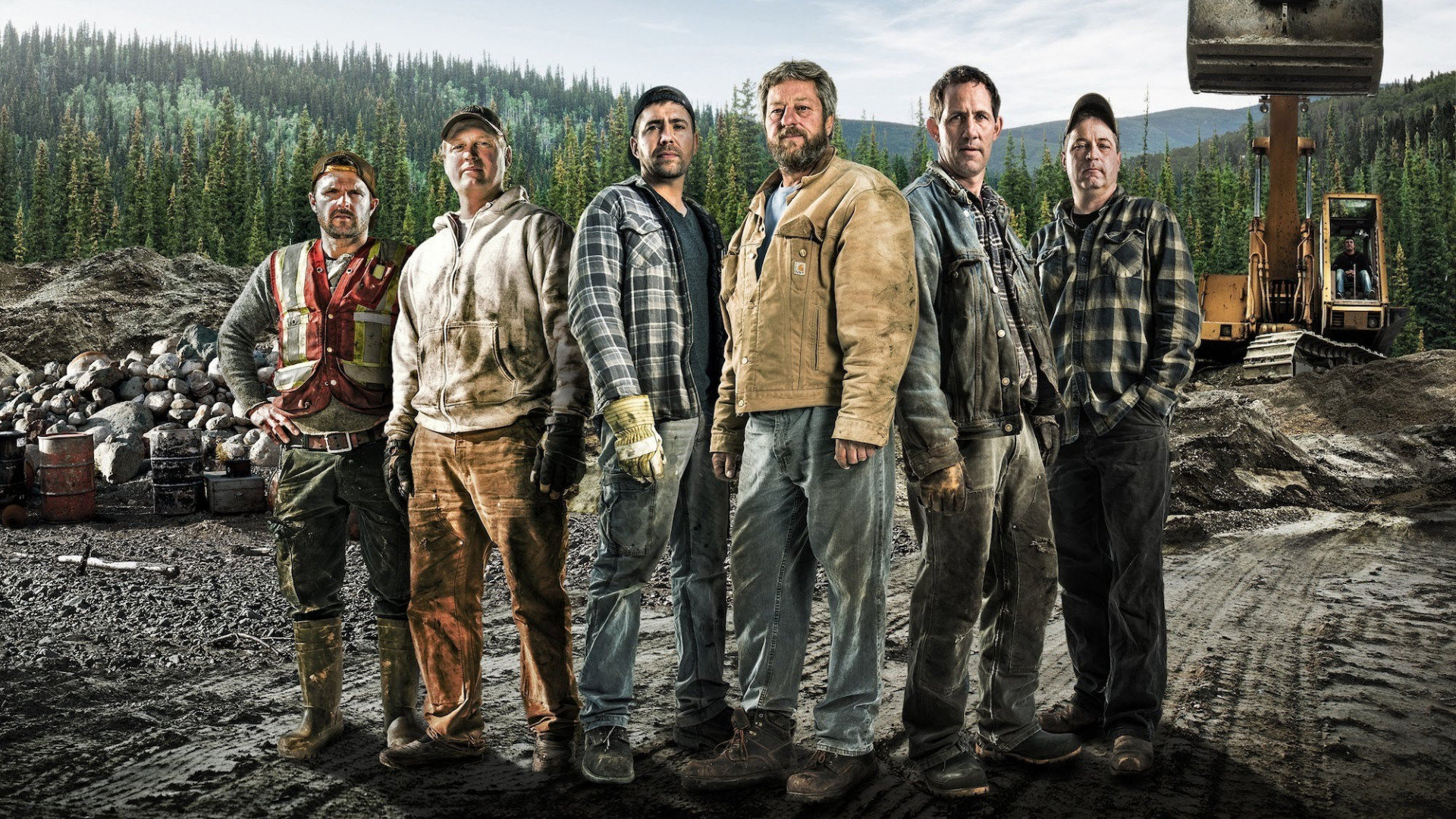
Mining is a gamble. Honestly, it’s less about "finding gold" and more about managing a series of expensive disasters while trying to stay sane in the middle of nowhere. When the Yukon Gold tv show first hit History Channel Canada back in 2013, people thought it was just going to be another Gold Rush clone. It wasn't. While the American counterparts often leaned into manufactured drama between crew members, the Yukon-based production focused on the soul-crushing reality of the permafrost. It was gritty. It was muddy. Most importantly, it was authentically Canadian.
The show followed several crews across the Klondike region, from the Indian River to Sulphur Creek. You had big players like Big Al McGregor and the younger, more frantic crews like those led by Nels Vollo or Ken Foy. The stakes weren't just about getting rich; they were about not going bankrupt before the first snowfall. In the Yukon, the mining season is a brutal, short window—usually from May to October—and if your sluice box isn't running by June, you're basically burning money.
The Brutal Reality Behind the Yukon Gold TV Show
Most viewers don't realize how much of a "dirt-moving" business this actually is. You aren't looking for coins in the sand. You’re moving thousands of tons of "overburden"—that's the useless dirt on top—to get to the "pay," which is the gold-bearing gravel near the bedrock. On the Yukon Gold tv show, we saw this play out in real-time. Big Al, who sadly passed away in 2019, was a fan favorite because he didn't sugarcoat the economics. He’d spend $30,000 on fuel in a week. If the wash plant broke down for two days, that was a catastrophic loss.
The sheer scale of the machinery is what hooks you. We're talking D10 dozers and massive excavators that cost more than a suburban home. When a part breaks in Dawson City, you don't just run to the hardware store. You wait. You weld. You pray. The show captured that specific brand of "bush mechanical" ingenuity where a piece of scrap metal and a blowtorch save a million-dollar operation.
Why the Klondike is Different
Geography matters. The Yukon isn't like the gold fields in Australia or even California. It’s frozen. The permafrost is a literal wall of ice and dirt that has to be stripped and left to melt under the sun before you can even touch the gravel. This is why timing is everything.
- Stripping: Removing the moss and trees.
- Thawing: Letting the sun do the heavy lifting.
- Sluicing: The actual process of washing the dirt to find the heavy gold.
If a miner misses the "thaw," they're done. You can't wash frozen dirt. The Yukon Gold tv show highlighted this perfectly with Bernie Friesen, whose "all or nothing" attitude often put him at odds with the literal ground beneath his feet. It’s a chess match against nature. Nature usually wins.
The Crews That Defined the Series
Ken Foy and Guillaume Brodeur were the heart of the show for many. They had that classic partnership—Ken was the dreamer and Guillaume was the mechanical wizard who kept the dreams from falling apart. Their move from Moose Creek to the Atlin, B.C. area was a massive plot point because it showed the volatility of the industry. You can have a "proven" claim that yields nothing.
Then there were the women of the Yukon, like Cam Johnson. It was refreshing to see the show acknowledge that mining isn't just a "boys' club" in the modern era. It’s a family business. It’s a multi-generational obsession. Many of these miners are the sons and daughters of the original stampeders from the 70s and 80s, carrying on a legacy of dirt and grit.
The Cost of a Cleanout
Let's talk numbers. People see a gold jar at the end of an episode and think these guys are millionaires. They aren't. Not usually. A "good" cleanout might be 100 ounces. At roughly $2,000 an ounce (depending on the year), that’s $200,000. Sounds great, right?
Subtract the $80,000 in fuel. Subtract the $40,000 in parts. Subtract the $30,000 for crew wages. Subtract the royalties paid to the claim owner. Subtract the reclamation costs required by the Yukon government.
Often, a miner walks away from a $200k week with maybe $15,000 in actual profit. And that has to last them through the entire winter when no gold is being pulled from the ground. It is a high-stakes, low-margin nightmare that only certain types of people can handle.
Environmental Regulations and the Yukon Reality
One thing the Yukon Gold tv show touched on, albeit briefly compared to the mechanical drama, was the strict environmental oversight in the territory. The Yukon Water Board doesn't mess around. You can’t just dump muddy water back into the creeks. Miners have to use settling ponds to ensure the water returning to the ecosystem is clean.
Reclamation is another huge hurdle. Once you're done mining an area, you have to put the dirt back. You have to re-contour the land so it doesn't look like a moonscape. This costs time and money, but it’s the only way the industry survives in a modern, environmentally conscious world. The "old timers" didn't have to do this, which is why you still see scars on the land from the 1900s, but the stars of Yukon Gold were operating under some of the toughest regulations on the planet.
The Psychological Toll
Mining is lonely. You’re stuck in a camp with the same five people for months. The dust gets into everything—your food, your bed, your lungs. The show did a decent job of showing the frayed nerves, but it’s hard to capture the true isolation of a site that is six hours away from the nearest cell signal.
When you see a miner on screen throwing a wrench or screaming at a conveyor belt, it’s rarely about the belt. It’s about the three months of sleep deprivation and the crushing weight of a bank loan that’s about to default.
Is the Show Still Relevant?
Even though the Yukon Gold tv show wrapped up its five-season run years ago, its legacy persists in the way we view the North. It didn't need the "fake" treasure-hunting vibes of other shows. It was about the process.
Today, mining in the Yukon has changed. Technology has gotten better. GPS-guided excavators and more efficient wash plants are the norm. But the gold? The gold is still in the same place it’s been for millions of years—stuck at the bottom of a frozen creek bed, waiting for someone brave (or crazy) enough to dig it up.
Practical Insights for the Aspiring Prospector
If you’ve watched the show and think you want to head up to Dawson City to strike it rich, there are a few things you should actually know before you pack your bags.
- Don't buy a claim online: Scams are rampant. Never buy a "proven" claim without seeing a drill report from a professional geologist.
- The "Old Timers" were thorough: Most of the "easy" gold was taken 100 years ago. Modern mining is about finding the microscopic flakes they missed or digging deeper than their hand-shovels could reach.
- It's a community: Dawson City is a tight-knit place. If you go up there with a big ego, you won't last a week. You need your neighbors to help you when your loader gets stuck in the mud.
- Permitting takes years: You can't just start digging. You need Class 3 or Class 4 mining land use permits, which involve consultations with First Nations and various government branches.
The Yukon Gold tv show gave us a window into a world that most people will never experience. It showed us that "gold fever" isn't about greed—it's about the challenge. It’s about proving that you can take a piece of wasteland and, through sheer force of will, find something of value hidden inside it.
If you're looking to revisit the series, it remains a masterclass in documentary-style reality television. It honors the people of the North without turning them into caricatures. It reminds us that at the end of the day, whether you find an ounce or a hundred, the Yukon always takes its pound of flesh.
To understand the current state of northern mining, your best bet is to follow the actual seasonal reports from the Yukon Geological Survey. They provide the raw data that the show dramatized—showing the actual gram-per-tonne yields across the different districts. Reading those reports alongside a re-watch of the series provides a much clearer picture of why some crews flourished while others vanished into the Alaskan mist.



